Whale Sharks Versus Mantas
Ari's headline is the whale shark, the world's largest fish. South Ari is one of the few places on Earth where they are present year-round. Encounters usually happen at the surface inside the South Ari Marine Protected Area, so snorkelers get just as close as divers. Guides brief you on the code of conduct: keep your distance, never touch and skip flash photography. Sightings are never guaranteed, which is why it pays to book your excursion early in the stay and leave time for a second try.
Baa's headline is the manta gathering at Hanifaru Bay. When plankton concentrates in the small bay, dozens of mantas loop and feed in shallow water. It is snorkel-only and visits are regulated to protect the animals. The difference is seasonality: Hanifaru runs roughly May through November and often peaks from about July to October.
Ari also has mantas at cleaning stations. Baa has turtles, dolphins and reef sharks. But if one encounter is the reason for the trip, the calendar will usually make the decision for you.
Matching the Atoll to Your Dates
Both atolls follow the national monsoon pattern. December to April is the dry northeast monsoon, with calm seas, the clearest water and the highest prices. June to September is the southwest monsoon, with more wind and showers that tend to come in short bursts. May, October and November are shoulder months.
For a dry-season honeymoon, Ari is the stronger pick. Calm water and clear visibility suit whale shark trips. The sharks don't depend on the monsoon. Baa in those months is lovely, but Hanifaru is out of season.
For a summer honeymoon, the logic flips. Baa's manta season lines up with the wetter months, so the lowest rates arrive just as the main attraction peaks. Ari still has whale sharks then, though choppier seas can make boat trips bumpier and some excursions may be rescheduled.
Shoulder months work for both, especially if you stay long enough to rebook a trip when the weather turns.
Resort Styles Side by Side
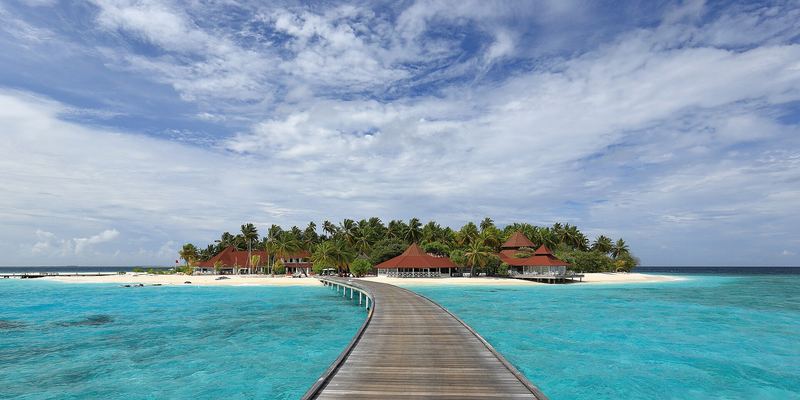
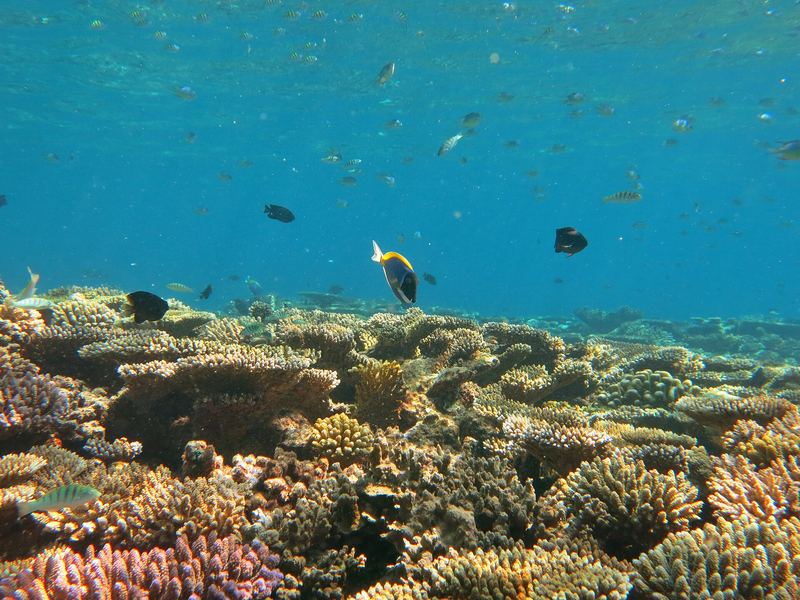
Our Ari pick is Conrad Maldives Rangali Island, spread across two private islands joined by a long footbridge. One island suits families; the other, Rangali, is quieter and geared to couples, so ask to stay there. The draw is range: around a dozen restaurants and bars, two spas, water villas with infinity pools, a rich house reef and resort-run whale shark trips. Entry beach villas often start around $800 a night room-only (approximate). The atoll has many other resorts too, from boutique islands to all-inclusive properties.
Baa offers three benchmarks with distinct personalities. Soneva Fushi is the original barefoot-luxury resort, with jungle villas, an open-air cinema and an observatory. Four Seasons Resort Maldives at Landaa Giraavaru pairs polish with marine science and phones your villa when mantas appear. Anantara Kihavah Maldives Villas has an underwater restaurant, an overwater observatory bar and glass-bottom tubs. Entry villas at these three often run from about $1,500 to $2,500 a night (approximate).
Ari gives you one resort with everything. Baa gives you three distinct characters to choose between.
Dining Below the Waterline
Both atolls let you eat with fish swimming past the glass, which is a nice tiebreaker if you can't choose.
In Ari, Ithaa seats just 14 diners five meters below the surface under a curved acrylic roof. It serves contemporary European cuisine and needs booking as soon as your villa is confirmed. The rest of the Conrad's lineup covers Japanese teppan, Chinese fine dining, Italian, a plant-based menu, a sunset grill and tastings in an underground wine cellar. Ask about Ithaa's dress code, which is smarter than elsewhere on the island.
In Baa, Anantara Kihavah's underwater restaurant offers the same thrill with a reef setting. Soneva Fushi is better known for Mediterranean dishes above an organic garden and for its playful extras. Four Seasons Landaa Giraavaru serves Arabian cuisine at the water's edge.
In either atoll, every meal is in-house. Compare half-board and full-board plans against à la carte. Try mas huni at breakfast and garudhiya, a clear fish broth, when a resort offers Maldivian nights.
Seaplane Logistics and Getting There
There are no nonstop flights from the US to the Maldives, so expect a connection through a Gulf, European or Asian hub to Velana International Airport (MLE). Both atolls then require a seaplane. Both share the same catch: seaplanes fly only in daylight. If your long-haul flight lands in the evening, plan a night near Malé.
Ari's flights are typically 25 to 40 minutes, with the Conrad about 30. Some Ari resorts also offer a domestic flight to South Ari plus a speedboat, around two hours in total, which can rescue a late arrival.
Baa's seaplanes take about 30 to 40 minutes. Some resorts can arrange a domestic flight to a regional airport followed by a speedboat as an alternative.
In both cases, transfers are charged per person and can add a significant amount to the bill, so ask for the price before booking. Baggage limits are tighter on seaplanes, so pack light and leave the extra shoes at home.
Beyond the Big Animals
Ari has a cultural layer many couples don't expect. Fenfushi has an old mosque with carved wooden ceilings and lacquerwork panels. Buddhist remains, including a stupa, have been found on Ariadhoo. A guided night snorkel shows the reef after dark. Sandbank sunset cocktails and overwater spa pavilions fill the slower days.
Baa leans into conservation and the night sky. Join a coral-planting session with a resort marine biologist. Look for spinner dolphins on a sunset dhoni cruise. Low light pollution makes stargazing superb, with telescopes at Soneva Fushi and Anantara Kihavah. Thulhaadhoo, a nearby inhabited island, is known for traditional lacquerwork.
For village visits in either atoll, cover shoulders and knees for both of you. Alcohol is served only at resorts, not on local islands. Pack a long-sleeved rash guard and reef-safe sunscreen. Whale shark and manta trips both involve time in open water under strong equatorial sun.
Combining Ari and Baa
Ari and Baa sit on opposite sides of the central Maldives, so moving between them usually means a seaplane routed through or near Malé. It's doable. Resorts will arrange it, but you pay two seaplane fares and deal with two daylight-only legs.
If you want both giants, a smarter plan for most couples is one seaplane atoll plus an easy finish near the airport. Spend five or six nights in Ari or Baa, then two or three in North or South Malé Atoll, where speedboats run around the clock and departure day is simple.
If you do commit to both, time it for the manta months, roughly July to October. That way you get Hanifaru in Baa and still have a strong chance of whale sharks in Ari. Allow at least ten nights so neither stop feels rushed. Keep a buffer between your last seaplane and your flight home.