Wild Coast or Village Coast
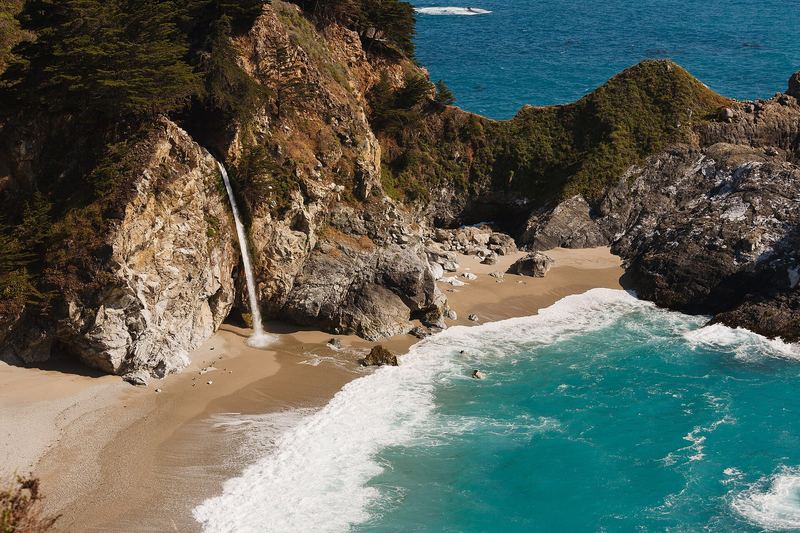
Big Sur is wildness on a grand scale. Mountains plunge into the sea, the highway clings to the cliffs and Bixby Bridge arches across a canyon. McWay Falls drops onto a pristine cove in Julia Pfeiffer Burns State Park. Redwood groves shelter in the canyons while condors ride the updrafts. You are always somewhere between the road and the sea, with no village at the center.
The Mendocino Coast is gentler and more lived-in. The village of Mendocino sits on a headland ringed by Mendocino Headlands State Park, with flat trails above sea caves and blowholes. A few miles away, Russian Gulch and Van Damme state parks hide fern-lined canyons and waterfalls under second-growth redwoods. Inland, Anderson Valley adds vineyards and orchards.
Big Sur is the place for grand views and silence. Mendocino is for strolling to a café, browsing a gallery and walking the headlands before dinner.
Two Legendary Retreats or a Dozen Small Inns
Big Sur's two famous hotels sit across Highway 1 from each other. Post Ranch Inn has about 40 architect-designed houses on a ridge high above the Pacific, from Cliff Houses with outdoor soaking tubs to triangular Tree Houses with skylights over the bed. There are no TVs. Its restaurant, Sierra Mar, has a Wine Spectator Grand Award list. Ventana Big Sur, an Alila resort, spreads across meadow and redwoods on the mountain side, with fireplaces, private hot tubs in suites, Japanese hot baths and glamping tents in a redwood canyon. Resort stays include dining at The Sur House.
Mendocino runs on small, often family-owned inns. MacCallum House occupies a Victorian home with garden cottages in the village. In Little River, Heritage House Resort and Spa sits above a cove and Glendeven Inn keeps llamas on the lawn. The Stanford Inn by the Sea has wood-burning fireplaces and a vegan restaurant, while Brewery Gulch Inn is known for its evening wine hour.
How the Days Unfold
In Big Sur, the drive is the first adventure. Stop at Bixby Bridge, then McWay Falls in late afternoon light. Wind down the canyon road to Pfeiffer Beach for its purple-tinged sand and keyhole arch. Hike among the redwoods in Pfeiffer Big Sur State Park, browse the Henry Miller Memorial Library and walk the coastal trails at Point Lobos near Carmel. Most evenings end with a soak above the Pacific.
On the Mendocino Coast, days settle into a slow rhythm. Walk the Headlands at sunset watching for sea lions. Hike the Fern Canyon Trail in Russian Gulch to a waterfall. Ride the Skunk Train from Fort Bragg into the redwoods, or pedal its rails on a two-person railbike. Paddle a canoe up Big River with the tide, wander the botanical gardens on the bluffs and spend an afternoon tasting along Highway 128. In winter, Point Cabrillo Light Station is a good spot for whale watching.
Tables With a View
Big Sur's dining is about setting. Sierra Mar at Post Ranch Inn and The Sur House at Ventana are the special-occasion choices, each looking far out over the ocean. Nepenthe, a cliffside institution with a terrace that seems to hang over the coast, is the classic stop for lunch and a glass of wine. Roadside bakeries and riverside lodges handle breakfast and picnic supplies. Carmel and Monterey, to the north, add a wider range of restaurants.
Mendocino eats close to home: Dungeness crab in winter, rockfish and salmon in season and foraged mushrooms in fall. Many inns include a cooked breakfast. Café Beaujolais, a longtime French-influenced favorite in a Victorian farmhouse, is the village standout. Several inns run restaurants open to outside guests. Anderson Valley pours cool-climate Pinot Noir and sparkling wine, including at Roederer Estate.
In both places, kitchens keep limited hours, so book dinners ahead, especially on weekends.
Fog, Wildflowers and Whales
The two coasts share a weather pattern. September and October are the best months in both, when the summer fog tends to lift and days are clear and mild. In Mendocino, that is also harvest season in Anderson Valley, so book inns early for weekends.
Spring brings wildflowers to both, with green hillsides and strong waterfalls in Big Sur during April and May. Summer is cool and frequently foggy on both coasts. In Big Sur, a ridgetop room can put you above the fog, looking down on a sea of clouds.
Winter is storm season. In Big Sur, storms can close sections of Highway 1, so build in a buffer day. In Mendocino, winter is the coziest time for a fireplace room, with midweek rates often lower. Gray whales pass both coasts from roughly December through April. Mendocino celebrates with whale festivals in March. Pack layers whatever the month.
Budget and Roads
The price gap is large. Post Ranch Inn and Ventana Big Sur typically run roughly $1,500 to well over $3,000 a night in peak season. Big Sur's historic lodges and cabins cost much less, or you can base yourselves in Carmel. Mendocino's inns run roughly $250 to $600 a night, with Fort Bragg cheaper still. All figures are approximate.
For Big Sur, Monterey Regional Airport (MRY) is about an hour from the central coast, with San Francisco and San Jose roughly two and a half to three hours away. Highway 1 has seen repeated landslide closures, so check Caltrans QuickMap before you set out. Drive in daylight.
For Mendocino, there is no commercial airport on the coast. Fly into San Francisco or Oakland and drive about 3.5 to 4 hours, or into Santa Rosa (STS) to cut that to 2.5 to 3. Take Highway 128 through Anderson Valley one way and slower Highway 1 the other.
Making a Coastal Road Trip
Big Sur and Mendocino sit on opposite sides of San Francisco, roughly five to six hours apart by road, so a single trip can include both. A balanced ten-night plan might be two nights in San Francisco, three in Big Sur, a night in the city or Sonoma on the way north and four on the Mendocino Coast.
With a week, choose one and pair it with wine country. Big Sur combines well with Carmel and Monterey or a southward drive toward Los Angeles. Mendocino combines naturally with Sonoma or Napa, since Anderson Valley sits on the way.
Both coasts share the same cautions. The surf is cold and dangerous, with sneaker waves and strong currents, so enjoy it from the sand and stay back from crumbly cliff edges. Download offline maps and music, fill the tank in larger towns and plan to arrive before dark, since the roads are narrow, unlit and home to deer.