Sea Versus Lagoon
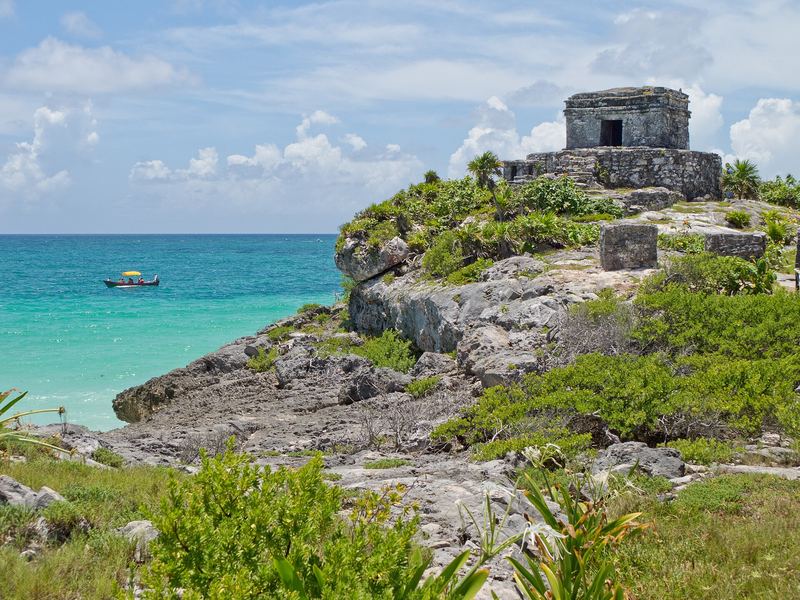
Tulum faces the open Caribbean. Its beach road runs along white sand and turquoise water, with the Tulum ruins on a cliff about 40 feet above a cove at the north end. Just south lies the Sian Ka'an Biosphere Reserve, a UNESCO World Heritage Site of lagoons, mangroves and reef where dolphins and turtles are common sightings. The sea is calmest from December through April. From late spring into summer, sargassum seaweed often washes onto the beaches.
Bacalar's lagoon runs about 37 miles north to south and only a mile or so across at its widest. It is fresh water, so there are no waves, no salty sting and no sargassum. You can step off a hotel dock into water that stays shallow for a long way before dropping into a blue hole. The colors depend on sunlight, so they are richest on clear days and duller under cloud or after heavy rain.
If you dream of ocean surf and beach walks, Tulum. If you dream of floating in still, glassy water, Bacalar.
Stays: Beach-Road Boutiques or Lagoon Docks
Tulum's hotels divide into two worlds. The beach road holds barefoot-luxe boutique hotels right on the sand, while Tulum town, Aldea Zamá and La Veleta have more affordable stays. For a honeymoon, the beach is worth the splurge. Azulik Tulum, a kid-free collection of about 48 treehouse-style villas built by hand from wood and vine, has oceanfront villas with hanging beds and Maya tubs. Entry villas start from roughly $300 a night, room only. Be Tulum, on the quieter southern stretch, has suites with private plunge pools, a beach club and a Maya spa, from around $350 a night.
In Bacalar, location on the lagoon matters more than the room. Look for a private dock, an east-facing view for sunrise and an easy walk or bike ride to town. Small hotels and guesthouses near the center often have lagoon frontage with hammocks and kayaks. Boutique hotels, eco lodges and rental houses spread north along the costera, quieter and greener. South toward Cenote Azul, some stays have cabins on stilts or glamping tents over the water. Check for air conditioning at the eco end between April and October.
How You Spend the Days
Tulum keeps you busy if you want it to. Walk the ruins at opening time, before the heat and tour buses, then swim in the cove below if it is open. Go cenote hopping: Gran Cenote has clear water and turtles, while the Dos Ojos system is a standout for snorkeling through caverns. Book a temazcal, a traditional Maya sweat-lodge ceremony, for a shared experience you won't forget soon. Spend a day boating through Sian Ka'an or float the ancient Maya channels near Muyil. Rent bikes and cruise the beach road to dinner at golden hour.
Bacalar slows everything down. Book a late-afternoon sail across the lagoon to the shallow white sand of the Pirates' Channel, stopping to swim as the light softens. Paddle a double kayak at sunrise, sometimes with breakfast on the water. Swim out over Cenote Azul until the bottom drops away to around 300 feet. See the stromatolites near Los Rápidos, among the oldest life forms on Earth. Walk the ramparts of the Fuerte de San Felipe, completed in 1729. Then add the quiet Maya site of Chacchoben, about 45 minutes away.
Dinner Plans
Tulum's dining scene punches far above its size. On the beach road, candlelit restaurants built around wood-fired grills and open kitchens turn local fish, Yucatecan produce and heirloom corn into sophisticated menus. Kin Toh at Azulik serves Maya-Mexican dishes in woven nests above the jungle canopy. Reserve the best tables weeks ahead in high season. In town, taquerías serve cochinita pibil tacos, plant-forward cafés reflect the wellness culture and cocktail bars pour mezcal flights.
Bacalar eats like the rest of the Yucatán, simply and well. Small loncherías around the square serve cochinita pibil, sopa de lima and salbutes topped with turkey for very little money. Open-air restaurants along the lagoon do ceviche, grilled fish and wood-fired pizza with water views. Los Aluxes, on the shore road, has a bar with swings instead of stools. For a special night, many boutique hotels set candlelit tables on their docks; ask ahead, since kitchens are small and some close early.
Food lovers will want time in Tulum. Bacalar's charm is a quiet dinner by the water.
Budget and Value
Tulum's beach road is one of the pricier corners of the Mexican Caribbean, especially from Christmas through March, when hotels sell out and rates climb. Azulik and Be Tulum start from roughly $300 to $350 a night for entry rooms, with oceanfront villas and plunge-pool suites costing far more. Destination restaurants are priced to match. Taxis are plentiful but expensive, so agree fares first. Stays in Tulum town cost less but put you farther from the sand.
Bacalar is a fair value by comparison. Lagoon-front boutique hotels with private docks and hammocks over the water cost noticeably less than similar beachfront rooms in Tulum. Meals around the square are cheap and sailing trips are reasonably priced. Bring pesos, since small restaurants and tour operators often prefer cash and the town has only a handful of ATMs.
All prices are approximate. A common approach is to splurge on a few Tulum nights, then let Bacalar stretch the budget for the rest of the trip.
Travel, Seasons and Staying Safe
Tulum International Airport (TQO), opened in late 2023, has made both places easier to reach, with nonstops that have included Atlanta, Dallas/Fort Worth, Houston, Miami and seasonally Newark. Tulum's hotel zone is a short drive away. Bacalar is about two to two and a half hours south by private transfer. Cancún (CUN) has far more flights but adds 1.5 to 2 hours to Tulum and another two to Bacalar. The Tren Maya stops in both. ADO buses run along the coast. Avoid driving the highway at night.
December through April is the best time for both, with dry days and, in Bacalar, the full range of lagoon colors. May is hot but still workable. Summer brings humidity, storms and, in Tulum, sargassum. September and October carry the highest hurricane risk.
Tulum town has had its share of nightlife-related crime, so stay with the dinner crowd at night and use taxis your hotel calls. On both, use biodegradable repellent and reef-safe sunscreen or a rash guard. Dengue circulates here, so if you're pregnant or hoping to be soon, check CDC travel health notices for Mexico.
The Salt-and-Fresh Honeymoon
The contrast between the two is a big part of the fun, which is why so many couples do both. A good week to ten days: three or four nights on Tulum's beach road for cenotes, the ruins, Sian Ka'an and a couple of big dinners, then three nights in Bacalar to float, sail and wind down. Three nights is the sweet spot in Bacalar; two feels rushed after the drive and four can feel slow unless you add day trips.
Putting Bacalar second works well. You get Tulum's energy while you still have it, then finish somewhere peaceful. Leave time for the drive back to TQO on your last day, or overnight in Tulum before an early flight.
If you only have five nights, pick one. Choose Tulum for style, food and variety. Choose Bacalar if all you really want is calm water, quiet evenings and the two of you on a dock at sunrise. Be gentle with the lagoon either way: skip chemical sunscreen before swimming and never stand on the stromatolites.