Getting Between Stops
You can do the whole trip on public transport. Swiss trains are punctual. The Swiss Travel Pass covers Lucerne's boats and the Rigi railways, with a discount on Pilatus. The Half Fare Card is cheaper if you only plan a few rides.
The longest transfer is Lucerne to Stresa. Trains via Brig and the Simplon line take roughly three and a half hours with changes. A private driver is faster door to door and lets you stop in Lugano. In summer, the Gotthard Panorama Express combines a boat and a train from Lucerne toward Lugano, but it makes the day longer.
On both Italian lakes, public ferries and faster hydrofoils link the towns. Water taxis wait at the main piers for late returns after dinner. A car is optional and often a nuisance on narrow lakeside roads where summer parking is tight.
Where to Stay
In Lucerne, the lakefront between the station and the casino holds the classic hotels. The Hotel Schweizerhof Luzern has hosted travelers since the 1840s. The Mandarin Oriental Palace, Luzern fills a restored Belle Époque building on the water. For a splurge, the Bürgenstock Hotel and Alpine Spa sits on a ridge above the lake.
On Lake Maggiore, Stresa is the easiest base. The Grand Hotel des Iles Borromées is a Belle Époque landmark with gardens to the water. Villa e Palazzo Aminta, just outside town, is another long-standing luxury choice.
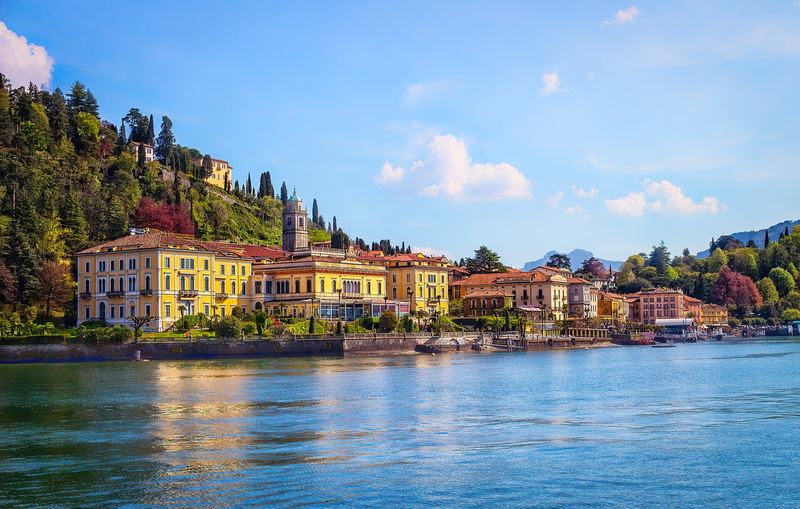
On Lake Como, Villa d'Este in Cernobbio is the grande dame, with a pool floating on the lake. Passalacqua in nearby Moltrasio is an intimate villa with terraced gardens. For the central lake, look at the grand hotels in Bellagio and Tremezzo or small boutique places in Varenna.
On all three lakes, a lake-view room with a balcony is worth the extra.
When to Go
May, June and September are the sweet spot. The boats run full timetables, the Pilatus cogwheel railway is open and the Italian lake gardens are in flower in spring. September brings warm water and thinner crowds.
July and August are warm and busy on the Italian lakes, with higher rates and booked-out restaurants. Lucerne stays comfortable in summer.
April suits garden lovers, since azaleas and camellias peak at Villa Carlotta and Villa Taranto, but the Pilatus cogwheel railway usually opens later in spring, so check before you plan around it. From November through March, many hotels on Como and Maggiore close entirely. This route is best treated as a spring-to-fall honeymoon. Mountain weather changes quickly in any month, so keep your summit day flexible and swap it with a lake day if the peaks are in cloud.
What It Costs
Switzerland is expensive and the Italian lakes are not cheap in season. As an approximate guide, lakefront grand hotels in Lucerne cost about $500 to $900 a night for two. On Lake Maggiore, Stresa's grand hotels start lower, often around $400 to $600. Lake Como is the priciest stop, with Villa d'Este and Passalacqua well above $1,000 a night in summer and smaller hotels in Varenna and Menaggio from about $250.
Trains and ferries are reasonable, especially with a Swiss Travel Pass. Mountain railways and the Bürgenstock spa add up, so pick one big summit.
The extras worth paying for are a private water taxi to the Borromean Islands at sunset, an hour on a vintage Riva on Como and a private transfer over the Alps. Swiss restaurant prices are high, so long Italian lunches are better value than Swiss dinners.
Tips for the Two of You
Pack layers. Summits can be near freezing when the lakeshore is warm. Evenings on the water get cool even in June. Comfortable shoes matter for cobbled lanes, island gardens and steep village stairs.
The Italian lakes are steep and stepped. Check how far your hotel is from the ferry pier and whether it sends someone to meet you with your bags.
Plan for different energy levels. One of you might hike from Rigi Kaltbad to the summit while the other takes the train up with a book. On Como, one might kayak in the morning while the other has a spa hour, then meet for lunch.
Book the famous gardens and boat outings for the morning, before day-trippers arrive. Restaurants on the islands and in Bellagio fill quickly on summer evenings, so ask your hotel to reserve a table on the water a few days ahead.
Make It Shorter or Longer
With a week, drop Lake Maggiore. Spend three nights in Lucerne, take the train through the Gotthard to Lugano and continue to Lake Como for four nights.
With 12 or 13 days, add two nights in the Jungfrau Region between Lucerne and the Italian lakes. The Luzern-Interlaken Express over the Brünig Pass takes about two hours. From there, trains continue via Spiez and Brig to the Simplon line for Stresa.
Another good extension is two nights on Lake Lugano between Lucerne and Maggiore, which breaks up the Alpine crossing. Or finish with a night in Milan for the Last Supper and an evening aperitivo before an early flight home. If you want the Dolomites as well, Lake Garda and Merano sit farther east but make the trip much longer.