Why Honeymoon in Tokyo
Tokyo gives you range without the friction that usually comes with a big city. In one day you can watch the tuna trade at Toyosu, walk through the cedar forest around Meiji Jingu, shop the backstreets of Daikanyama and end up in a lantern-lit alley in Shinjuku eating grilled chicken skewers elbow to elbow with office workers.
It is also one of the safest large cities on earth. Walking home together at midnight feels normal. That ease matters on a honeymoon, when you want to wander without planning every step.
The food is the headline. Tokyo has one of the world's largest collections of Michelin-starred restaurants, but the everyday food is just as memorable: department store food halls, standing soba shops, convenience store egg sandwiches that people genuinely rave about. Couples who love eating rarely leave disappointed.
When to Go
Spring and autumn are the sweet spots. Cherry blossoms usually peak in Tokyo in late March or the first days of April, though the exact week shifts each year and hotels fill early. May brings fresh green and comfortable temperatures before the rainy season.
The rainy season, called tsuyu, usually runs from early June into mid July. It is gray and damp rather than stormy. July and August are hot and very humid, often in the 90s Fahrenheit, with typhoons possible from late summer into early autumn.
October and November are excellent: dry air, clear views of Fuji on good mornings and autumn leaves that reach Tokyo's parks in late November and early December. Winter is cold but sunny and rarely snowy. It is a quieter, cheaper time with the best odds of seeing Fuji from rooftops.
Where to Stay
Pick a neighborhood by mood rather than by map.
- Marunouchi and Otemachi, beside Tokyo Station, are polished and practical. Aman Tokyo and the ryokan-style Hoshinoya Tokyo sit here, both quiet high above or tucked behind office towers.
- Ginza and Hibiya suit couples who want shopping, theaters and serious restaurants on the doorstep. The Peninsula Tokyo overlooks the Imperial Palace gardens.
- Shinjuku is busy and convenient, with views and nightlife. Stay on the west side for calmer streets.
- Shibuya and Ebisu feel younger, with good bars and easy walks to Daikanyama and Nakameguro.
- Asakusa offers an older Tokyo of temples and craft shops, with lower prices.
Rooms are small by American standards. If space matters, book a corner room or a suite rather than assuming a standard double will feel roomy. As a rough guide, the top hotels run about $700 to $1,500 or more a night, while good mid-range hotels cost about $200 to $400 (approximate).
Romantic Things to Do
Start early at Senso-ji in Asakusa, before the shopping street opens, when the incense smoke and lanterns are yours alone. Later, take a water bus down the Sumida River toward Hama-rikyu, a former shogun's garden with a teahouse on a pond where you can sit with matcha and a sweet.
At dusk, ride up to an observation deck. Shibuya Sky has an open rooftop above the famous crossing. The Tokyo Metropolitan Government Building in Shinjuku has a free deck with a similar view.
Book one splurge dinner at a counter, where you watch the chef work in front of you. Spend another evening in the alleys of Golden Gai or Omoide Yokocho, ducking into bars that seat six.
For something hushed, visit a sento, a neighborhood public bath where men and women bathe separately, or the immersive digital art at teamLab Planets in Toyosu.
Getting There and Around
Tokyo is the easiest place in Asia to reach from the United States. Nonstop flights run to Haneda and Narita from a long list of US cities, including Los Angeles, San Francisco, Seattle, Dallas, Houston, Chicago, Atlanta, Detroit and the New York area. Expect roughly 11 to 14 hours westbound.
Haneda is the more convenient airport, about half an hour from the center. From Narita, the Narita Express reaches Tokyo Station in about an hour.
Once in the city, use the trains and subway. Load a Suica or Pasmo card into your phone wallet and tap in and out. Taxis are clean and honest but pricey for long rides. Avoid rush hour on weekday mornings with luggage. For bigger bags, use the cheap and reliable luggage forwarding service, takkyubin, to send suitcases ahead to your next hotel.
Food and Drink
Eat sushi at least once at a counter. The famous names need reservations weeks or months ahead, often through a hotel concierge, but many excellent counters in Ginza and Shinjuku take bookings closer to the date, especially at lunch.
Beyond sushi, try tempura fried in front of you, tonkatsu, ramen in a dozen styles, yakitori under the train tracks at Yurakucho and wagyu sukiyaki at an old-school restaurant. Department store basements, called depachika, are ideal for picnic shopping, with bento boxes, fruit sold like jewelry and pastry counters.
For drinks, Tokyo's cocktail bars are among the most precise anywhere. Japanese whisky is easy to sample by the glass. Sake bars will pour tasting flights. Tipping is not expected anywhere. Leaving cash on the table can confuse staff.
Honeymoon Tips
Tell your hotel you are on your honeymoon when you book. Japanese hotels often respond with a small, thoughtful touch, such as a cake or a better room.
Tokyo is mostly cashless now, but carry some yen for small shrines, older restaurants and festival stalls. Convenience store ATMs accept American cards.
Carry a small towel and a bag for your trash; public bins are rare. Speak quietly on trains and skip phone calls entirely.
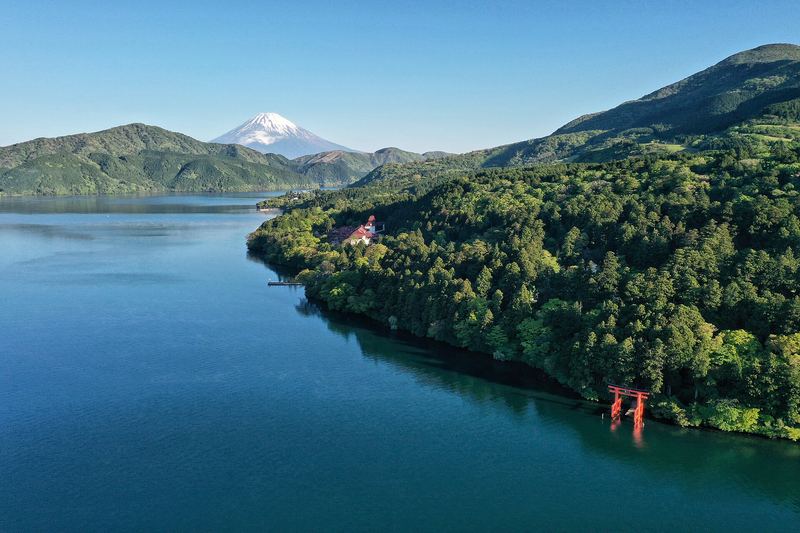
Plan one or two day trips. Kamakura has a giant bronze Buddha and beaches about an hour south. Nikko has ornate shrines in cedar forest about two hours north. Many couples also use Tokyo as the jumping-off point for Hakone or the Fuji Five Lakes for a night in a hot spring inn.