The Big Difference: Igloo or Architecture
In Finnish Lapland the room itself is the aurora viewing platform. Kakslauttanen Arctic Resort near Saariselkä is the original glass igloo village, Levin Iglut Golden Crown puts a small set of domes on a hilltop above Levi and the Arctic TreeHouse Hotel near Rovaniemi raises glass-fronted suites into the forest. You can watch the sky without getting out of bed, which is a real luxury at minus 20.
Swedish Lapland's stars are built to be looked at as much as looked out of. Treehotel's Mirrorcube nearly disappears into the trees, the Bird's Nest looks like a giant tangle of branches and the 7th Room has a netted terrace hung over the forest floor. The Icehotel goes further, with art suites carved fresh each winter. You sleep in thermal bags on reindeer hides and warm up in the sauna afterward. Most guests do one night on ice and the rest in heated rooms.
If the view from your pillow matters most, Finland wins. If the room should feel like an experience in itself, Sweden does.
Northern Lights Odds
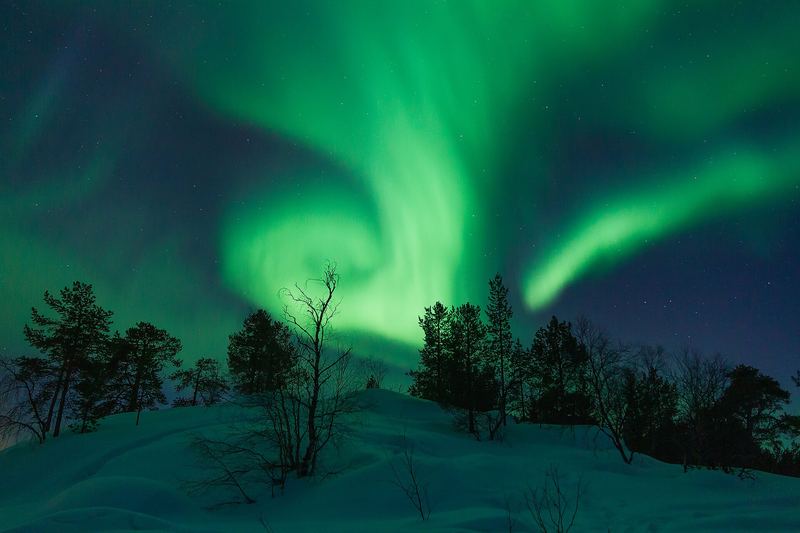
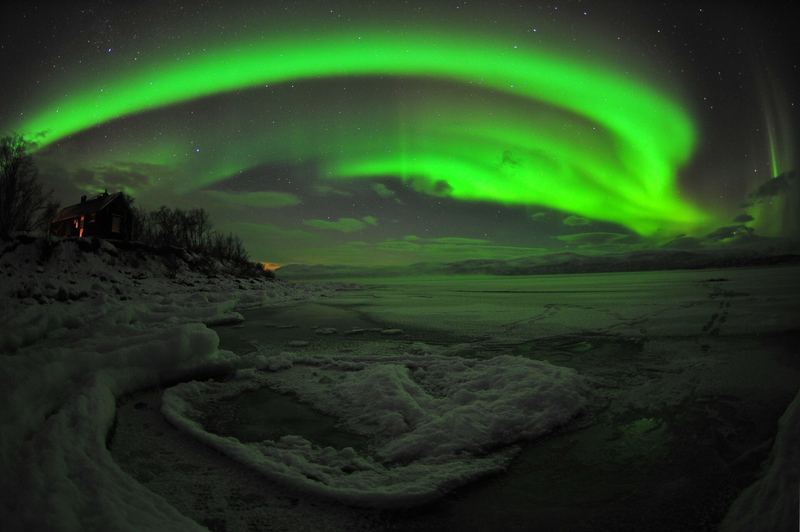
On aurora odds the two are close to even. Both regions lie under the auroral oval and both enjoy dark skies far from big cities. What decides your luck is cloud cover, so the honest advice is the same on either side of the border: stay three or four nights at a minimum and keep your evenings flexible.
Swedish Lapland has one advantage worth knowing. Abisko National Park, west of Kiruna, sits in a rain shadow created by the surrounding mountains, so it often stays clear when the coast is socked in. Its mountain station runs aurora evenings that many travelers add to an Icehotel stay.
Finnish Lapland's advantage is convenience. With a glass roof overhead you do not need to stand in a field at 1 a.m. to catch a display. Many lodges also offer aurora alarms, so you can sleep and still be woken when the sky lights up. Couples who tire easily in the cold often find that makes more difference than a few extra clear nights.
Getting There From the US
Finland is the simpler route. Finnair and its partners fly nonstop to Helsinki (HEL) from New York and several other US hubs, then domestic flights of about ninety minutes reach Ivalo (IVL) for Saariselkä, Kittilä (KTT) for Levi or Rovaniemi (RVN). If the timing works you can land in Lapland the day after leaving home. The overnight Santa Claus Express from Helsinki to Rovaniemi, with private sleeper cabins, is a slower and more romantic option.
For Sweden you connect through Stockholm (ARN), which has nonstop service from a handful of US cities, then fly about ninety minutes to Luleå (LLA) for Treehotel or Kiruna (KRN) for the Icehotel. Night trains also run north from Stockholm to both towns.
The extra planning in Sweden comes from the two-hotel itinerary. Treehotel and the Icehotel are roughly four hours apart by road, or you can take the train between Boden and Kiruna. It is a lovely journey, but it does use up a day.
Best Months for Each
The calendars are almost identical. Aurora season runs from late August to early April in both, with the polar night from late November into January bringing only a few hours of twilight and the strongest Christmas-card atmosphere. That is also the priciest and busiest period.
February and March are the sweet spot on both sides of the border. Snow is deep, there is enough daylight for long husky and snowmobile runs and the nights are still dark enough for the lights. If you have flexibility, aim there.
The Icehotel adds one timing wrinkle. The seasonal ice hotel typically opens in December, so an earlier visit means relying on Icehotel 365, the year-round building with ice suites and private saunas. Finland's autumn ruska season from late August through September is a lovely alternative, with red and gold fells and the aurora reflected in unfrozen lakes. In June and July both regions swap the aurora for the midnight sun. The forest mosquitoes also come out in force.
What a Week Costs
Neither region is cheap. The signature rooms are where the money goes. In Finnish Lapland, glass igloo stays typically run from several hundred dollars to well over $1,000 a night in peak season. That is before husky safaris, transfers and lunches. Many resorts sell half-board packages that help with budgeting.
Swedish Lapland's famous rooms sit in a similar range, with Treehotel's most sought-after rooms and the Icehotel's deluxe art suites at the top. Because most couples sleep only one night on ice, you can mix in warmer standard rooms and bring the average down a little. The two-hotel plan does add transfer or rail costs.
As a rough guide, expect a week in either region with good rooms, a few guided activities and nice dinners to land in a similar band. Treat any figure as approximate. Book the big-ticket activities when you book your room, especially for February and December.
Days Out Together
Both regions do the classic Arctic adventures well: driving your own husky team, snowmobile safaris across frozen lakes, reindeer encounters with Sámi herders and snowshoe walks under the stars. The differences are in the extras.
Finland leans into sauna culture. A traditional smoke sauna heated for hours with wood, followed by an ice swim or a roll in the snow, is the ritual most couples talk about afterward. Rovaniemi adds the Arktikum museum, which explains the science behind the aurora, plus Santa Claus Village on the Arctic Circle line if you want a bit of kitsch.
Sweden leans into creativity and scale. At the Icehotel you can join an ice-sculpting workshop, sip from an ice glass at the Icebar and wander the art suites before bed. Near Treehotel, the Storforsen rapids are one of Europe's largest unregulated rapids. Abisko's trails and mountain station make a good aurora night out. The Kungsleden trail draws summer hikers.
Can You Do Both on One Trip
You can. It works better than most people expect. Rovaniemi and Treehotel are roughly four hours apart by road via the border towns of Tornio and Haparanda. Levi to Kiruna is a similar drive through the forest. A rental car with winter tires gives you the most freedom, though winter driving takes care, daylight is short and reindeer often stand in the road.
A balanced ten-night plan might start with four nights in a Finnish glass igloo, then two at Treehotel and three in Kiruna with one night on ice and an evening at Abisko. Fly into Helsinki and out of Stockholm to avoid backtracking.
Remember that Finland runs one hour ahead of Sweden. If time is tight, though, pick one country and stay longer. More nights in one place means more chances at clear skies. The aurora rewards patience far more than mileage.