Two Coasts, Two Looks
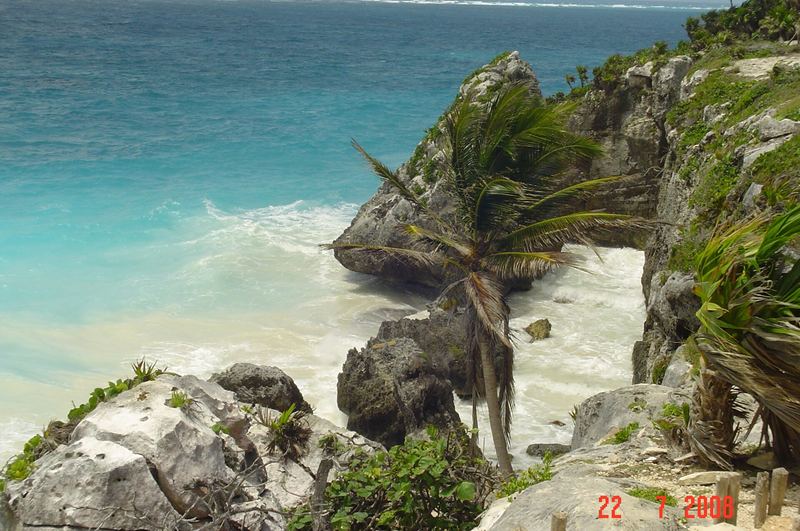
The Riviera Maya is what most people picture when they imagine the Caribbean: powdery white sand, palms and water in shades of turquoise, with the Mesoamerican Reef, the second-longest barrier reef in the world, running offshore. Inland, flat jungle hides cenotes, limestone sinkholes full of crystal-clear fresh water that the ancient Maya considered sacred. Temples stand at Tulum, Cobá and Chichén Itzá.
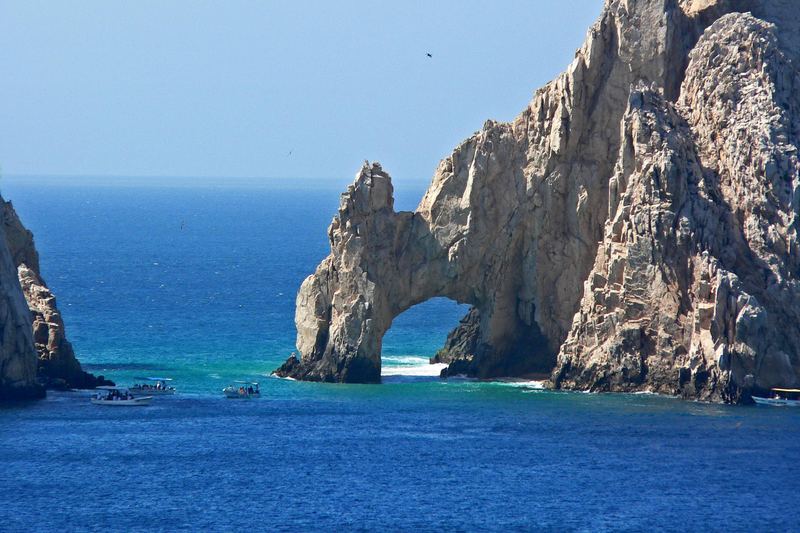
Los Cabos is a different kind of beautiful. Instead of jungle and lagoons, you get cactus-studded mountains, granite arches and deep-blue water. Desert sunsets set the mountains glowing and evenings in winter can be cool enough for a sweater. It is some of the most striking coastal scenery in North America.
Neither is better; they suit different imaginations. If you want to float in warm, clear water and explore jungle, the Riviera Maya fits. If you want a landscape that feels raw and cinematic from a clifftop suite, Los Cabos does it better.
Swimming and the Sea
This is the biggest practical difference. On the Riviera Maya, the sea is generally calm and swimmable, with reef close to shore at Puerto Morelos, green turtles grazing at Akumal and Cozumel's dive sites a ferry ride from Playa del Carmen. Add cenote swims and you could spend every day in the water.
In Los Cabos, many beaches on the Pacific side and parts of the Corridor have strong currents and dangerous shore breaks. Safe swimming is limited to spots such as Medano Beach in Cabo San Lucas and the protected bays of Santa María and Chileno, which are also the best for snorkeling. Many couples swim mostly in resort pools. The long day trip to Cabo Pulmo National Park, with one of the few living hard-coral reefs in the Sea of Cortez, is the big underwater outing.
Sargassum flips the picture in spring and summer. The Riviera Maya can see seaweed on its beaches from late spring into summer, while Los Cabos never does.
Best Time to Go
The Riviera Maya's sweet spot runs from December through April, with reliable sun, lower humidity and the calmest seas. May through July is hotter, cheaper and the most likely time for sargassum; resorts rake daily, but conditions vary week to week. August through October is the heart of hurricane season. November is a lovely shoulder month.
Los Cabos is most comfortable from November through May, with warm, dry days and cool evenings. From roughly December through April, humpback whales visit, sometimes visible from shore. June and July grow hotter but stay mostly dry. August through October brings intense heat, humidity and the peak of the Pacific hurricane season, with September typically the rainiest month.
The upshot: for a winter honeymoon, both are excellent, with Los Cabos adding whales. For a late spring or early summer trip, Los Cabos is the safer beach bet because there is no sargassum. For late summer, both carry storm risk, so buy travel insurance either way.
Where You Will Stay
Los Cabos is a room-only luxury destination at heart. Esperanza, Auberge Collection, on the headland of Punta Ballena, is an intimate Forbes Five-Star resort with Beachfront Junior Suites that have infinity-edge hot tubs and Cocina del Mar, one of Mexico's most romantic restaurants. Las Ventanas al Paraíso, A Rosewood Resort, near San José del Cabo, is known for 24-hour butlers and rooftop-terrace suites with private hot tubs. Cabo San Lucas has lively hotels near Medano Beach and San José del Cabo has boutique stays near its historic center.
The Riviera Maya offers more styles. El Dorado Maroma has the Palafitos, widely credited as Mexico's first overwater bungalows, kid-free and all-inclusive. Hotel Xcaret Arte is a kid-free, art-filled all-inclusive with access to the Xcaret parks. In Mayakoba, Rosewood Mayakoba has Forbes Five-Star suites with plunge pools and boat docks, while Banyan Tree Mayakoba has all-pool villas and a superb spa. If you want all-inclusive, the Riviera Maya is the clear choice.
Getting There
Geography decides this for many couples. Los Cabos International (SJD) has nonstops from many US cities, with flights of about two hours from Los Angeles and other West Coast cities and roughly three to five hours from much of the central and eastern US. Corridor resorts are 20 to 45 minutes from the airport.
Cancún International (CUN) has nonstops from cities across the US, typically two to five hours. Maroma and Mayakoba are about 30 to 45 minutes from the airport, Playa del Carmen and Xcaret about 45 minutes to an hour. The newer Tulum airport (TQO) helps for resorts in the south.
Rule of thumb: West Coast and Mountain states usually reach Cabo faster, while the East Coast and Southeast usually reach Cancún faster. At both airports, pre-book a private transfer and walk straight past the timeshare sellers in arrivals. Renting a car for day trips works on both coasts; on the Riviera Maya, watch for speed bumps.
Days Out Together
The Riviera Maya gives you a long list. Swim in jungle cenotes early in the morning, before tour groups arrive. Snorkel with sea turtles at Akumal with a licensed guide. Watch sunrise over the clifftop Tulum ruins and bike through the jungle to the pyramid at Cobá. Glide by boat through the Mayakoba mangroves or take a Yucatecan cooking class to learn cochinita pibil. In the evening, Playa del Carmen's Fifth Avenue has restaurants of every kind.
Los Cabos is more focused. Take a boat to El Arco at Land's End, ideally a private sunset charter. Look for sea lions on the rocks. In winter, whale watching is the headline. Snorkel Santa María Bay, ride an ATV or a camel through the desert, have dinner among the crops at an organic farm near San José del Cabo and stroll the Thursday Art Walk in season. Todos Santos, about an hour north, is an artsy day trip. Cabo rewards couples who love food and spas. The Riviera Maya rewards couples who love to explore.
Cost, Safety and Combining Coasts
The Riviera Maya has the wider range of prices. Kid-free all-inclusives often fall between the mid-hundreds and over $1,000 a night for two, food and drinks included. In Los Cabos, the Five-Star resorts frequently start above $1,000 a night for the room alone, then climb steeply for villas and suites with private pools. Mayakoba is priced similarly at the top. Taxes and service charges add a significant amount everywhere. All figures are approximate.
Safety advisories in Mexico are set by state, so check Baja California Sur or Quintana Roo before you go. On both coasts, use pre-booked transfers and taxis your hotel calls at night. Downtown Cabo San Lucas gets rowdy late around the bars, as do parts of Playa del Carmen. Dengue circulates in Mexico, so pack repellent; if you're pregnant or hoping to be soon, check CDC travel health notices.
Combining coasts needs a domestic flight, often via Mexico City, which costs most of a day. Save it for trips of ten days or more.