The Beaches
Punta Cana's beaches are its whole identity. Long stretches of white sand run for miles, with palms leaning over them and reefs offshore that keep much of the water calm, shallow and pale aquamarine. Early mornings are lovely for walks of a few miles with only joggers and fishermen for company. Juanillo Beach in Cap Cana is polished. Macao is a public beach backed by dunes and good for watching surfers. Uvero Alto is wilder, with rougher Atlantic water.
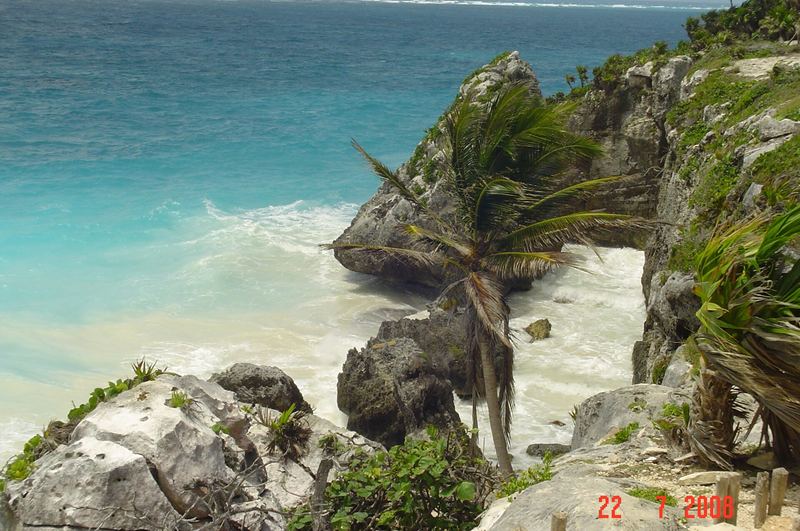
The Riviera Maya's beaches are excellent too, with powdery white sand and turquoise water, but they are more varied and often broken up by rocky points, mangroves and coves. Maroma is one of the coast's most celebrated beaches. Akumal's bay is shallow and full of turtles. Puerto Morelos has a protected reef close to shore. If you mostly want to walk and lie on the sand, Punta Cana's long beaches win. If you want to swim over coral from the beach, the Riviera Maya does it better.
Life Beyond the Resort
This is where the Riviera Maya pulls ahead. Inland lie thousands of cenotes, jungle sinkholes of clear fresh water that the ancient Maya considered sacred. Swimming in one early in the morning, with shafts of sunlight through the rock, is the coast's signature experience. Add snorkeling with green turtles at Akumal, dives off Cozumel, sunrise at the clifftop Tulum ruins and a bike ride through the jungle to the pyramid at Cobá. Playa del Carmen's Fifth Avenue offers restaurants and nightlife.
Punta Cana has more to do than many couples expect, but less variety. The classic outing is a catamaran to Saona Island, with a stop at the shallow natural pool where starfish dot the sand. Indigenous Eyes Ecological Park near the airport has a dozen spring-fed freshwater lagoons. Golfers can play Punta Espada or Corales along the cliffs. Sunset horseback rides and lunch at a Macao fish shack round things out. If one of you gets restless by day three, choose the Riviera Maya.
Resorts and Room Styles
Punta Cana is all-inclusive country, with kid-free resorts competing hard on swim-up suites, couples' spa rituals and long lists of restaurants. Cap Cana is the most upscale area, with Eden Roc Cap Cana as the boutique luxury pick and Sanctuary Cap Cana and Secrets Cap Cana as kid-free all-inclusives. Tortuga Bay near the cape is a small hotel of villas. Uvero Alto has spacious kid-free resorts such as Excellence Punta Cana and Zoëtry Agua Punta Cana. Read the fine print, since some kid-free resorts share a beach with a family complex.
The Riviera Maya offers more distinctive rooms. El Dorado Maroma's Palafitos, widely credited as Mexico's first overwater bungalows, have glass floors and private pools and are kid-free and all-inclusive. Hotel Xcaret Arte is a kid-free, art-filled resort whose rate includes airport transfers and access to the Xcaret parks. In Mayakoba, Rosewood Mayakoba has Forbes Five-Star suites with plunge pools and boat docks, while Banyan Tree Mayakoba has all-pool villas and a superb spa.
Sargassum and the Calendar
The two coasts share a calendar, for better and worse. December through April is peak season in both, with dry, sunny, breezy weather and highs in the low to mid 80s Fahrenheit. Rates peak over the holidays and spring break, so book early.
Sargassum seaweed is the wild card on both. Large mats can wash ashore from roughly spring through late summer, with conditions changing week to week and beach to beach. Resorts rake the sand each morning, but the water near shore can look brown on bad days. In Punta Cana, coves and reef-protected beaches such as parts of Cap Cana tend to fare better. In the Riviera Maya, the cenotes, pools and inland adventures are untouched, which gives you a reliable plan B.
Hurricane season covers June through November, with the highest risk from August through October. May and June are good value in Punta Cana, while November is a lovely shoulder month on the Riviera Maya.
Flights and Transfers
Both are about as easy as a Caribbean honeymoon gets. Punta Cana International (PUJ) is compact and open-air, with thatched terminals and nonstops from cities including New York, Newark, Boston, Atlanta, Charlotte, Chicago, Philadelphia and Miami. Cap Cana and Bávaro are about 15 to 25 minutes away and Uvero Alto about 40 minutes.
Cancún (CUN) has nonstops from cities across the US. Maroma and Mayakoba are roughly 30 to 45 minutes away, Playa del Carmen and Xcaret 45 minutes to an hour. The newer Tulum airport (TQO) can be handy for resorts in the south.
In both, pre-book a private transfer. In Cancún it lets you walk straight past the timeshare sellers in arrivals. Renting a car makes more sense on the Riviera Maya, where the highway is good and cenotes and ruins are spread out; watch for speed bumps. In Punta Cana, driving in Bávaro is chaotic and night driving on rural roads is best avoided, so most couples use resort shuttles and licensed taxis.
Price and Value
Punta Cana's strength is competition. With so many all-inclusives on one coast, resorts fight for business, promotions are frequent and standards at good kid-free properties are high across many price levels. That usually makes it the better value for a pure resort week. Your main extras are excursions, spa time and tips for staff.
The Riviera Maya spans a wider range. Kid-free all-inclusives such as El Dorado Maroma are strong value for an overwater room. Hotel Xcaret Arte costs more but bundles in parks and transfers. At the top, the room-only Five-Star resorts of Mayakoba frequently start above $1,000 a night and climb steeply for villas. Budget too for cenote admission, guides, a rental car and meals in Playa del Carmen or Tulum, which are worth leaving the resort for. Taxes and service charges can add a significant amount to quoted rates in both. All prices here are approximate. For a budget-conscious couple, Punta Cana stretches further.
Food, Safety and Small Things
In Punta Cana, most meals happen at the resort, which may have anywhere from four to a dozen restaurants; book the à la carte ones on arrival. Leave at least once for fresh fish in Cap Cana or Puntacana Village and fried fish with tostones at Macao. Order a frosty Presidente and toast with mamajuana. On the Riviera Maya, Yucatecan food is a highlight: cochinita pibil, sopa de lima, panuchos and marquesitas from street carts at night.
The US State Department rates the Dominican Republic at Level 2 because of crime. Mexico's advisories vary by state, so check Quintana Roo before you go. In both, use pre-booked transfers or licensed taxis, keep valuables in the safe and book excursions through established operators rather than beach vendors. At night in Playa del Carmen and Tulum town, stay on busy streets. Drink bottled or purified water. Dengue circulates in both, so pack repellent. If you're pregnant or hoping to be soon, check CDC travel health notices.