Bushveld Versus Floodplain
The Sabi Sand is Lowveld bush, threaded by the Sand River and bordered by the Sabie. In winter the vegetation thins and you can see far into the woodland. In summer everything turns green and thick. It feels like the classic African safari: dirt tracks, big trees, open vehicles and a tracker on the front seat.
The Okavango looks like nowhere else. Silver channels and water lilies surround islands crowned with palms while the floodplains change with the seasons. From the air, during a doors-off helicopter flight, it looks like a map drawn in water. On the ground you might cross a channel by boat to reach a game drive.
If you want water woven into every day, the Delta is unique. If you prefer a traditional bush setting with a river view from your suite, the Sabi Sand delivers it beautifully.
Wildlife and Sightings
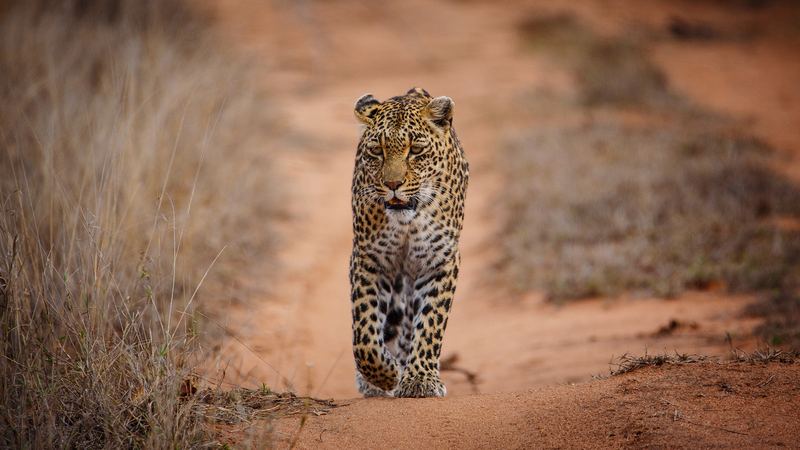
Both have all of the Big Five. The Sabi Sand is famous for leopards that have grown up with vehicles nearby, so sightings tend to be long and close. Lions, elephants, buffalo, rhinos, cheetahs, wild dogs and around 500 bird species are all present. Rangers can follow animals off-road. Vehicle numbers at sightings are managed.
The Delta's wildlife comes with water. Elephants wade chest-deep across channels, red lechwe bound through the shallows and hippos grunt beyond the deck at night. Predator viewing at land camps near Chief's Island and in Moremi is excellent. Rhinos have been reintroduced to protected areas. Walking safaris on islands add a different perspective.
The Sabi Sand gives you more reliable leopard time. The Delta gives you more variety of setting and the chance to see big game from a canoe, which few places on earth can match.
Lodges and Camps
The Sabi Sand is home to some of the continent's most celebrated lodges. Singita Boulders Lodge, on the Sand River, has glass-walled suites with plunge pools and a strong wine program. Londolozi, in the Varty family since 1926, has several camps, with Tree Camp and the Private Granite Suites suited to couples who want more seclusion. Expect elegant design, spas and fine dining.
Delta camps are smaller and more pared back, though still very comfortable. Raised tented suites have outdoor showers, decks and often plunge pools. Wilderness Mombo, on Chief's Island, starts from about $6,000 a night. Wilderness Vumbura Plains, mixing water and land activities, starts from roughly $4,000. Belmond Eagle Island Lodge starts from about $2,000 (all approximate). Many couples split their stay between a water camp and a land camp.
Both styles feel romantic. The Sabi Sand leans toward luxury hotel; the Delta leans toward intimate bush camp.
Getting There From the US
Both trips start with a nonstop flight to Johannesburg (JNB), roughly 15 to 16 hours from Atlanta or Newark.
The Sabi Sand is the simpler leg. Short scheduled or charter flights of about an hour reach Skukuza Airport (SZK) or a private airstrip near your lodge. You can arrive on a morning flight and be on an afternoon game drive the same day.
The Delta takes longer. Most couples overnight in Johannesburg to recover, then fly to Maun (MUB) and connect to a light aircraft for a 20 to 60 minute hop to a dirt strip near camp. Moving between camps means more short flights.
In both cases, small planes cap luggage, usually around 20 kg per person in soft bags without wheels. Store anything extra at your Johannesburg hotel. The Delta's extra travel time is part of what keeps it so quiet.
What It Costs
Neither is a budget trip. The Sabi Sand's best-known lodges charge premium all-inclusive rates, especially in the dry winter. The Delta is pricier still on average, because Botswana deliberately keeps visitor numbers low. Established Delta camps in private concessions generally run about $900 to $2,000 per person per night, with top-tier camps in peak season well beyond (approximate). Light aircraft transfers add a few hundred dollars per leg.
The Sabi Sand offers a slightly wider range of price points among its lodges. The shorter journey also means lower transfer costs. If you are planning a combined South Africa trip with Cape Town, keeping the safari in the Sabi Sand makes the overall budget easier to manage.
Green-season rates bring prices down in both places. In the Delta, discounts between November and March can be significant.
When Each One Shines
In the Sabi Sand, game viewing is good year-round. The dry winter months, roughly May to September, are best, with thinner bush and animals gathering near water. Summer from November to March brings green scenery, newborn animals and afternoon storms, often with lower rates.
The Delta runs on its own clock. Rain falls in the Angolan highlands early in the year. The flood reaches the Delta months later, peaking roughly June to August. That means full channels during the dry winter, ideal for mokoro trips. September and October are hot and outstanding for predators. November to March is the green season, with storms and lower prices, though some water activities depend on levels.
For a June to September honeymoon, both are at their peak. For the southern summer, the Sabi Sand is often the steadier choice.
Health, Comfort and Doing Both
Both areas carry malaria risk. Talk to a travel clinic about prevention, use repellent at dusk and sleep under the nets provided. If you're pregnant or hoping to be soon, check CDC travel health notices for South Africa and Botswana. In both, animals wander through unfenced camps, so staff escort you after dark.
Winter mornings on open vehicles are cold in both places, so pack warm layers along with neutral colors.
Combining them is very doable. Fly from Johannesburg to the Sabi Sand for three nights, return to Johannesburg and continue to Maun for three or four nights in the Delta. The contrast between leopards in the bushveld and canoes in the channels makes for a remarkable trip. With time left over, finish in Cape Town or the Cape Winelands to slow down before flying home.