What You See From the Vehicle
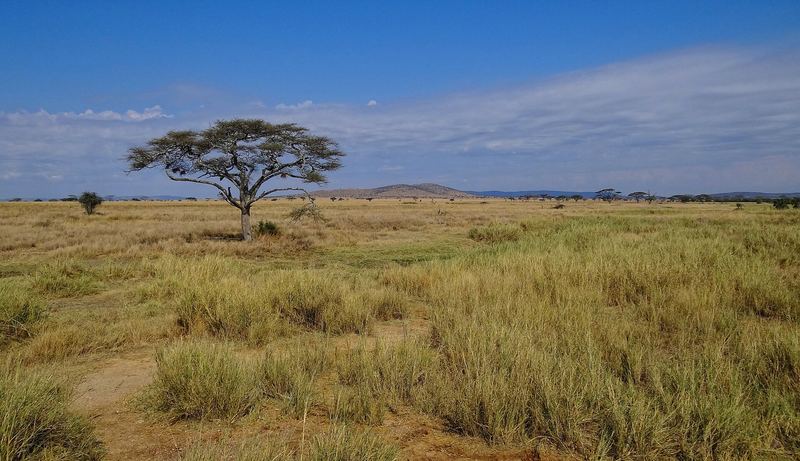
In the Serengeti the show is numbers. Columns of wildebeest stretch past the horizon, lions lounge on kopjes and cheetahs hunt in the open. If your dates line up, a river crossing on the Grumeti or Mara is one of the most dramatic scenes in nature.
The Delta mixes water and big game in a way nowhere else does. Elephants wade across channels, red lechwe antelope bound through the shallows and African fish eagles call from dead trees, all in the same morning. All of the Big Five live here, including reintroduced rhinos in protected areas. Predator sightings in the dry months are outstanding.
You see more animals in a Serengeti migration week. You see them with less company and in more varied settings in the Delta, often from a boat or on foot as well as from a vehicle.
Privacy and Pace
This is the Delta's trump card. Botswana chose small, expensive camps over volume decades ago. Each private concession hosts only a few camps, so a leopard sighting usually has one vehicle beneath it. Guides can drive off road, run night drives and lead walks on islands. Camps often have eight to twelve tents and staff learn your names on day one.
The Serengeti varies by region. Inside the national park, especially around Seronera and the northern river crossings in peak months, you share roads with other vehicles. The private reserves on its edges, such as Singita Grumeti, copy the concession model with off-road driving, walks and night drives.
If the idea of a cluster of jeeps around one lion would spoil the moment, the Delta or a Serengeti private reserve is the answer. If you mainly want the herds, the park itself delivers.
Seasons Side by Side
The Serengeti runs on rain. Calving on the southern plains is roughly January to March, the Western Corridor and Grumeti crossings come around May to July and the northern Mara River crossings run from about July to October. April and May are the long rains, when some lodges close.
The Delta runs on a flood that arrives months after the rain. Water from Angola reaches the top of the Delta around March and peaks roughly June to August, in Botswana's dry, clear winter. June to September is peak season. September and October are hot, often past 100°F in October, with superb predator viewing. November to March is the green season with storms, newborn animals and much lower rates, though some channels run low.
In July and August both are at their best. That makes it a decision about style rather than weather.
Where You Will Stay
In the Serengeti, Four Seasons Safari Lodge Serengeti offers 77 rooms, suites and villas inside the park around a busy elephant waterhole, plus a spa and terrace suites with plunge pools. Singita Sasakwa Lodge is a hilltop manor in the Grumeti reserve with nine cottages and a villa, each with an infinity pool. Mobile tented camps follow the herds for a simpler, closer experience.
In the Delta, the best plan is usually two camps of three nights each: one water camp for mokoro and boating, one land camp for game drives. Wilderness Mombo on Chief's Island has a long reputation for game viewing. Wilderness Vumbura Plains mixes drives and mokoro. Belmond Eagle Island Lodge has plunge pools over the floodplain and sundowners at the Fish Eagle Bar. Ask about a sleep-out deck for one night under the stars.
The Bill
All figures are approximate and swing with season.
The Serengeti spreads widely. Mid-range luxury tented camps run roughly $600 to $1,200 per person per night, while top lodges such as Singita often pass $1,500 per person in high season, typically including meals, drinks and game drives. Park fees come on top, charged per person per day.
The Delta is expensive by design. Established camps run about $900 to $2,000 per person per night all-inclusive, with top camps in peak season far higher. Wilderness Mombo is among the priciest safari stays in Africa. Light aircraft transfers between camps add a few hundred dollars per leg.
Green season is the Delta's great discount, with rates that can fall by a third or more from November to March. The Serengeti's cheapest months are the long rains.
Flights and Logistics
For the Serengeti, US couples usually connect through Europe or the Middle East to Kilimanjaro (JRO), spend a night near Arusha and fly by light aircraft for one to two hours to park airstrips.
For the Delta, the usual route is a nonstop from Atlanta or Newark to Johannesburg, a night to recover and a morning flight to Maun (MUB). From there a small Cessna takes 20 to 60 minutes to a dirt strip near camp. Johannesburg nonstops make the Delta slightly simpler to reach from the US than many expect.
Both require soft bags without wheels for the small planes. The Delta's limit is usually about 20 kg per person including camera gear. Leave extra luggage at your Johannesburg or Arusha hotel.
The Second Chapter
A Serengeti safari almost writes its own ending. Zanzibar is a short flight from park airstrips, with warm turquoise water, Stone Town's alleys and dhows at sunset. Four or five nights on the island turns the trip into the classic bush-and-beach honeymoon.
The Delta has no beach next door. Botswana's add-ons are wilder: the Chobe riverfront for elephant herds and boat safaris, the Makgadikgadi Pans for meerkats and nights on the salt. Victoria Falls is about 90 minutes from Kasane. Couples who want sand often fly on via Johannesburg to Cape Town or to Mauritius.
If a beach is non-negotiable and you want it close, the Serengeti wins. If more wilderness sounds better than more sand, Botswana's circuit is hard to beat.