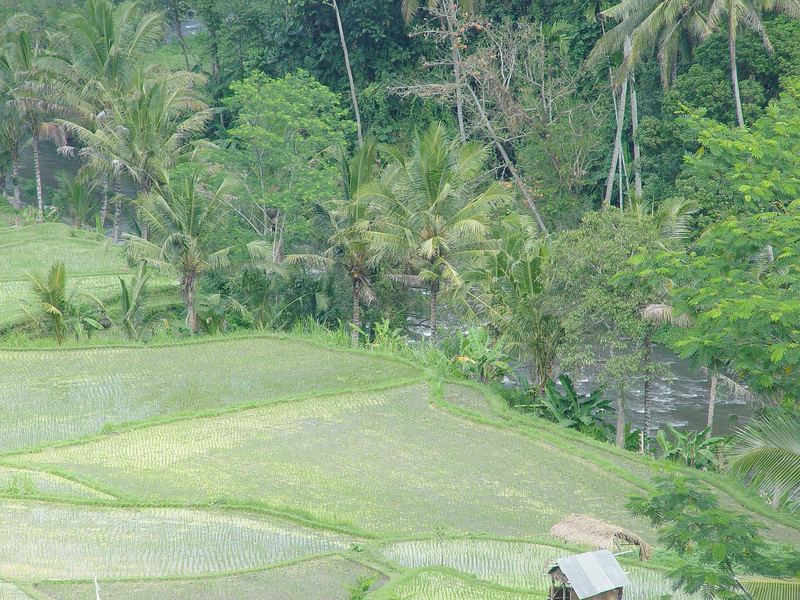
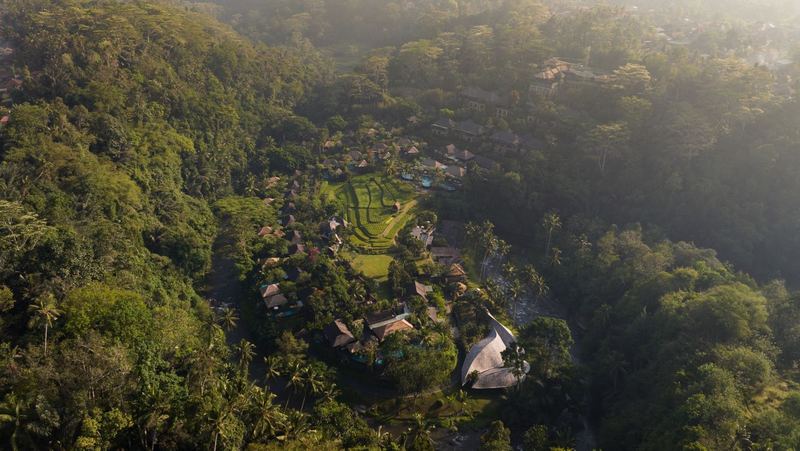
Take a 19th-century expedition camp and hand it to Bill Bensley, the designer famous for turning hotels into fairy tales. That is Capella Ubud: a string of canvas tents strung along a jungle ridge in the artist village of Keliki, each one dressed as the quarters of a fictional early settler. One belongs to the photographer, another to the cartographer, another to the baker. Antique trunks, brass fittings, campaign furniture and copper bathtubs fill the rooms, while outside a teak deck drops away to a private saltwater pool and a view of rice paddies and the Wos River.
It is whimsical, yes, but far from a gimmick. With only 22 tents and a single lodge, the camp feels more like an exclusive house party than a resort. In 2020, readers of Travel + Leisure voted it the best hotel in the world. It has since earned recognition in the MICHELIN Key guide. Couples still arrive expecting theater and leave talking mostly about the people.
Highlights at a glance
- Bill Bensley-designed tents themed around 19th-century settlers
- Private saltwater pool and copper tub in every tent
- Api Jiwa: an intimate fire-cooked tasting menu at a chef's counter
- Moon-phase spa treatments in canvas wellness tents
- 24-hour personal Culturalist for every tent
- Voted No. 1 hotel in the world by Travel + Leisure readers in 2020
- Recognized in the MICHELIN Key guide
Life on the Ridge
Keliki sits in the Tegallalang highlands north of Ubud, a quieter, greener corner of Bali where farmers still work the terraces by hand. The camp follows a narrow ridgeline above the Wos River. Bensley famously built it without felling trees, threading boardwalks and tents between the existing trunks.
The result is a place where nature does most of the decorating. Mornings start with birdsong and drifting mist; afternoons often bring a rain shower that drums on the canvas roof. Central Ubud is about half an hour away by car and the resort runs a complimentary shuttle three times a day, but most couples find they leave less often than planned.
Inside the Tents
Calling these tents undersells them. Each one is a fully air-conditioned suite under canvas with a proper bed, a freestanding copper tub, indoor and outdoor showers and a large terrace with a daybed overlooking your own saltwater plunge pool. Wi-Fi works throughout.
The fun is in the details. Every tent is styled around its imagined occupant, so the Librarian's Tent is lined with classic hardcover books while others are filled with antique cameras, maps or nautical curios, some pieces drawn from the owner's personal collection. Many couples find themselves reading the objects like a museum exhibit on the first afternoon.
For more space, the two-bedroom Lodge offers extra room for a longer stay, though most honeymooners are perfectly happy in a one-bedroom tent. Each tent is assigned a 24-hour personal assistant, called a Culturalist, who handles everything from dinner bookings to arranging a blessing at the river temple.
Fire, Spice and Tiffin Boxes
Dining here is small-scale and deliberately varied. Mads Lange, the split-level main dining tent named for a 19th-century Danish trader who settled in Bali, serves Indonesian and international dishes from breakfast through dinner.
The headline act is Api Jiwa, an intimate counter where a multicourse, Asian-inspired dinner is cooked over open flame. With only around 16 seats split between a chef's counter and a few private tables, it is the kind of meal you plan the rest of the day around. It is reserved for guests aged eight and up.
The Mortar and Pestle Bar mixes cocktails using local herbs and spices pounded by hand. Every evening the Officer's Tent hosts complimentary cocktails and canapes. Room service arrives in stacked tiffin boxes, which makes a lazy lunch on your deck feel like a picnic. Ask your Culturalist about private dinners set up in the jungle or among the rice paddies.
Why guests fall for it
Auriga Wellness and Camp Rituals
Auriga, the camp's spa, is spread across three canvas wellness tents. Its menu follows the phases of the moon in keeping with Balinese and Hindu tradition. Treatments shift depending on whether the moon is new, waxing, full or waning, using organic products blended locally. You can also book therapies in your own tent, along with sound healing, reformer Pilates and sessions with local healers.
Beyond the spa, the camp has a rhythm of its own. The Cistern, a long heated saltwater pool, invites slow laps; The Armory, an open-air tented gym, hosts yoga and barre; and a small river temple at the base of the property holds daily blessing and purification rituals. In the evenings, guests gather at the campfire for snacks and black-and-white films about old Bali, weather permitting.
Days in the Highlands
The camp's rangers lead a weekly program that ranges from gentle to genuinely energetic: rice paddy walks, nighttime treks with flashlights through the fields, guided mountain bike rides along the ridges and visits to artisan studios in Keliki, a village long known for its miniature painting tradition.
For bigger outings, your Culturalist can arrange sunrise at the Tegallalang terraces before the crowds, temple visits, or a day in Ubud for the market and galleries. Then come back for afternoon tea at the Officer's Tent and a swim as the light softens.
What Guests Rave About
Ask returning travelers what made their stay. The answer is almost always the Culturalists. Reviews praise how personal the service feels, with assistants who seem to know what you want before you ask, from a surprise anniversary setup to an umbrella left on the path before a storm.
The design is the other constant. Guests love discovering the details in their themed tent and describe the copper tub and private pool as the moments they return to in memory. Many mention Api Jiwa as a meal of the trip. Plenty single out the small touches, like the complimentary evening cocktails and the campfire, as what made the camp feel social without ever feeling crowded.
Good to Know
- The camp is laid out along a steep ridge with many stairs and boardwalks. Staff can help with luggage, but this is not the right fit for anyone with limited mobility.
- Tents are air-conditioned, but you are still in a rainforest. Expect insects, geckos and the sound of heavy rain on canvas during the wet season, which is part of the charm.
- Return airport transfers are complimentary for stays of four consecutive nights or more, which makes a longer booking better value.
- Complimentary inclusions include Wi-Fi, limited daily laundry and the Ubud shuttle. Api Jiwa and private dinners book up, so reserve before you arrive.
- For temple visits, both of you should cover shoulders and knees; a sarong and sash are usually lent at the entrance.
- Dengue is present in Bali, so use repellent at dusk. If you're pregnant or hoping to be soon, check CDC travel health notices before you go.
Insider tips
- Book at least four nights to unlock the complimentary round-trip airport transfer.
- Reserve Api Jiwa for your second or third night, once you have recovered from the flight and can enjoy the full menu.
- Ask your Culturalist to check the lunar calendar so you can time a spa treatment with the full moon.
- Take a morning shuttle into Ubud and be back for afternoon tea before the rain usually rolls in.