
Why Honeymoon in Ubud
Ubud's appeal is that the days fill themselves without ever feeling rushed. You can spend a morning walking the Campuhan Ridge, where two rivers meet below a long grassy spine, then visit the galleries and museums that tell the story of Balinese art, from the Puri Lukisan Museum to the Neka Art Museum and Agung Rai Museum of Art.
The town's name is said to come from the Balinese word for medicine, a nod to its history as a source of healing herbs. That spirit lives on in its spas and wellness traditions. Even the resorts feel different here. Instead of beachfront strips, you get villas perched on the walls of river gorges and rooftops floating at canopy level. It suits couples who want culture and food with their pool villa. If you mainly want beach time, give Ubud two or three nights and save the rest for the coast.
When to Go
Ubud is warm year-round, with daytime highs typically in the mid-80s Fahrenheit and pleasantly cooler nights than the coast. The main variable is rain. The drier months run roughly from April to October, with August usually the driest month of all, which makes this the most comfortable time for temple visits and rice terrace walks.
July, August and the late-December holidays are peak periods, with the highest rates and the busiest roads. May, June and September offer a lovely balance of good weather and fewer crowds. The wet season, from about November to March, brings heavy downpours, often in the afternoon, followed by clear spells. January is typically the wettest month, but the landscape is at its most lush and rates are often lower.
Where to Stay
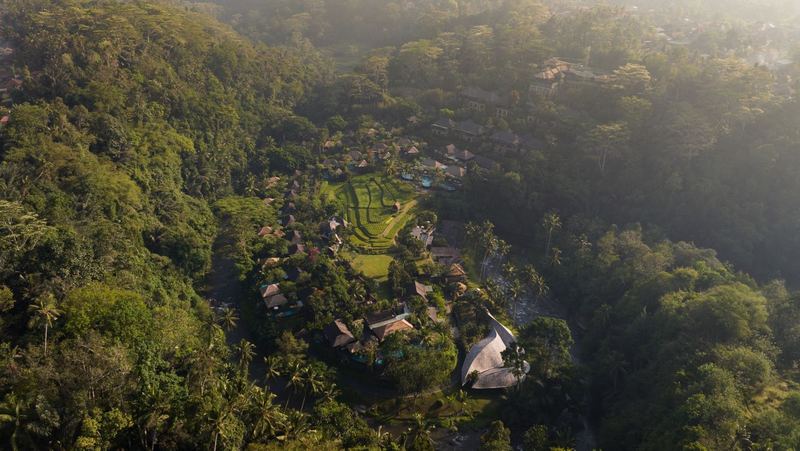
Ubud has some of the finest resorts in Asia, many of them lining the gorge of the Ayung River west of town.
Four Seasons Resort Bali at Sayan is famous for its arrival over a suspension bridge onto a rooftop lotus pond, with villas cascading down to the river and a seven-course Balinese chef's table at Sokasi. Mandapa, a Ritz-Carlton Reserve, sits further along the Ayung, with walled pool villas on the riverbank, a working rice field and dinners in Kubu's bamboo pods. Capella Ubud, designed by Bill Bensley, offers a completely different mood: themed luxury tents with saltwater pools on a jungle ridge in the artist village of Keliki.
Beyond these, the area includes boutique villas, wellness retreats and stylish guesthouses in the rice fields. For honeymooners, staying just outside central Ubud gives you peace and privacy while keeping galleries and restaurants within easy reach. As a rough guide, the big Ayung River resorts run from about $700 to well over $1,500 a night, while boutique villas in the rice fields can cost $150 to $400 (approximate, higher in July and August).
Romantic Things to Do
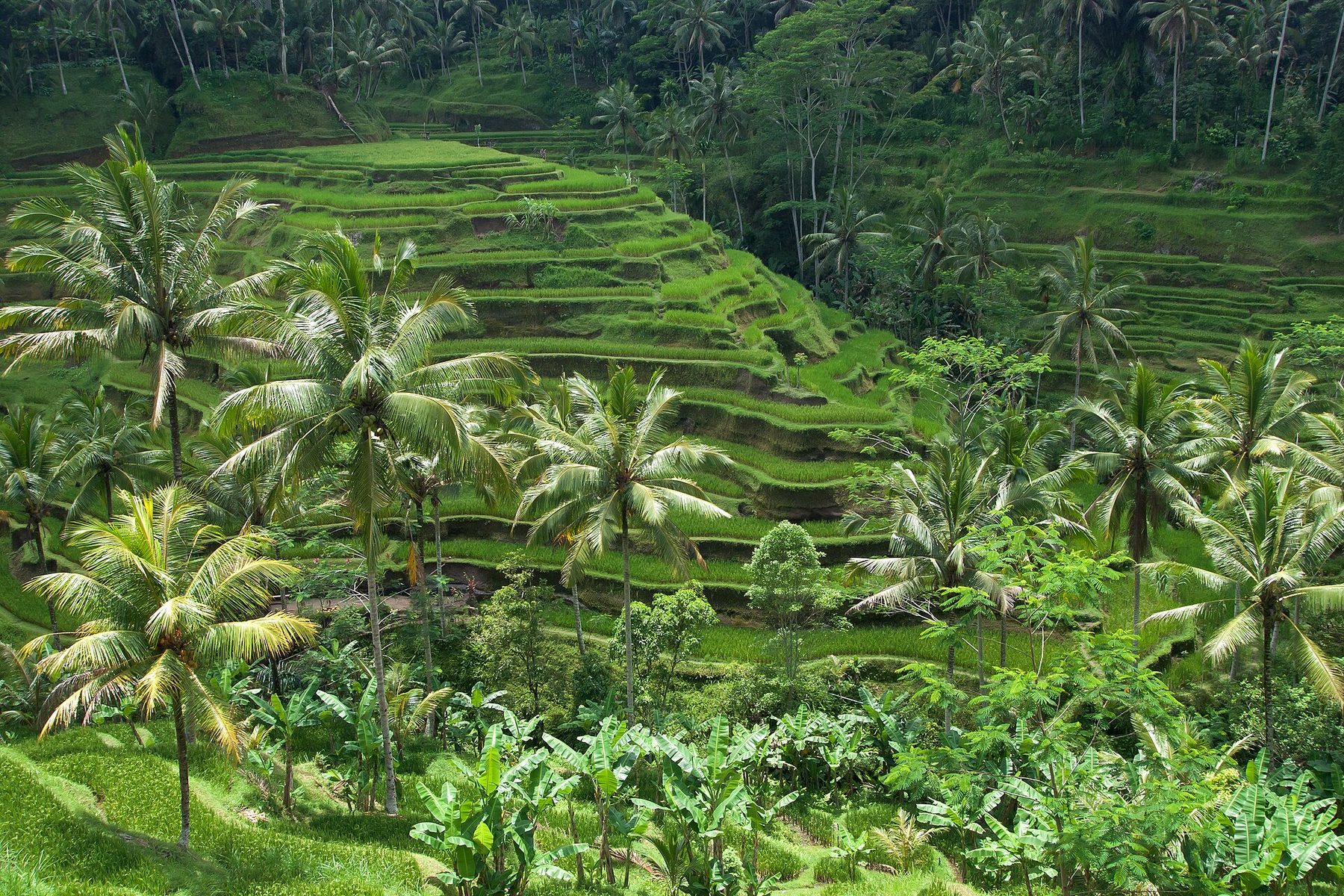
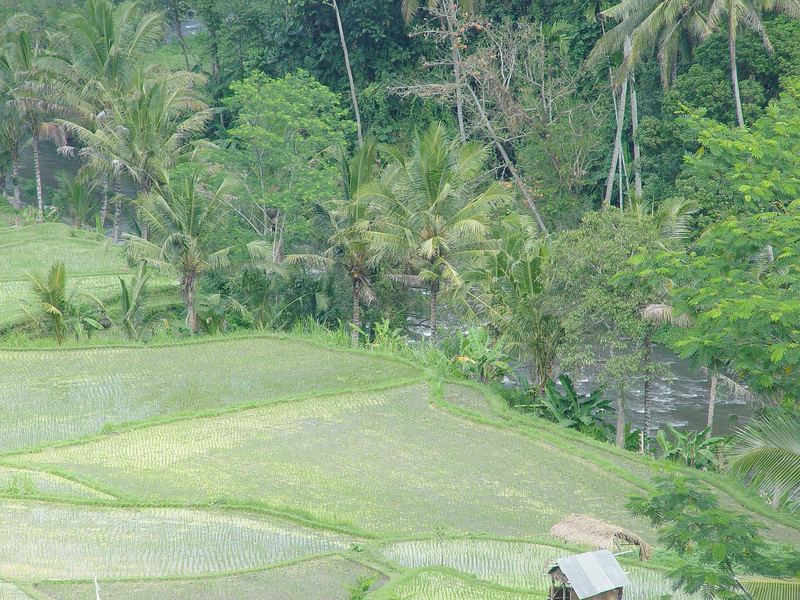
- Watch sunrise over the rice terraces at Tegallalang before the crowds arrive, or explore quieter paddies near your resort with a local guide.
- Take part in a water purification ritual at a temple such as Tirta Empul, guided by a priest or a knowledgeable local.
- Walk the Campuhan Ridge in the late afternoon for golden light over the valleys.
- Visit the Sacred Monkey Forest Sanctuary, home to hundreds of long-tailed macaques and a temple. Don't carry food and keep your distance, as the monkeys can bite.
- See a traditional dance performance, such as Legong or Kecak, in a temple or palace courtyard.
- Raft the Ayung River together, then reward yourselves with a couples' massage.
- Take a Balinese cooking class and learn to make spice pastes and sambal from scratch.
Getting There & Around
International flights land at Ngurah Rai International Airport (DPS) in the south of Bali. From the US, the journey typically involves connecting through an Asian hub such as Singapore, Tokyo, Seoul, Taipei or Hong Kong, with total travel time often exceeding 20 hours.
From the airport, Ubud is about 1 to 1.5 hours by car, though traffic can stretch that considerably. The easiest option is a private transfer arranged by your resort. Once in Ubud, most couples rely on resort shuttles, private drivers or ride-hailing apps; renting a scooter is common among travelers but not recommended unless you are experienced, as roads are narrow and busy. Hiring a driver for a full day is affordable and lets you combine several temples and rice terraces without stress.
Food & Drink
Ubud is one of Bali's best places to eat, with everything from simple warungs to ambitious tasting menus. Try babi guling (Balinese spit-roasted pork) and bebek betutu (slow-cooked duck in spice paste), both often served at celebrations. Nasi campur, a plate of rice with small portions of several dishes, is a perfect introduction to the island's flavors.
The town also has a thriving scene of healthy cafes, plant-based restaurants and coffee shops, reflecting its wellness community. Resort dining is a highlight in its own right: think a Balinese feast at Four Seasons Sayan's Sokasi, a fire-cooked tasting menu at Capella's Api Jiwa, or a candlelit cocoon at Mandapa's Kubu. Many resorts also offer private dinners in rice fields or by the river, which make for very romantic honeymoon evenings.
Honeymoon Tips
- Book at least three nights in Ubud. The journey from the airport takes time. The area rewards slow exploration.
- Carry a sarong and sash for temple visits; many temples lend them, but having your own is easier. Shoulders and knees should be covered.
- Keep an eye on your belongings around monkeys, which are skilled at grabbing sunglasses and phones.
- Ask your resort about local ceremonies during your stay; Balinese temple festivals are frequent and visitors are often welcome to watch respectfully.
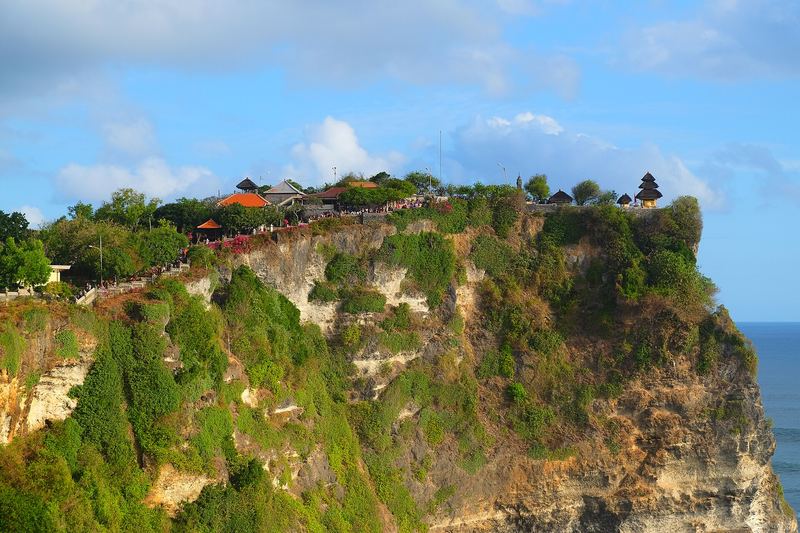
- Pair Ubud with Uluwatu or Sumba for a trip that combines jungle, coast and remote island adventure.
- Mosquitoes carry dengue in Bali, so use repellent at dawn and dusk. If you're pregnant or hoping to be soon, check CDC travel health notices for Indonesia.