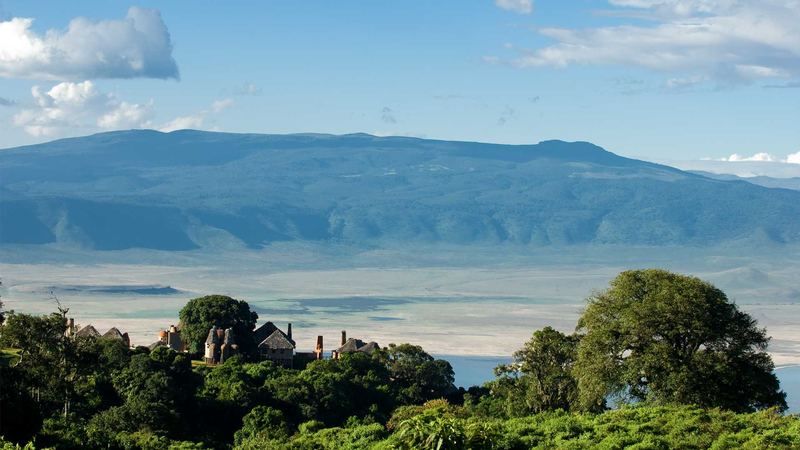
Damaraland Camp is a small, remote camp in northwest Namibia for couples who want big landscapes and a different kind of safari. It sits in the Huab River Valley within the Torra Conservancy, with ten elevated adobe and thatch suites looking out over rust-colored plains and flat-topped mountains. The main reason to come is the desert-adapted elephants, which you track on foot and by vehicle along dry riverbeds.
This is not a Big Five reserve. You come for the silence, the scale and the surprise of finding elephants, giraffes and oryx in a place that gets almost no rain. The camp is run by Wilderness as a joint venture with the local community and conservancy income supports families in the nearby village of De Riet.
It suits couples who have done a classic safari or want something wilder and who enjoy long drives, walks and empty horizons. It suits less well those who need lots of animals every hour or a spa. Rates are fully inclusive, with meals, local drinks and twice-daily activities, which makes budgeting easy. Two or three nights fit neatly between Sossusvlei and Etosha.
Highlights at a glance
- Ten elevated suites over the Huab Valley
- Tracking desert-adapted elephants
- Joint venture with the Torra Conservancy
- Fully inclusive rates
- Day trips to the Twyfelfontein engravings
Why Couples Love Damaraland Camp
The landscape is unlike anywhere else in Africa. The camp looks across wide plains toward the mountains and in the early morning the light picks out every ridge and boulder. At sunset, the colors move from orange to purple and the silence becomes almost physical.
The wildlife is fewer but more memorable. Desert-adapted elephants walk long distances between water sources and finding a herd moving down a dry riverbed is a moment few couples forget. You may also see giraffes, oryx, springbok and kudu.
The community model adds meaning. Damaraland Camp was one of the early partnerships between a safari company and a local conservancy and the Torra Conservancy has become a model for conservation in Namibia. Many of the staff come from the area and their pride in the place shows.
Suites to Book
Damaraland Camp has ten suites, each raised on a platform with adobe walls and a thatched roof. They are simple and comfortable rather than lavish, with views over the plains, en suite bathrooms and decks where you can sit with a coffee before the morning drive.
There is also a family unit, set apart for privacy, which suits families or two couples traveling together.
For a honeymoon, ask for a suite at the end of the row for the most privacy and the widest view. Mention the honeymoon when you book; the team can arrange a private dinner or sundowner. Nights can be cold in winter, from about June to August, so ask for extra blankets if you feel the chill. In summer, days are hot and the pool becomes the center of the afternoon.
Food, Drink and Camp Life
Meals are part of the rate and served in the main area, often under the sky. Expect hearty, home-style cooking with fresh bread, salads and grilled meats. Dietary needs can be handled with notice.
Local drinks are included, so sundowners and wine with dinner do not add to your bill. Premium imported brands and champagne cost extra.
After dinner, the camp often gathers around the fire. Staff from the village sometimes sing and the evening ends early because mornings start at dawn. The pool is the place for the hottest part of the day, with sundowners there in the evening. There is no spa, which keeps the focus on the landscape. Step away from the lights after dark; the stars here are extraordinary.
Why guests fall for it
Things to Do
Activities run twice a day and are included.
- Track desert-adapted elephants on foot and by vehicle, guided by experts who know their movements.
- Take nature drives and walks to look for oryx, giraffes, springbok and smaller desert life.
- Visit the Twyfelfontein rock engravings, a UNESCO World Heritage Site, on a day trip.
- Join a scorpion walk at night with UV torches.
- Visit De Riet to meet the community that partners with the camp.
- Stargaze from camp on clear nights.
Bring sun protection, a hat and good walking shoes for both of you. Days can be very hot in summer and nights cold in winter, so pack layers. Malaria risk in this part of Namibia is generally low but not zero, so talk to a travel health clinic before your trip.
Getting There
Damaraland is remote. By road, Twyfelfontein is about six hours from Windhoek Hosea Kutako Airport (WDH) and the camp is further along gravel tracks. Many couples drive themselves on a self-drive itinerary, often from Swakopmund or Sossusvlei, with a night or two in between.
The easier option is a light-aircraft flight from Windhoek or another camp to an airstrip near the camp, followed by a road transfer. Flights cut hours off the journey and give you aerial views of the desert. Luggage limits are strict, usually soft bags only.
Damaraland fits neatly between Sossusvlei and Etosha on a classic Namibia route. Plan two or three nights here to make the trip worthwhile.
Is It Worth It?
For couples who want a wilder safari with a purpose, yes. Damaraland Camp offers a landscape few people see, the chance to track desert elephants and a community model that gives the stay depth. The fully inclusive rate keeps things simple.
The trade-offs are distance and density. Game is sparse compared with Etosha or East Africa and you will spend time driving between sightings. Suites are comfortable rather than luxurious and there is no spa. Couples who want more polish might prefer one of the boulder lodges around Twyfelfontein, which also cost less. Those who want rhino tracking specifically might look at Desert Rhino Camp. If you want silence, desert elephants and a meaningful stay, Damaraland Camp is a fine choice.
Insider tips
- Ask for an end suite for the most privacy and the widest view.
- Spend at least two nights to give the elephant tracking a fair chance.
- Fly in by light aircraft if you want to avoid a long gravel drive.
- Pack a warm layer for winter mornings and evenings.