Newfoundland
Honeymoon in Canada

Newfoundland

Icebergs, outports and the warmest welcome on the North Atlantic.

1 hand-picked staysBest: Jun–SepGander International
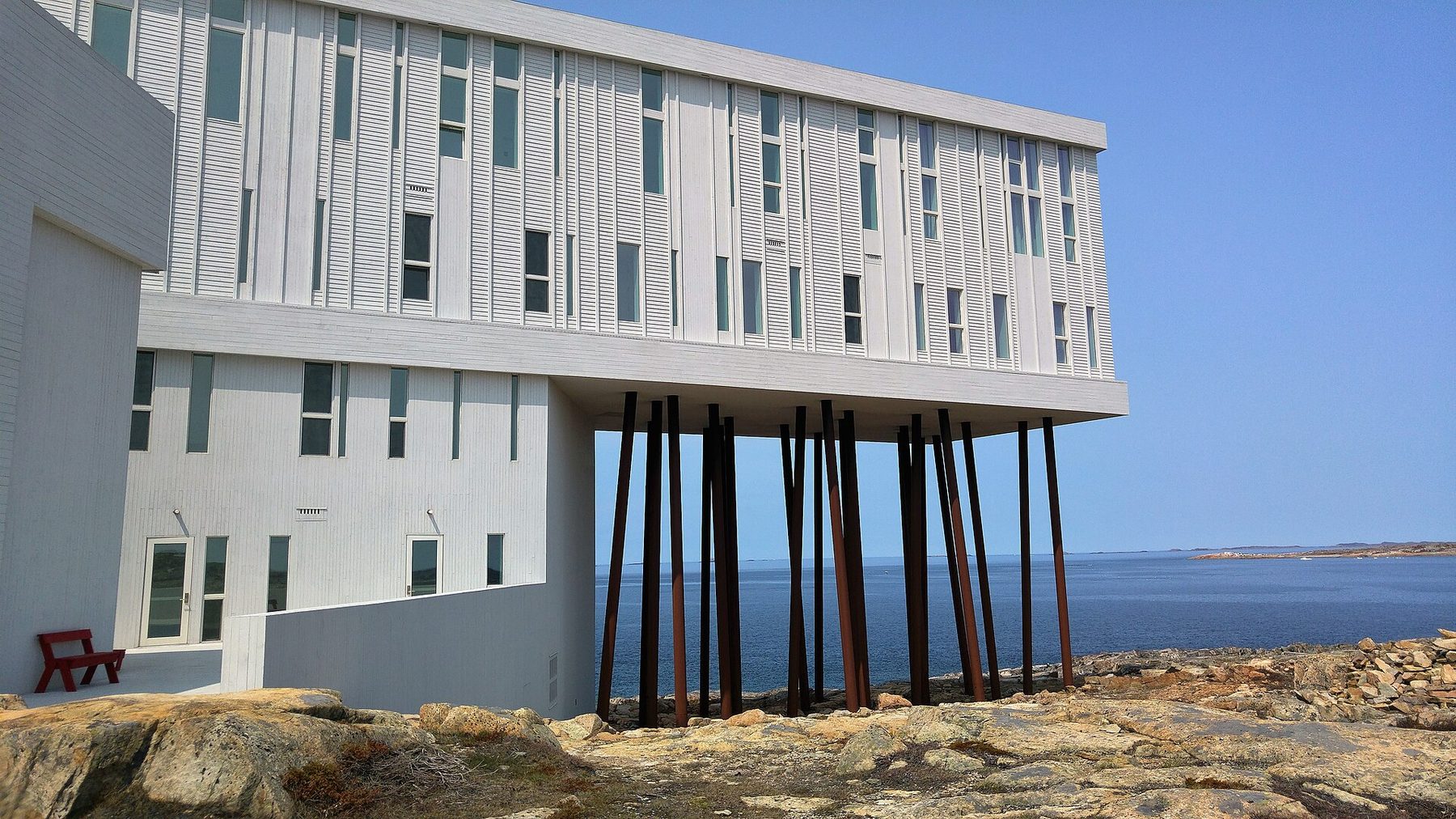
Photo: Fogo Island Inn · https://www.flickr.com/photos/72874821@N03/ · CC BY 2.0
The short answer

Newfoundland is an unexpected honeymoon for couples who prefer wild coast and warm people to pools: icebergs in late May and June, whales and puffins in summer and kitchen parties with fiddle music. The season runs roughly May to October. The Fogo Island Inn is a serious splurge with full board and a three-night minimum, while inns and B&Bs elsewhere are often moderately priced. Plan about a week with a rental car. Don't miss watching icebergs drift past the cliffs at Twillingate or Fogo Island.

Best for
  • Couples who want somewhere unexpected
  • Wildlife lovers and coastal hikers
  • Pairs who value culture over gloss
Maybe skip it if
  • You want warm weather and swimming
  • Fog-shifted plans would frustrate you

Newfoundland is not where your friends will expect you to honeymoon. That is exactly the point. This big, rugged island on Canada's far eastern edge feels like its own country, with its own time zone, its own dialects, its own music and a wildness that is hard to find anywhere else within a few hours of the US East Coast. In spring and early summer, icebergs calved from Greenland's glaciers drift south along the coast, sometimes grounding just offshore from tiny fishing villages painted in reds, yellows and blues.

For couples, Newfoundland offers romance of a rare kind: windswept clifftop hikes, humpback whales breaching beside your boat, puffins tumbling off sea stacks and evenings of fiddle music and storytelling where locals treat you like long-lost relatives. At its heart for honeymooners is Fogo Island, a remote island off the northeast coast where the extraordinary Fogo Island Inn has turned one of Canada's most traditional outport communities into an internationally celebrated destination. Pair a few nights there with the colorful capital, St. John's and you have a honeymoon story nobody else will have.

Best time to visit Newfoundland

Peak months: June, July, August, September

BestGood / shoulderLow season (rain, heat, storms or closures)
Best months
June to September
Shoulder
May and October
Stays from
about $2,100 a night for two
Getting there
Gander International (YQX), about 1 hour plus a ferry to Fogo Island
Country
Canada
From the US
Short hops to Calgary (YYC), Vancouver (YVR) or Gander/St. John's from many US cities.
Where to stay

Where to stay in Newfoundland

Every stay is hand-picked for couples. Tap a heart to save your favorites.

Don’t miss

Newfoundland at a glance

  • Iceberg spotting (roughly May–June)
  • Hike Fogo Island's coastal trails
  • Boat ride with a local fisherman
  • Traditional kitchen party with music
  • Puffin and whale watching

Best months: June, July, August, September

Why Honeymoon in Newfoundland

Newfoundland is about connection: with the landscape, with the people and with each other. Life moves at an unhurried outport pace. With fewer crowds than Canada's big-name parks, it is easy to feel you have a headland, a beach or a trail all to yourselves.

Nature does the heavy lifting. Iceberg Alley, the stretch of ocean along the northeast coast, delivers towering bergs in late spring. Summer brings humpback and minke whales feeding close to shore and some of North America's largest seabird colonies, including Atlantic puffins. Then there is the culture: centuries of Irish, English and Indigenous heritage expressed through music, food and an irrepressible sense of humor. For couples who value authenticity over gloss and would rather share a laugh in a kitchen than sip cocktails by a pool, it is a revelation.

When to Go

Newfoundland's travel season is short and sweet, roughly May to October.

  • Late May to June is iceberg season along the northeast coast, including around Fogo Island and Twillingate. Weather can be cool and foggy, but the bergs are worth it.
  • July and August bring the warmest weather, long days, festivals, whale-watching at its peak and puffins nesting on the coast. This is the busiest time, so book early.
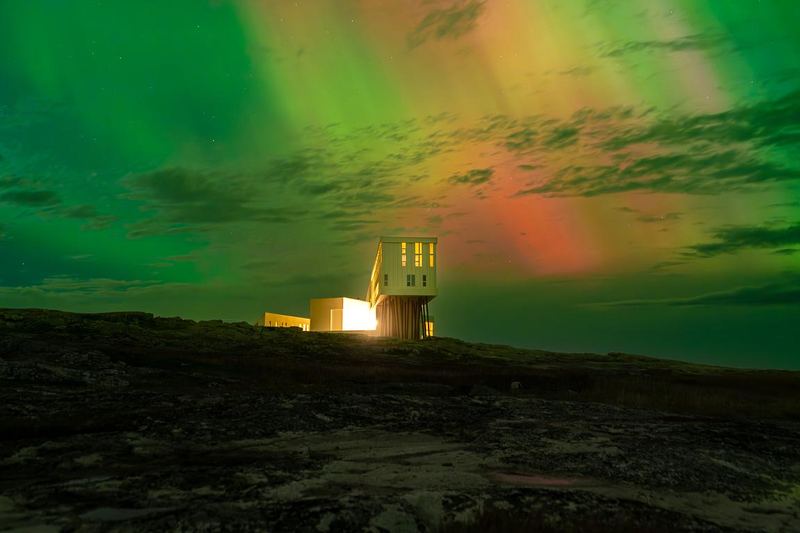
  • September and early October offer berry season, glowing autumn colors on the barrens, fewer visitors and the chance of northern lights on clear nights.

Winter is long, snowy and quiet. Many tourism businesses close. The Fogo Island Inn itself typically operates from about April to November. Whenever you go, pack layers and waterproofs; a sunny morning can turn foggy by lunch.

Where to Stay

The Fogo Island Inn is the reason many couples come to Newfoundland at all. Opened in 2013 on the rocky shore of Joe Batt's Arm, this strikingly modern building by Newfoundland-born architect Todd Saunders has just 29 rooms and suites, all facing the North Atlantic. Stays are full board, with seasonal dining rooted in island ingredients, rooftop hot tubs, wood-fired saunas and an island orientation led by a local Community Host. It holds Three Michelin Keys and is run as a social business that reinvests its surpluses into the community. A three-night minimum applies.

Elsewhere, accommodation is mostly small and characterful rather than lavish. St. John's has boutique hotels and heritage inns in the colorful downtown, while coastal towns like Twillingate and Bonavista offer B&Bs, cottages and simple inns, often with ocean views. Book early for summer, as the best places are small and fill quickly.

Romantic Things to Do

On Fogo Island, spend your days hiking coastal trails past sea stacks and berry barrens, visiting the Irish-settled village of Tilting, climbing Brimstone Head (which local lore calls one of the four corners of the flat earth) and dropping into the artists' studios scattered along the shore. Join a boat trip with a local fisher and try kayaking in a sheltered cove. End the day in a rooftop hot tub under dark skies.

On the main island, watch for icebergs from the cliffs at Twillingate and take a whale and puffin boat tour. At Elliston, the clifftop viewing area puts you close to the puffins. In St. John's, climb Signal Hill for wide harbor views and stand at Cape Spear, the easternmost point of North America, at sunrise. Then wander the fishing village of Quidi Vidi. If you have more time, Gros Morne National Park on the west coast is a UNESCO World Heritage Site of fjords and mountains.

Getting There & Around

Newfoundland is closer than most Americans think. Most travelers fly into St. John's (YYT) or Gander (YQX), usually connecting through Toronto, Montreal or Halifax. For Fogo Island, Gander is the nearest airport. From there it is roughly an hour to an hour and a half by car to the ferry terminal at Farewell, then about a 45-minute ferry ride across Hamilton Sound. The Fogo Island Inn can arrange a chauffeured transfer from Gander.

A rental car is essential for exploring beyond St. John's. Distances are large and roads are often quiet and scenic. Watch for moose, especially at dawn and dusk. Book rental cars and summer ferry crossings early. Note that Newfoundland runs on its own time zone, 30 minutes ahead of Atlantic time and 90 minutes ahead of Eastern.

Food & Drink

Newfoundland cooking is hearty, honest and increasingly celebrated. Cod is king: try it fresh, fried in fish and chips, as cod tongues or salted in traditional fish and brewis. Look for toutons, fried dough served with molasses, at breakfast. Also try Jiggs dinner, a boiled Sunday feast of salt beef and vegetables. Wild berries are everywhere in late summer and fall, from partridgeberries to bakeapples (as Newfoundlanders call cloudberries). They turn up in jams, desserts and cocktails.

At the Fogo Island Inn, the kitchen reinterprets these traditions with handlined cod, local shellfish, foraged herbs and preserving techniques islanders have used for generations. In St. John's, George Street is famous for its pubs. Visitors can join a lighthearted screech-in ceremony to become honorary Newfoundlanders. Local breweries even make beer with iceberg water.

Honeymoon Tips

Build in slack. Fog, wind and ferry schedules can shift plans, especially for island hops like Fogo, so avoid tight connections and plan at least four nights on the island itself.

Talk to people. The best experiences in Newfoundland often come from conversations: an invitation to a kitchen party, a tip about where the icebergs are, a story about a shipwreck. Friendliness here is legendary and genuine.

Track the icebergs. Websites and local social media groups map current sightings during the season, so check them before choosing your dates and day trips.

Pack for four seasons in a day. Warm layers, a waterproof shell and sturdy walking shoes are essential even in July. Bring binoculars for whales, seabirds and distant bergs, plus insect repellent for June and July, when blackflies and mosquitoes come out on calm days.
Plan the rest

Book the details for Newfoundland

Partners we use for flights, transfers, connectivity and cover.

Experiences & tours

Sunset cruises, snorkel trips, cooking classes and private guides. Most offer free cancellation.

Private airport transfers

A private driver waiting at arrivals with your name on a sign. No taxi lines after a long flight.

Car & scooter rental

Compare rental cars (and scooters where they make sense) across the big brands in one search.

Stay connected (eSIM)

Install a travel eSIM before you fly so your phone works the moment you land, with no roaming bill.

Travel insurance

Compare trip-cancellation and travel-medical plans built for US travelers.

Flights

Search flexible fares and clever routings to your honeymoon gateway.

FAQ

Newfoundland honeymoon FAQ

When is the best time to see icebergs in Newfoundland?

Icebergs typically drift along the northeast coast from about late May through June, sometimes earlier or later depending on the year. Fogo Island and Twillingate are among the best places to see them. Numbers vary greatly from season to season, so check online iceberg trackers before you travel and treat sightings as a bonus rather than a guarantee.

How do we get to Fogo Island?

Fly into Gander International Airport, usually via Toronto, Montreal, Halifax or St. John's. From Gander it is roughly an hour to an hour and a half to the Farewell ferry terminal, followed by a crossing of about 45 minutes. The Fogo Island Inn offers a chauffeured shuttle from Gander and can help plan your arrival and ferry timing.

Is Newfoundland expensive for a honeymoon?

It can suit many budgets. The Fogo Island Inn is a serious splurge, though its full-board rates include meals, gratuities and many activities. Elsewhere, inns, B&Bs and cottages are often moderately priced. Dining is good value too. Flights and rental cars can be pricey in peak summer, so book early to keep costs in check.

How many days should we spend in Newfoundland?

Plan about a week. Four nights on Fogo Island lets you settle in and absorb island life, while two or three nights in St. John's covers Signal Hill, Cape Spear and the city's food and music scene. With ten days or more, add Twillingate, Bonavista or the dramatic fjords of Gros Morne National Park.

Is Newfoundland a good fit if one of us is not a big hiker?

Yes. Many of the best moments need no hiking at all: whale and puffin boat tours, iceberg viewing from roadside lookouts, a kitchen party with fiddle music, long dinners in St. John's and the saunas and rooftop hot tubs at the Fogo Island Inn. The keen walker can head out on a coastal trail in the morning and you can meet for lunch in an outport cafe. Scenic drives along the coast fill the gaps nicely.

Honeymoon Huts is reader-supported. When you book through links on this page we may earn a commission, at no extra cost to you. Our picks are editorially independent. How we earn money.

Nearby

Honeymoon spots near Newfoundland

Same mood, elsewhere

If you love Newfoundland

More in USA & Canada