Green Cliffs or Black Lava
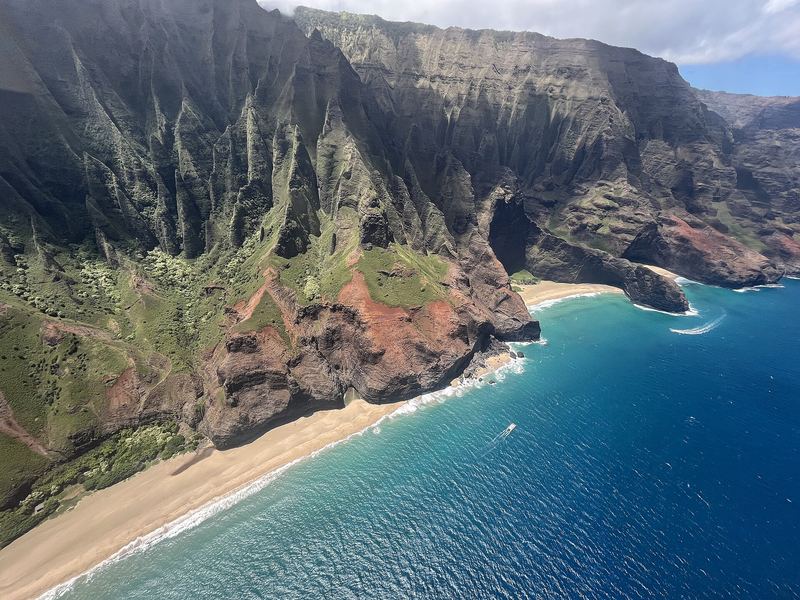
Kauaʻi wears its age as greenery. The North Shore around Hanalei has taro fields, one-lane bridges and mountains streaked with waterfalls behind a crescent bay. The west side holds Waimea Canyon and the Kōkeʻe lookouts down into Kalalau Valley. The south shore around Poʻipū is sunnier and calmer, with the island's larger resorts. Everything feels close, soft-edged and wet.
The Big Island wears its youth as rock. Along the Kohala Coast, the resorts sit on sheltered bays cut into black lava fields, with white sand beaches between them. Inland, the land climbs to Mauna Kea, where some of the world's largest telescopes sit on the summit. The southeast has the national park and the active crater. The east side around Hilo and Akaka Falls is as green as anything on Kauaʻi. By one common count the island holds 10 of the world's major climate zones. You notice it every 20 minutes of driving.
Your Adventure Days
Kauaʻi's adventures are mostly about seeing a coastline that roads cannot reach. In summer, catamaran and raft tours run along the Nā Pali cliffs, often with snorkeling and spinner dolphins. Helicopter tours fly year-round and show waterfalls and valleys you cannot see any other way. Hikers can walk the first two miles of the Kalalau Trail to Hanakāpīʻai Beach, though its currents are deadly, so stay on the sand. Add a guided Wailua River paddle and jungle hike to Secret Falls.
The Big Island's adventures are about elements. The manta ray night snorkel off Kona and Keauhou is its signature, with mantas feeding just below you in the lights. In the national park, walk part of the Crater Rim Trail, drive Chain of Craters Road to the sea arch and come back after dark when Kīlauea is active. Hike the switchbacks into Pololū Valley for a black boulder beach under cliffs. Book a guided sunset and stargazing tour on Mauna Kea rather than driving yourself, since the road needs four-wheel drive and the altitude is serious.
Hotels for Two
Kauaʻi's top honeymoon stay is 1 Hotel Hanalei Bay on the Princeville bluff, reopened in 2024 after a full transformation. Its views across Hanalei Bay to Makana, the peak known as Bali Hai, are some of the best in Hawaii. Its Bamford Wellness Spa is a good reward after a long hike. Expect well over $1,000 a night in high season. Many couples split the stay with a few nights at a Poʻipū beach resort, which often costs less and brings more reliable sun.
The Big Island has more choice at the top. On the Kohala Coast, Four Seasons Resort Hualalai has low-rise bungalows and a natural saltwater pool stocked with reef fish. Mauna Kea Beach Hotel, Laurance Rockefeller's 1965 resort, sits on one of the island's finest crescent beaches and is known for manta viewing from its point. Mauna Lani, an Auberge Resorts property, has ancient fishponds on its grounds. Top resorts often run about $1,000 to well over $2,000 a night in winter. Near the volcano, Volcano House and Volcano village cottages cost far less. All prices here are approximate.
Weather Coast by Coast
Both islands have a wet side and a dry side, so where you stay matters as much as when you go. On Kauaʻi, the mountains and North Shore take most of the rain. Poʻipū and the west side are noticeably sunnier. May to September is the season for Nā Pali boat tours and North Shore snorkeling at spots like Tunnels Beach. From October to April, big surf closes many North Shore beaches and can cancel boat trips, though humpbacks visit offshore. April to May and September to October balance weather, crowds and rates.
On the Big Island, the Kohala and Kona coasts are sunny most of the year, while Hilo is one of the wettest towns in the country. April through June and September through October are the sweet spots. Volcano viewing is not seasonal at all, since it follows Kīlauea's own schedule. For winter honeymoons, the Big Island's dry west coast is the more dependable beach base. For summer, Kauaʻi's North Shore is at its best.
Getting There and Getting Around
Kauaʻi's Līhuʻe Airport (LIH) has nonstops from several West Coast cities and connections through Honolulu. From the airport, Poʻipū is about 25 to 30 minutes and Princeville about 45 minutes to an hour. The island is small, but the highway does not make a full loop because the Nā Pali Coast blocks it, so the North Shore to Waimea Canyon means going the long way round. Traffic through Kapaʻa can be slow.
The Big Island's Kona International Airport (KOA) has nonstops from Los Angeles, San Francisco and Seattle, among others. It sits 20 to 40 minutes from the Kohala Coast resorts. Hilo (ITO) is mostly interisland. Distances are long: Kona to Hilo is about two hours and Kohala to the volcano close to three. A rental car is essential on both islands. Kauaʻi demands more advance booking for access, since Hāʻena State Park entry for out-of-state visitors needs a reservation that sells out. On the Big Island, book the manta snorkel early in the trip in case conditions cancel.
Food and Downtime
Kauaʻi eats casually. Food trucks, farmers markets, poke counters and shrimp shacks set the tone, with a small cluster of laid-back restaurants in Hanalei and local spots in Kapaʻa and Kōloa. Shave ice is a daily habit. For a special dinner, Kai Maikaʻi at 1 Hotel Hanalei Bay pairs sushi and cocktails with bay views. Downtime here usually means a beach backed by mountains and an early night.
The Big Island's food is tied to its land. Kona coffee farms above Kealakekua and Hōlualoa offer tastings. It is worth asking for 100 percent Kona. Each Kohala resort has a showpiece restaurant by the water. Hilo's farmers market sells fruit you will not see on the mainland. Loco moco was invented there. Waimea's ranch country serves grass-fed beef. Downtime means resort pools and long, quiet bays, broken up by early starts and late nights for the volcano and stars. Pack layers: it can be 85 degrees at the pool and 45 on Mauna Kea after dark.
Choosing, or Doing Both
With a week, pick one. Kauaʻi is the better choice if you want everything within an hour's drive and a small-island feel. Plan five to seven nights, with spare days in case weather moves a boat or helicopter tour. The Big Island is the better choice if a volcano and manta rays top your list. Plan at least seven nights, including one or two near the national park so you are not driving five hours round trip.
With twelve nights or more, combining them is a rewarding honeymoon, because you see the full arc of Hawaii from its newest land to its oldest. Expect to connect through Honolulu between Līhuʻe and Kona. In summer, start on Kauaʻi while the North Shore is calm. In winter, start on the Big Island's dry coast. On both, respect the ocean: powerful currents and shore breaks are common. Lifeguarded beaches are the safest choice. Give monk seals and sea turtles plenty of room on the sand.