Two Green Islands, Two Paces
On a map, Moorea and Huahine look like cousins: jagged volcanic peaks, valleys of green, reef-ringed lagoons and small villages along a coastal road. On the ground, the difference is pace.
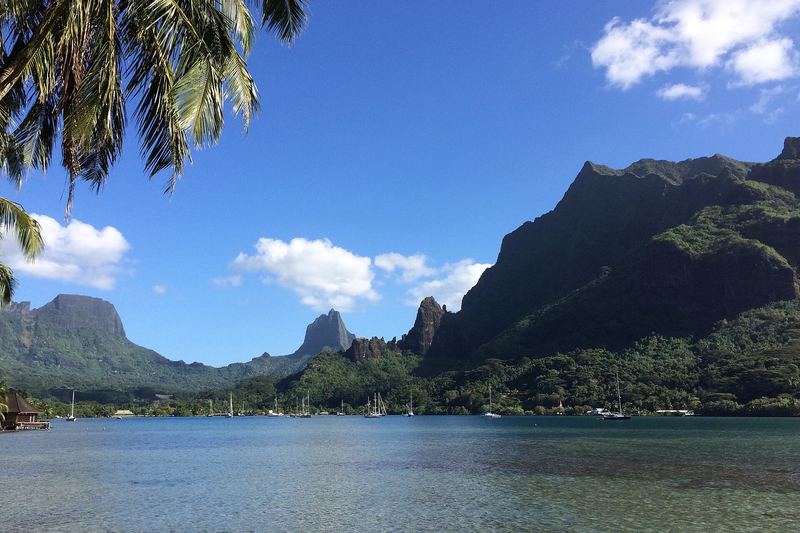
Moorea feels lived-in but busy enough. Roadside fruit stands, local churches and family restaurants sit alongside resorts. Mount Rotui separates the two famous northern bays and the ridges behind them catch the light at sunrise and sunset. Stingrays glide over sandbanks in the lagoon and humpbacks pass offshore in season.
Huahine feels like Moorea with the volume turned down. Fare, the northern village, has a waterfront of shops and food trucks. That's about as lively as it gets. Many beaches are quiet, some almost empty, especially on Huahine Iti. Village life continues around marae that are centuries old.
If you want variety close at hand, Moorea suits you. If you'd like an island to slow you right down, Huahine does that better than almost anywhere in French Polynesia.
Overwater or On the Sand
This is the most practical difference. Moorea has overwater bungalows; Huahine does not.
Our Moorea pick is the Hilton Moorea Lagoon Resort & Spa on the north coast between Cook's Bay and Opunohu Bay. Its overwater bungalows sit above clear, shallow water ideal for snorkeling from your deck. Toatea, its overwater crêperie, has blacktip reef sharks gliding beneath at sunset. Several other Moorea resorts also have overwater bungalows, along with boutique hotels, villas, pensions and vacation rentals.
On Huahine, the honeymoon beach stay is Hotel Le Mahana, with 33 air-conditioned bungalows on Avea Bay at the quiet southern end, a coral garden at the end of the jetty and a pool. It's a relaxed three-star hotel rather than a luxury resort. Maitai Lapita Village near Fare sits among gardens close to the archaeological sites. Pensions and villas around the lagoon, often with kayaks and bikes, give a more local feel.
If an overwater night matters, Moorea is your island, or pair Huahine with one that has them.
Price Check
All figures are approximate. On Moorea, overwater bungalows often cost several hundred dollars to around $1,000 a night, noticeably less than on Bora Bora. Hilton entry garden rooms or bungalows often start around $650 room-only. Roulottes and small restaurants make eating out easy and fairly priced. A rental car opens up the island.
On Huahine, expect about $200 to $450 a night for a good boutique hotel or bungalow, with Le Mahana often around $290. Pensions often cost less. Fare's roulottes serve grilled fish, steak frites and Chinese-Tahitian dishes in the evening at good-value prices. Its grocery stores stock French cheese, baguettes and wine for picnics.
Prices for food are high by US standards on both. Carry cash in CFP francs, since smaller pensions, fruit stands and roulottes may not take cards. ATMs are limited outside Fare on Huahine.
For couples balancing a Bora Bora splurge, either island lowers the average. Huahine lowers it further.
Ferry or Flight
Both start with a nonstop flight to Papeete (PPT) on Tahiti, about eight hours from Los Angeles or San Francisco. Tahiti shares Hawaii's time zone.
Moorea is the easiest island in French Polynesia to reach. Ferries run several times daily from Papeete's harbor to Vai'are, a crossing of about 30 to 45 minutes. Short flights also land at Temae. Resorts can arrange transfers from the ferry terminal or airport.
Huahine needs an Air Tahiti flight of about 40 minutes from Papeete, with several flights a day. Air Tahiti also links Huahine with Bora Bora, Moorea and Raiatea. Huahine Airport (HUH) is about 15 minutes by taxi from Fare. Le Mahana is roughly 30 to 40 minutes by car.
On both islands, renting a car, scooter or bike is the best way to explore. Moorea's coastal road runs about 60 kilometers. A full loop of both Huahine islands takes a few hours with stops. Book Air Tahiti flights early in peak season; an island-hopping air pass can save money if you visit several islands.
Days Out Together
Moorea is the more active island. Drive up to the Belvedere lookout early for clear views over both bays and Mount Rotui. Stop at the marae in the Opunohu Valley and wander pineapple fields. Hike to waterfalls or ridgelines with a guide. Join a lagoon tour to swim with stingrays and blacktip reef sharks on a sandbank, then picnic on a motu. Taste fruit wines at the juice factory and distillery. End the day kayaking the reef at sunset.
Huahine is the more cultural island. Walk the Maeva archaeological site, with marae temples along the lake and V-shaped stone fish traps still in use; a small museum explains the history. Visit Faie village to see the sacred blue-eyed eels in the stream. Drive to the Belvedere above Maroe Bay. Book a lagoon tour by outrigger canoe with snorkeling, a pearl farm and a motu picnic. Finish with an afternoon at Avea Bay.
Respect marae sites on both islands. They are sacred, so don't climb on the stones or take anything away.
Weather and Whales
The two islands share a climate. The drier season runs roughly May to October, with sunshine, lower humidity and trade winds. June through August is peak season on Moorea, so book early; Huahine never feels crowded even then.
November to April is warmer and wetter, with heavy showers and lusher landscapes. Cyclones are rare in the Society Islands but possible, mainly from about January to March. April, May, October and November often combine good weather with better value.
Whales tip the balance toward Moorea from roughly July to October. Whale-watching tours operate there, often finding mothers with calves. Choose an operator that follows local guidelines. Sightings around Huahine are sometimes possible but less of a focus.
Mosquitoes are present on both islands and dengue occurs in French Polynesia. Use repellent and cover up at dusk, especially in the valleys. If you're pregnant or hoping to be soon, check CDC travel health notices. Pack hiking shoes with your swimwear.
Fitting Both Into One Trip
Moorea and Huahine work well together because they cover different moods. Air Tahiti links them. Most couples also add Bora Bora or Taha'a for overwater luxury.
A classic ten-night plan: three nights on Moorea after landing, using the ferry to skip an extra flight. Then three or four nights on Huahine to slow right down. Finish with three or four nights on Bora Bora or Taha'a for the overwater splurge. Huahine sits close to both, so the final hop is short.
If you only have a week, choose Moorea plus Bora Bora for the classic combination, or Huahine plus Bora Bora for a quieter one. Moorea's ferry makes it the easier first stop; Huahine is better as a middle chapter once the jet lag has gone.
Shops and restaurants on Huahine close early and on Sundays, so plan meals ahead. Allow buffer time between ferries, interisland flights and your international departure.