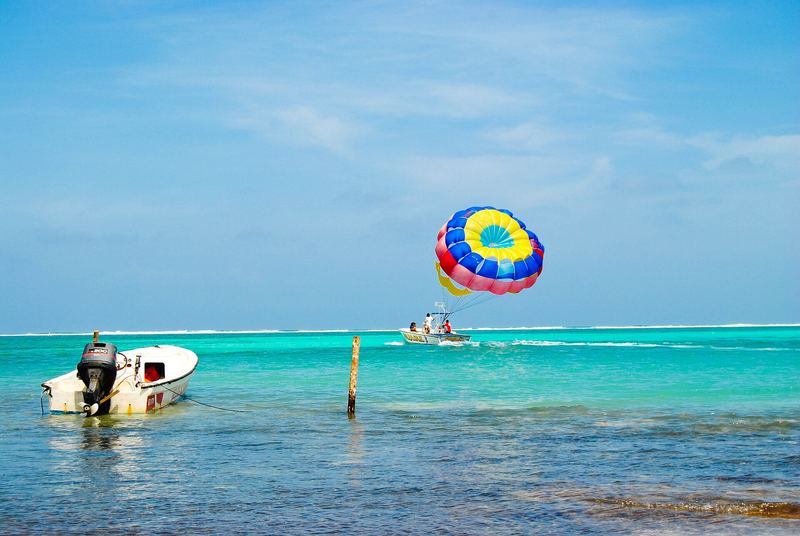
Two Islands, One Reef
Roatán feels more like a small country than a beach strip. A green ridge runs down its spine and the island has a Caribbean culture shaped by British, Cayman Islands and Garífuna roots. Each area has its own mood. West Bay is about pale sand and calm, clear water. West End is a village with dive shops and casual bars. The north shore and east end hold boutique resorts and villas around places like Camp Bay and Paya Bay, with private docks and kayaks.
Ambergris Caye is flatter and more compact in feel. San Pedro is colorful and sociable, with sandy streets and golf carts everywhere. North of town, the island becomes quieter and more spread out, with boutique resorts set along the beach. On the lagoon side, tiny cayes hold private retreats.
Roatán rewards couples who like variety and a bit of exploring. Ambergris rewards couples who want an easy, walkable island rhythm built around the water.
Snorkeling and Diving
Roatán's big advantage is shore access. At West Bay, the reef starts close to shore and the water is usually calm, so you can snorkel straight off the beach between swims. For more variety, boats run to sites along the north side. Divers find walls, wrecks and coral gardens for every level and you can learn together with an introductory dive or a full certification course. The Roatán Marine Park has worked to protect the reef since 2005 and turtles, eagle rays and schools of reef fish are common.
Ambergris Caye's reef is a short boat ride away rather than a swim. The essential trip is Hol Chan Marine Reserve near the island's southern tip, followed by Shark Ray Alley, where nurse sharks and southern stingrays gather near the surface. Experienced divers can make the full-day trip to the Great Blue Hole, while others see it on a scenic flight.
For spontaneous beach snorkeling and wall diving, Roatán wins. For famous guided snorkel sites, Ambergris has the edge.
Where You Will Stay
On Roatán, West Bay has the largest concentration of resorts and condo hotels, all within walking distance of the sand. The Kimpton Grand Roatán and Infinity Bay are well-known options. It is the easiest base for first-time visitors, though it can get busy on cruise ship days. West End has small hotels, dive lodges and guesthouses with restaurants nearby. For privacy, look to boutique resorts and villas on the north shore and east end, which feel remote and quiet but need a car or driver.
Ambergris Caye ranges from boutique beachfront resorts north of town to stylish stays south of San Pedro within golf-cart range of restaurants. For a once-in-a-lifetime splurge, Cayo Espanto is a private island about three miles off San Pedro with just seven villas, six with plunge pools and one overwater bungalow. Rates start from around US$2,300 a night per villa with meals and house drinks.
Roatán offers more mid-range beach resort choice. Ambergris offers the more famous luxury island experience. Prices are approximate.
Getting There From the US
Both are among the easiest reef islands to reach. Roatán's Juan Manuel Gálvez International Airport (RTB) has nonstop flights from Atlanta, Houston, Dallas/Fort Worth and Miami, plus seasonal service from some other cities. Flights take about two to three hours and the airport is 15 to 25 minutes from West End and West Bay. That means you land on the island itself, with no second flight.
For Ambergris Caye, fly nonstop to Philip S. W. Goldson International Airport (BZE) in Belize City. Flights from Miami and Houston take under two hours. From there, Tropic Air and Maya Island Air fly to San Pedro in about 15 to 20 minutes, or a water taxi takes about 90 minutes.
On Roatán, taxis are available, but agree on the fare first and request a private ride. Water taxis between West End and West Bay take a few minutes. A rental car helps for the east end, but avoid driving at night. On Ambergris, golf carts are the way to go.
Season and Weather
Their calendars differ a little. Ambergris Caye's best stretch is the dry season from roughly late November or December through April, with sunny days and cooling trade winds. May and November are good shoulder months. June through November is the wet season and Atlantic hurricane season.
Roatán is warm all year, with sea temperatures suited to swimming every month. The best weather usually runs from February to June, when skies are mostly clear, rain is light and the water is calm and clear for snorkeling. March through May is peak diving season. July to September is hot and humid but often still good. Hurricane season runs June to November and late fall tends to be the wettest stretch.
That makes May and early June a sweet spot for Roatán, when Ambergris is heading into its rainier months. For a winter honeymoon over the holidays, Ambergris is the more reliable pick for dry weather.
Safety and Everyday Practicalities
Advisories differ, so check the fact table above and the State Department before you book. Honduras is under a Level 3 advisory for crime and terrorism, which mainly reflects gang violence on the mainland. Roatán sees mostly theft and occasional robberies. Flying straight to the island, staying in established areas and using hotel-arranged transport keeps most risk low. Belize carries a lower advisory level and Ambergris is generally relaxed, though normal precautions apply in San Pedro at night.
Both islands welcome cruise ships and West Bay on Roatán gets crowded when several are in port, so check the schedule and save those days for the east end or a boat trip.
English is Belize's official language and is widely spoken on Roatán too. Bring reef-safe sunscreen, never touch coral and pack repellent, since sandflies can be a nuisance on both islands at dawn and dusk. If you're pregnant or hoping to be soon, check CDC travel health notices.