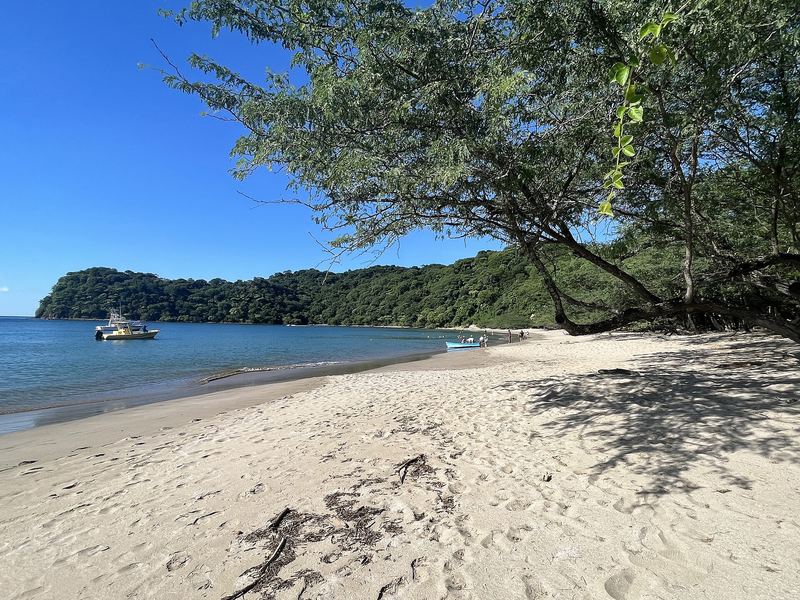
Village Life or Resort Life
Santa Teresa feels more like a village than a tourist strip. There are no high-rise resorts. Beaches are long and backed by forest and the main road is lined with cafés, surf shops and open-air yoga studios. The crowd is international and relaxed. Days follow the tides: surf in the morning, a long lunch, a nap and sunset on the sand.
Guanacaste is bigger and more varied. Some areas, such as Tamarindo, are busy beach towns with surf schools and bars. The Papagayo Peninsula is the opposite, a protected stretch of dry forest and coastline with dozens of small beaches and only a few resorts. Monkeys and iguanas roam resort grounds and catamarans sail along the coast at dusk.
If you want to wander out for dinner and feel part of a beach community, Santa Teresa is the better match. If you want a resort that takes care of everything, Guanacaste wins.
Getting There From the US
Guanacaste is one of the easiest beach trips in Central America. Guanacaste Airport (LIR) in Liberia has nonstop service from a number of US hubs and the Papagayo resorts are roughly 30 to 60 minutes away by car. You can land at lunch and be in the pool by mid-afternoon.
Santa Teresa takes more effort, which is part of why it stays laid-back. From Juan Santamaría International Airport (SJO), drive about two hours to Puntarenas, take a car ferry of roughly an hour and a quarter to Paquera and then drive about an hour and a quarter more. Plan on four and a half to five hours in total. Private shuttles handle the whole trip. The fastest option is a short domestic flight from San José to Tambor Airport (TMU), about 45 minutes from town. You can also drive from LIR, which takes several hours on Nicoya Peninsula roads.
For a short honeymoon, Guanacaste's quick transfer is a real advantage.
Beaches, Surf and Swimming
Santa Teresa is a surf town first. Waves range from gentle beginner breaks at Playa Hermosa and Playa Carmen to more challenging reef spots, so a lesson together is almost a rite of passage. The trade-off is that rip currents are common, especially at Playa Santa Teresa. Swim near other people, ask locals about conditions and stick to calmer days. Tide pools at Mal País make a lovely low-tide walk.
Guanacaste has more variety. The Papagayo bays are often calm enough for swimming and paddleboarding, while Tamarindo offers a forgiving beginner surf break. Snorkeling and diving around the Catalina Islands bring rays, turtles and schools of tropical fish. Secluded coves can be reached by boat or trail.
If you mainly want to swim and float, Guanacaste's sheltered bays are the safer choice. If surfing together is part of the dream, Santa Teresa's waves and surf schools are hard to beat.
Where You Will Stay
Santa Teresa's stays are small and stylish. Most line the main road through Santa Teresa and Mal País, with others on the hills behind for ocean views. Nantipa, a Tico Beach Experience, has bungalows and suites set in gardens right on Playa Santa Teresa and is one of the strongest romantic picks, from around US$450 a night. Latitude 10 is a small resort with open-air casitas near the beach. Many couples rent a hillside villa with an infinity pool for extra privacy. Boutique stays run roughly US$200 to US$600 a night in high season.
Guanacaste's showpiece is Four Seasons Resort Costa Rica at Peninsula Papagayo, a Forbes Five-Star resort on an isthmus between two beaches, with a kid-free pool, Canopy Suites with private plunge pools, an Arnold Palmer golf course and a strong spa. Entry rooms start from around US$1,200 a night. Beach towns farther south have boutique hotels and rentals at gentler prices.
All prices are approximate and rise around the holidays.
Food and Evenings
Santa Teresa's dining scene is one of the best on the Nicoya Peninsula. Expect fresh sushi, wood-fired pizza, Mediterranean plates, poke bowls and creative Costa Rican dishes made with local fish and produce. Sodas serve casados, the classic plate of rice and beans with salad, plantains and a protein and ceviche is everywhere. Evenings start with sunset on the beach and continue at a beach bar or a candlelit table along the road.
Guanacaste has a proud food identity rooted in corn and cattle country. Look for arroz de maíz, a hearty corn stew and sweet corn treats at roadside stands. On the coast, fresh ceviche, whole fried snapper and grilled mahi-mahi star. The luxury resorts bring polish with steakhouses, Mediterranean beach clubs and rum bars.
Santa Teresa gives you more choice and more spontaneity at night. Guanacaste's resorts give you more polish but fewer reasons to leave.
Seasons and Practical Tips
Both are best from December through April, with sunny days, blue skies and dry roads. That is peak season, so book early for Christmas, New Year and Easter.
Guanacaste is the driest region in Costa Rica, so it holds up better from May through November, with mostly sunny mornings and afternoon showers. Santa Teresa's green season from May through August is pleasant, with lush landscapes, bigger surf and lower prices. July often brings a short dry spell. In September and October, the wettest months, roads get muddy and some Santa Teresa businesses close.
In Santa Teresa, bring sunglasses and a buff for dusty dry-season roads. ATVs are popular but can be risky, so wear helmets and never ride after drinks. Petty theft occurs, so keep valuables off the beach. In Guanacaste, pack high-SPF reef-safe sunscreen and a layer for the strong early-year breeze.
Mosquitoes are more common in the rainy season in both. If you're pregnant or hoping to be soon, check CDC travel health notices.