At a glanceA long three-part honeymoon that uses Dubai as a stopover on the way to Africa: three nights in Dubai, four on the Rufiji lakes in Nyerere National Park, three walking and driving in remote Ruaha, then six nights on Zanzibar. It suits couples who have done a busy safari before or want one without crowds. Go in September and October or January and February.
Southern Tanzania is the quieter side of the country's safari story. Nyerere National Park, once part of the Selous, is known for boat safaris on the Rufiji River and its lakes. Ruaha, a short flight west, is big, dry and wild, with baobab-studded valleys, large lion prides and very few camps. Both sit under an hour or two by light aircraft from Dar es Salaam or Zanzibar.
This route adds Dubai at the start. Emirates flies nonstop from many US cities to Dubai, where Emirates and flydubai connect on to Dar es Salaam and Zanzibar. Three nights there break the long journey and give you desert dunes, a skyline dinner and a beach day before the bush.
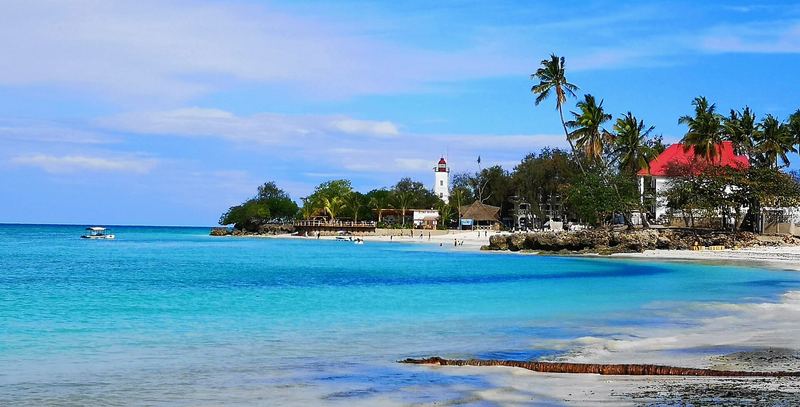
After seven nights on safari, Zanzibar is the reward: six nights of warm water, dhow sails and Stone Town's carved doors. Flights connect directly from the safari airstrips to the island, so you go from bush to beach in a single morning.
The route
- DubaiUnited Arab Emirates · 3 nights
- Nyerere National ParkTanzania · 4 nights
- Ruaha National ParkTanzania · 3 nights
- ZanzibarTanzania · 6 nights
- Best months
- September to October and January to February
- Trip length
- 17 days
- Budget
- About $800–2,000 a night for two on safari, $500–1,300 in Dubai and $400–1,500 on Zanzibar (approximate)
Day by day
Days 1–4: Dubai
Land at Dubai International (DXB) after a nonstop of about 12 to 13 hours from the East Coast. Spend two nights on Palm Jumeirah at One&Only The Palm, which has a private beach and calm gardens, then one night in the desert at Al Maha, a Luxury Collection Desert Resort & Spa, where suites have private plunge pools facing the dunes.
On day 2, sleep off the flight, then go up the Burj Khalifa at sunset and eat in Downtown. Take an abra across Dubai Creek and walk the Al Fahidi heritage district in the cooler morning hours.
On day 3, transfer to Al Maha, about an hour from the city. Oryx and gazelles graze around the suites. The romantic moment is a dawn hot-air balloon flight over the dunes, or simply watching the sun set over the sand from your plunge pool. On day 4, return to DXB for the flight to Dar es Salaam.
Days 4–8: Nyerere National Park
Fly from Dubai to Dar es Salaam (DAR) in about five and a half hours. A light aircraft reaches the park's airstrips in under an hour. If your arrival is too late for the afternoon flights, stay one night in Dar and fly in the next morning.
Stay on the Rufiji River or its lakes. Sand Rivers Selous sits on a bend of the river and is known for walking and fly camping. Roho ya Selous has modern tents above Lake Nzerakera. Siwandu is on the same lake with a pool.
Use your four nights to mix activities. Take a boat safari on the lakes for hippos, crocodiles and elephants drinking at the water's edge. Go out at dawn on a walking safari with an armed ranger. Search for wild dogs, which do well here. The romantic moment is a sunset boat safari, with a drink in hand as the birds settle on the dead trees in the lakes.
Days 8–11: Ruaha National Park
Fly west from Nyerere to Ruaha's Msembe airstrip, a hop of an hour or two depending on stops. Ruaha is one of Tanzania's largest parks and one of its least visited. Its dry river valleys, baobabs and granite kopjes feel very different from the lakes of Nyerere.
Jabali Ridge is built among granite boulders with views over the bush and a pool. Kigelia Ruaha is a small, intimate tented camp with a focus on guiding.
Ruaha is known for its big lion prides, elephants and greater and lesser kudu. Spend a full day with a pride if your guide finds one. Walk along a sand river in the morning, then rest at camp through the heat. The romantic moment is a night at a fly camp, sleeping under a mosquito net in the open with the sounds of the bush around you. Ask for this when you book; many couples call it the best night of the trip.
Days 11–17: Zanzibar
Fly from Ruaha to Zanzibar's Abeid Amani Karume International (ZNZ), often via Dar es Salaam, in a few hours. Your resort transfer to the north or east coast takes about an hour to an hour and a half.
Stay on the north coast around Nungwi or Kendwa for swimming at most tides and sunsets over the water, or on the east coast for long beaches and a wide lagoon. For complete privacy, &Beyond Mnemba Island takes only its own guests and has beachfront bandas on a tiny island ringed by reef.
This is the slow stretch, so plan little. Spend half a day in Stone Town with a guide, then eat at the Forodhani night market. Visit a spice farm, snorkel the Mnemba reef with turtles and see the red colobus monkeys in Jozani Forest. Book a dinner at The Rock, a restaurant on a rock in the sea on the east coast. The romantic moment is a sunset dhow sail. On day 17, fly home through Dubai.
Getting Between Stops
Emirates flies nonstop from many US cities to Dubai. From there, Emirates and flydubai connect to Dar es Salaam and Zanzibar. Dubai to Dar es Salaam takes about five and a half hours.
In Tanzania, scheduled light aircraft connect Dar es Salaam, Nyerere, Ruaha and Zanzibar. Flights often stop at several airstrips, so allow a morning. Luggage is usually limited to about 15 to 20 kg each in soft bags. Leave a suitcase at your Dubai hotel for the return trip if you are flying home that way, or pack light from the start.
On Zanzibar, your resort will arrange transfers, since roads are slow. To fly home, fly from Zanzibar to Dubai (directly or via Dar es Salaam) and connect to the US. A night in Dubai on the way home is also easy to add if you want a final hotel stay.
Where to Stay
Dubai: One&Only The Palm has a private beach and quiet gardens on Palm Jumeirah. Al Maha, a Luxury Collection Desert Resort & Spa, has suites with private plunge pools inside a desert conservation reserve.
Nyerere National Park: Sand Rivers Selous for walking and fly camping, Roho ya Selous for modern tents above a lake or Siwandu for a pool and lake views. Beho Beho sits in the hills away from the river with stone cottages.
Ruaha: Jabali Ridge for granite boulders, a pool and a polished feel. Kigelia Ruaha for a smaller, simpler tented camp with strong guiding.
Zanzibar: &Beyond Mnemba Island for privacy on its own island. Boutique beach hotels on the north coast suit couples who want to swim at any tide. A night in a Stone Town hotel adds culture.
Advertisement
When to Go
Southern Tanzania's dry season runs from about June to October, when the bush thins and animals gather at the rivers. Many camps close during the long rains from about March to May. January and February are a short, hot, green window when some camps open and birdlife is excellent.
Dubai is at its best from November to March. From May to September it is extremely hot, though hotel rates are much lower and the beach and pools still work early and late.
Zanzibar is driest from June to October and hot and mostly sunny from December to February. September and October combine late dry-season game viewing with a warm but workable Dubai. January and February trade some game concentration for perfect Dubai weather and a hot, sunny beach finish.
Budget and Booking
Southern Tanzania camps run roughly $800–2,000 a night for two in the dry season, usually with meals, drinks and activities included. Park and concession fees may be extra. Dubai's top beach and desert resorts run about $500–1,300 a night for two, cheaper in summer. Zanzibar beach hotels run about $400–1,500 a night for two. All figures are approximate.
Add light aircraft flights within Tanzania and the transfer to Al Maha. Green-season rates in January and February are noticeably lower.
Book southern camps six to twelve months ahead for September and October; they have very few tents. A Tanzania specialist can coordinate the light aircraft and lodge schedules. Mention your honeymoon: camps often arrange a private dinner on a sandbank or in the bush.
Make It Shorter or Longer
For 13 or 14 days, drop Ruaha and spend five nights in Nyerere, then five on Zanzibar. Keep Dubai to two nights.
With 19 to 21 days, add a quiet island after Zanzibar: Mafia Island and Pemba Island are short flights away, with good reefs and very few visitors. Or add a night in Stone Town before the beach.
Couples who want more safari variety can add three nights in the Serengeti, flying from Zanzibar or Arusha, for the migration in season. This adds cost and more flights but gives you both the busy northern parks and the quiet southern ones.
Honeymoon Tips
- Wear khaki, olive or tan on safari; dark blue and black attract tsetse flies.
- See a travel doctor about malaria prevention well ahead. If you're pregnant or hoping to be soon, check CDC travel health notices.
- In Dubai, cover shoulders and knees in malls and old areas; swimwear is fine at the resort.
- On Zanzibar, both of you should cover shoulders and knees in Stone Town and the villages.
- Take taxis rather than walking Stone Town's back lanes late at night.
- Pack a warm layer for open-vehicle drives at dawn.
- Read the State Department advisories for Tanzania and the United Arab Emirates before you book.
FAQPlanning this trip
Why combine Dubai with a Tanzania safari?
Emirates flies nonstop from many US cities to Dubai and connections continue to Dar es Salaam and Zanzibar, so a stopover is easy. Three nights in Dubai break up the long journey, help with jet lag and add a desert night and a city to the trip.
How is southern Tanzania different from the Serengeti?
Nyerere and Ruaha see far fewer visitors. Camps are small and you rarely share a sighting. You also get boat safaris and walking safaris, which are more limited in the northern parks. The trade-off is that there is no wildebeest migration and the parks are best in the dry season.
Is seven nights on safari too much?
Not when it is split between two parks as different as Nyerere and Ruaha. Boat safaris, walks and fly camps add variety. Midday rest at camp keeps the pace gentle. Couples who want less safari can drop Ruaha and stay longer on Zanzibar.
When is the best time for this honeymoon?
September and October are best for game viewing and still workable in Dubai. January and February bring ideal Dubai weather, a hot and sunny Zanzibar and green-season rates in the parks. Avoid March to May, when the long rains close many southern camps.
How much does this honeymoon cost?
For 17 days at good camps and resorts, many couples spend roughly $12,000 to $30,000 for two including light aircraft flights and park fees, before international airfare. These are approximate figures. Traveling in January and February can lower safari rates noticeably.