Why Honeymoon in Ruaha
Ruaha has a reputation among guides as a lion park and it has been recognized as a Lion Conservation Unit. Big prides patrol the riverbanks and you will often watch them without another vehicle in sight. It is also one of the better places in East Africa for wild dogs, plus leopards, cheetahs, hyenas, buffalo and elephants.
The park sits where East and southern African habitats overlap. That is why you can see greater and lesser kudu, sable and roan antelope in a single trip, a combination rare elsewhere. More than 570 bird species have been recorded, including several hornbills.
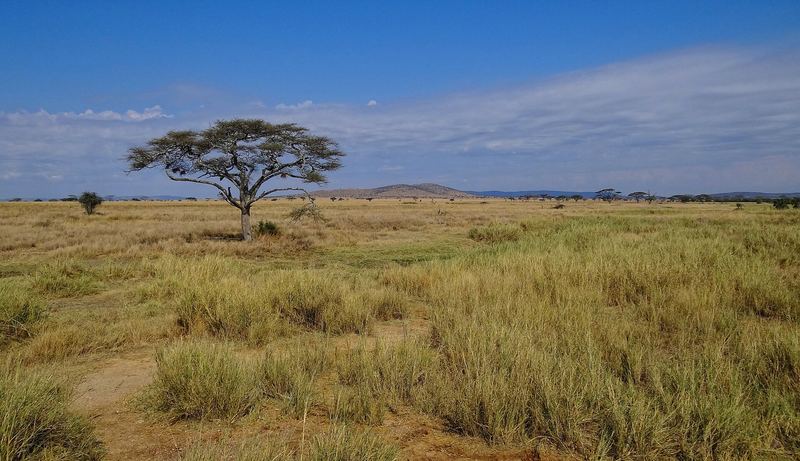
The scenery helps. Baobabs the size of houses, sand rivers, granite outcrops and palm-lined channels make every drive look different. Camps are small and widely spaced and walking safaris with an armed ranger are a highlight. For a couple who has done the northern circuit or wants a first safari far from other vehicles, Ruaha delivers.
When to Go
The dry season, roughly June to October, is prime time. The rivers shrink to pools, animals concentrate along the Great Ruaha and the grass is short. It gets hot as the season goes on, with afternoons around 35°C (95°F) by October and nights near 20°C (68°F), though June and July mornings can be cool.
November and December see the first rains, green shoots and newborn antelope and the birding is superb. January and February are the green season: lush, quieter and good value, though animals spread out and some tracks get muddy.
March to May is the long rainy season. Many camps close during these months and those that stay open offer limited areas. If your dates are flexible, aim for July to October for the strongest wildlife viewing, or November for a mix of green landscapes and active predators.
Where to Stay
Ruaha's camps are small, usually six to ten tents and most sit on rivers or kopjes.
Jabali Ridge, an Asilia lodge, is built among granite boulders with views over the bush and a pool, a good pick for couples who want a bit of polish. Kigelia Ruaha is an intimate tented camp under trees in a quiet part of the park, with a strong emphasis on guiding. Ruaha River Lodge, one of the park's oldest, sits on the river among rocks and is simpler and more affordable.
In the dry season, expect roughly $900 to $2,000 per night for two at a high-end camp, usually including meals, drinks, game drives and walks (approximate). Park and concession fees can be added on top, so check. Green season rates drop noticeably. Ask about fly camping, a night out in a small bush camp with mosquito-net tents, which many couples call the best night of the trip.
Romantic Things to Do
Go on a walking safari. Ruaha is one of Tanzania's best parks for walking with an armed ranger and guide and tracking along a dry riverbed is a different kind of thrill. One partner who prefers vehicles can stay in the truck.
Spend full days out. Pack breakfast and lunch, follow the river and stay with a lion pride as long as you like. Ask your guide to look for wild dogs, which roam huge distances and are luck-dependent.
Sleep out. A fly camp or star bed gets you closer to the night sounds of lions roaring and hyenas whooping. Watch the sunset from a granite kopje with a gin and tonic in hand and baobabs silhouetted against the sky.
For something quieter, sit at your camp's waterhole or riverbank during the midday break. In the dry season, elephants and kudu wander past on their own schedule.
Getting There and Around
There are no nonstop flights from the US to Tanzania. Most couples connect through Amsterdam, Doha, Dubai, Istanbul or Addis Ababa into Dar es Salaam (DAR), Zanzibar (ZNZ) or Kilimanjaro (JRO).
From Dar es Salaam, scheduled light aircraft reach Msembe airstrip in about 1.5 to 2 hours, sometimes with a stop. Flights also connect Ruaha with Nyerere National Park, Zanzibar and Arusha, which makes it easy to build a southern circuit. Some flights are seasonal or run only on certain days, so let your operator coordinate.
By road, Ruaha is about 130 km west of Iringa on a dirt road, a long trip from Dar that suits overlanders more than honeymooners. Within the park, game drives run in your camp's open vehicles. Light aircraft enforce strict luggage limits, usually around 15 to 20 kg each in soft bags.
Food and Drink
Ruaha camps are full board and cooking in the bush is impressive given the logistics. Expect fresh breads, salads, grilled meats and vegetables, with Tanzanian touches such as pilau rice, coconut beans or chapati. Bush breakfasts on a riverbank and dinners by lantern are part of most stays.
Tanzanian coffee from the slopes of Kilimanjaro and the southern highlands is usually on offer. Local beers include Safari and Kilimanjaro and camps stock South African wine.
Tell your camp about dietary needs when you book, since supplies come in by air or a long road and last-minute changes are hard. Drinking water is filtered or bottled; many camps provide refillable bottles. If you are celebrating, ask about a private dinner on a sandbank or deck, which most camps can set up with notice.
Honeymoon Tips
- Read the State Department's Tanzania advisory before booking and again before you fly.
- Malaria is present. Take prophylaxis on medical advice, cover up at dusk and use repellent. If you're pregnant or hoping to be soon, check CDC travel health notices.
- Tsetse flies are common in some areas. Wear khaki, olive or tan; avoid dark blue and black, which attract them.
- Book dry-season camps six to twelve months ahead. Room numbers are small.
- Pack layers. Early mornings in June and July are chilly in open vehicles.
- Stay at least three nights. Ruaha is big and the flights take time.
- Dress modestly when passing through towns; both partners should cover shoulders and knees.