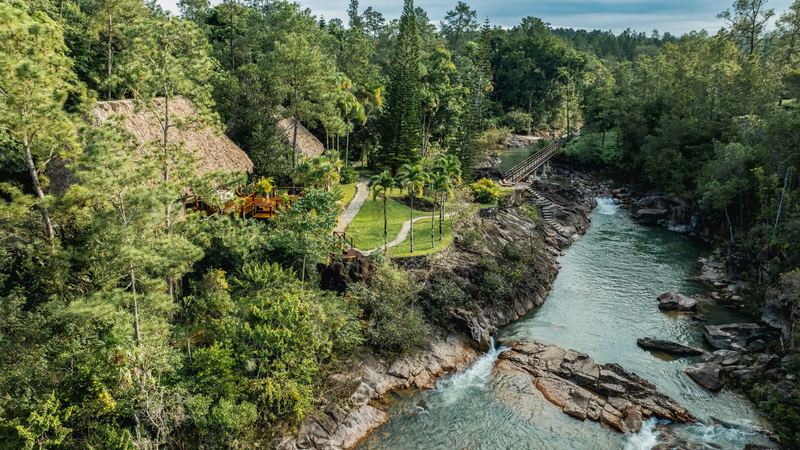
HOSHINOYA Fuji is the honeymoon pick at the Fuji Five Lakes for couples who would rather sit by a campfire than sit through a formal kaiseki dinner. Opened in 2015 as Hoshino Resorts' first glamping property, it climbs a forested hillside above Lake Kawaguchi. The cabins look across the water toward Mount Fuji through wall-sized windows.
Think of it as camping with the hard parts removed. There are no tents, no sleeping bags and no setting up: you get a well-designed cabin with a proper bed and a terrace, while staff build the fires, cook outdoors and lead activities from canoeing to forest walks. Evenings center on the Cloud Terrace, a series of wooden decks among the pines where campfires burn after dark.
It suits outdoorsy couples, design lovers and anyone who wants a different Japan story from temples and ryokan. If your heart is set on soaking together in a private hot spring bath, a lakeside ryokan on the north shore is the better match. Mount Fuji also hides behind clouds for days at a time, especially in summer, so plan a couple of nights to give yourselves a chance at the view.
Highlights at a glance
- Cabins with window walls facing Lake Kawaguchi
- Cloud Terrace decks and campfires in the pine forest
- Early-morning canoeing toward Mount Fuji
- Outdoor cooking and seasonal forest activities
- About two hours from Tokyo
Why Couples Love Hoshinoya Fuji
The design does most of the persuading. Cabins step down the slope in tiers, so each one looks over the trees rather than into a neighbor's window. Big panes of glass frame the lake and, on clear mornings, the snow-capped cone of Fuji. Waking up to that view with coffee on your terrace is the moment couples remember.
The second draw is the atmosphere. Hoshinoya runs this as a curated outdoor retreat. Staff, many of them trained in outdoor skills, set up campfires, cook over open flames and suggest activities based on the weather. You can be as active or as lazy as you like.
It also breaks up a Japan itinerary nicely. After the noise of Tokyo, a couple of nights of fresh air, firelight and forest is a reset. The resort is small enough that it feels personal and quiet even when full.
Cabins to Book
All cabins share the same idea: a clean, modern room with a lake-facing window wall and a terrace for sitting out. Sizes vary, from compact cabins for two to larger ones with more terrace space.
For a honeymoon, book the largest cabin category you can afford, mainly for the extra outdoor space. Terraces are where you will spend the best hours, wrapped in blankets at dawn or under the stars at night. Higher cabins on the slope tend to have the most open views over the treetops, so ask for one when you book.
Cabins are reached by paths and stairs on a steep hill. Staff move luggage for you, but anyone with mobility concerns should mention it in advance. Remember that Fuji views are never guaranteed. Clear skies are most likely in the colder months from late autumn through winter, when the peak also wears its snow.
Dining and Campfire Evenings
Dining is part of the outdoor theme. Dinner is served at the resort's dining hall, with menus that draw on local ingredients from the Fuji area, including game and mountain vegetables. Meals are usually booked separately from the room rate, so reserve dinner when you book; there are few good restaurants within walking distance.
The Cloud Terrace is the social heart of the resort. Its wooden decks spread through the forest with seating and fire pits. Staff light campfires in the evening and run small outdoor cooking sessions. It is a cozy place for a drink after dinner.
On fine mornings, breakfast on your own terrace is the best seat in the house; ask about the options when you book. In cold months, dress warmly for outdoor meals and evenings: the lake sits at around 830 meters (2,700 feet) and nights can be sharp from autumn through spring. Pack hats and warm jackets for both of you.
Why guests fall for it
Things to Do at Lake Kawaguchi
Start with the lake. Early-morning canoe trips on Lake Kawaguchi are a highlight when the water is still and Fuji is reflected on the surface. Forest walks and outdoor activities run from the resort through the year, adjusted to the season.
Around the lake, the Chureito Pagoda in Arakurayama Sengen Park gives the classic view of a red pagoda with Fuji behind. Go early to beat the crowds on the long staircase. The Kawaguchiko Music Forest and the Itchiku Kubota Art Museum, devoted to kimono art, are lovely half-day outings.
The Oishi Park flower fields on the north shore bloom with lavender in early summer and red kochia in autumn. For a hike, the trails around Mount Mitsutoge offer big Fuji views. Climbing Fuji itself is only possible in July and early September and needs planning, fitness and warm gear.
Getting There
Lake Kawaguchi is about two hours from central Tokyo. Highway buses run frequently from the Shinjuku Expressway Bus Terminal to Kawaguchiko Station. The Fuji Excursion limited express train runs from Shinjuku to Kawaguchiko. From the station, the resort is a short taxi ride.
From Tokyo Haneda (HND), allow about two to 2.5 hours by car or airport bus, depending on traffic. Narita (NRT) is around three hours away. Weekend and holiday traffic on the Chuo Expressway can add an hour, so travel midweek if you can.
You do not need a car at the resort itself, but one helps if you want to explore the other Fuji lakes or drive around to the Fuji-facing viewpoints. Local sightseeing buses also loop around Lake Kawaguchi and Lake Saiko.
Is It Worth It?
For the right couple, yes. Rates are not low: expect very roughly $650 a night for two for a cabin on a room-only basis, rising on weekends, in autumn and around holidays (approximate; check the official site for your dates). Add dinner and activities and a night here costs about the same as a top lakeside ryokan.
What you get for that money is design, setting and a different kind of experience. If the idea of firelit evenings and canoe mornings excites you both, it is worth every yen.
Pick elsewhere if a private hot spring bath is a must, since soaking together is the heart of the ryokan experience and this is not a ryokan. Couples who dislike cold, stairs or the outdoors may also be happier in a traditional inn on the lake's north shore. Plan two nights for the best chance of seeing Fuji.
Insider tips
- Ask for a cabin higher on the slope for the most open views.
- Book dinner when you reserve, since nearby options are limited.
- Visit from November to February for the clearest Fuji skies.
- Travel midweek to avoid heavy weekend traffic from Tokyo.