Looking at the Mountain or Living Under It
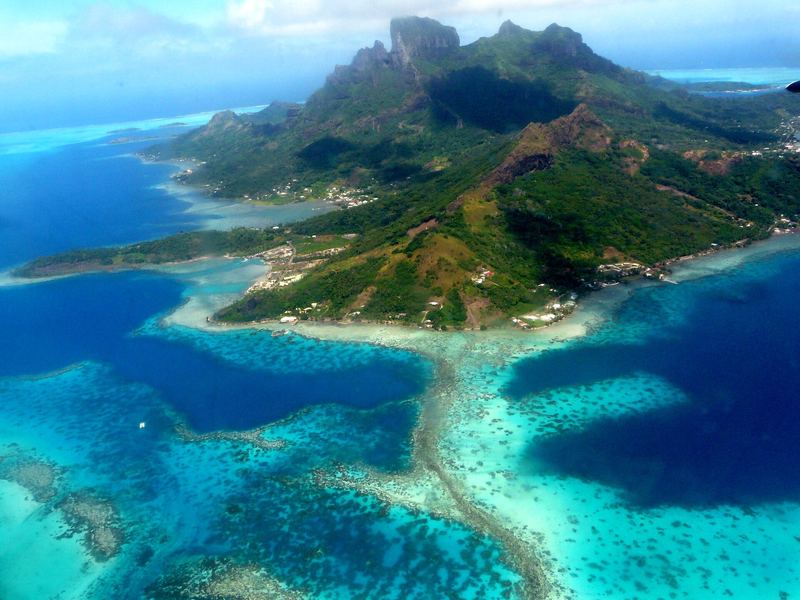
On Bora Bora, the mountain is the main event. Mount Otemanu rises from the center of the island, wrapped in clouds at dawn or glowing pink at sunset. The lagoon around it shifts from pale aquamarine to deep sapphire. Resorts are arranged to frame that view. Blacktip reef sharks, stingrays and reef fish are everyday sights from the deck.
On Taha'a, the view is of Bora Bora itself. From the western motus, its silhouette sits on the horizon and turns violet against a gold sky at dusk. Behind you, the main island is hilly and green, with little traffic. The scent of vanilla drifts from drying sheds along the road and church singing carries on Sunday mornings.
Bora Bora feels like a postcard you've stepped into. Taha'a feels like an island where people live, with a postcard on the horizon. Couples who need the drama up close should pick Bora Bora. Couples who prefer authenticity and space will find Taha'a's version of the view just as moving.
The Resorts on Each Island
Bora Bora has the deeper bench. Four Seasons Resort Bora Bora on Motu Tehotu is the benchmark, with around 100 overwater bungalows, many with plunge pools and Otemanu views, plus a marine sanctuary lagoon. The St. Regis Bora Bora Resort on Motu Ome'e has some of the largest overwater villas in the South Pacific, a private Lagoonarium and a kid-free pool. Conrad Bora Bora Nui wraps around a sheltered cove on Motu To'opua with a hilltop spa. The InterContinental Thalasso has been closed for a full renovation, so check whether it has reopened. Family-run pensions on the main island cost far less.
Taha'a is simpler. Le Taha'a by Pearl Resorts sits alone on Motu Tautau with 59 overwater suites and pool villas facing Bora Bora. It was the first Relais & Châteaux hotel in French Polynesia. The Coral Garden is right next door. A few smaller motu retreats exist. Pensions on the main island offer lagoon-view bungalows and home-cooked meals.
On Bora Bora, you choose a resort. On Taha'a, you mostly choose whether to stay at Le Taha'a.
Cost Compared
Neither island is cheap. All figures are approximate. On Bora Bora, overwater bungalows at the top resorts run from around $1,000 to several thousand dollars a night. Four Seasons entry bungalows often start around $1,800 room-only, while Conrad entry rooms can start nearer $900. Some resorts charge per person for boat transfers. Dining is expensive because nearly everything is imported.
On Taha'a, an overwater villa at Le Taha'a often runs about $700 to $1,500 a night. Pensions on the main island are often around a couple of hundred dollars. Because motu resorts are isolated, you'll eat most meals there, so ask about meal plans.
The gap isn't huge at the luxury end, but couples often find better value on Taha'a for a comparable overwater stay. Splitting a trip is a popular way to manage the total. A few nights on Taha'a bring down the average, so a Bora Bora finish feels more manageable. Hotel points at Hilton and Marriott can also help on Bora Bora.
Flights, Boats and Transfers
Both trips start with a nonstop flight to Papeete (PPT) on Tahiti, about eight hours from Los Angeles or San Francisco. Tahiti shares Hawaii's time zone.
For Bora Bora, Air Tahiti flies about 50 minutes from Papeete to Bora Bora Airport (BOB) on Motu Mute, with several flights daily. Your resort's boat then takes 10 to 20 minutes.
Taha'a has no airport. Fly about 45 minutes from Papeete to Raiatea (RFP), where resorts collect guests by boat from the airport dock. The ride to Le Taha'a takes about 35 minutes; transfers on the island range from roughly 20 to 45 minutes. Shuttle boats also run from Uturoa, Raiatea's main town.
Once there, both islands run on boats. Bora Bora's motu resorts shuttle guests to Vaitape, the main village. On Taha'a, a coastal road circles the main island and resorts run boats there for tours.
Weigh your luggage before interisland flights. Air Tahiti baggage allowances can be stricter than international ones. Boat transfers depend on weather.
Days on the Lagoon
Bora Bora's days revolve around its lagoon. Join a snorkel tour to swim with blacktip reef sharks and stingrays in shallow water, ideally with an operator that doesn't feed them. Picnic on a private motu. Have breakfast delivered to your bungalow by outrigger canoe. On land, a 4x4 tour visits WWII cannons left by American forces. A helicopter flight shows the lagoon from above. Divers can explore the outer reef.
Taha'a mixes lagoon and land. The Coral Garden near Motu Tautau is one of the best snorkel spots in French Polynesia. A gentle current carries you through a channel between motus over coral heads alive with fish, then you walk back and float through again. Lagoon tours combine a pearl farm, a vanilla plantation, a snorkel stop and a motu picnic. Across the lagoon on Raiatea, Taputapuātea is a sacred marae complex listed as a UNESCO World Heritage Site.
Bora Bora has more on the menu. Taha'a has the better snorkel at your doorstep.
Same Season, Different Crowds
The two islands share the same weather. The drier, cooler season runs roughly May to October, with sunny skies, lower humidity and steady trade winds. June through August is peak season on both. Taha'a's few resorts fill early because they have so few rooms.
November to April is warmer and wetter, with heavy tropical showers and lower rates. It overlaps the South Pacific cyclone season, especially December to March, though direct hits on the Society Islands are uncommon. Water stays warm year-round, in the high 70s to low 80s Fahrenheit, so snorkeling is pleasant in any month.
April, May, October and November often balance weather and value. Humpback whales pass through French Polynesia from roughly July to October, a bonus for drier-season trips.
Where the islands differ is crowds. In peak months, Bora Bora's lagoon tours and restaurants are busier. Taha'a stays quiet. Pack reef-safe sunscreen, a rash guard and water shoes for both. Bring insect repellent. If you're pregnant or hoping to be soon, check CDC travel health notices.
How to Do Both
Taha'a and Bora Bora are made for a two-island trip. They are a short flight apart. The contrast is part of the pleasure.
The most popular order is Taha'a first. Spend three or four nights on Motu Tautau or at a pension, snorkel the Coral Garden more than once and take a vanilla and pearl tour. Then fly to Bora Bora for four or five nights of Otemanu views, canoe breakfasts and a sunset cruise.
Some couples reverse it and end with Taha'a's quiet, which works well if you want the honeymoon to wind down rather than peak. Either way, plan a night on Tahiti at the start or end if your international flight times are awkward.
Leave buffer time between connections. Air Tahiti sometimes changes schedules, boats depend on weather and you don't want a delay to touch your flight home. With more time, Raiatea's yacht charters make a sailing loop around Taha'a a fine extra adventure.