Two Lagoons, Two Personalities
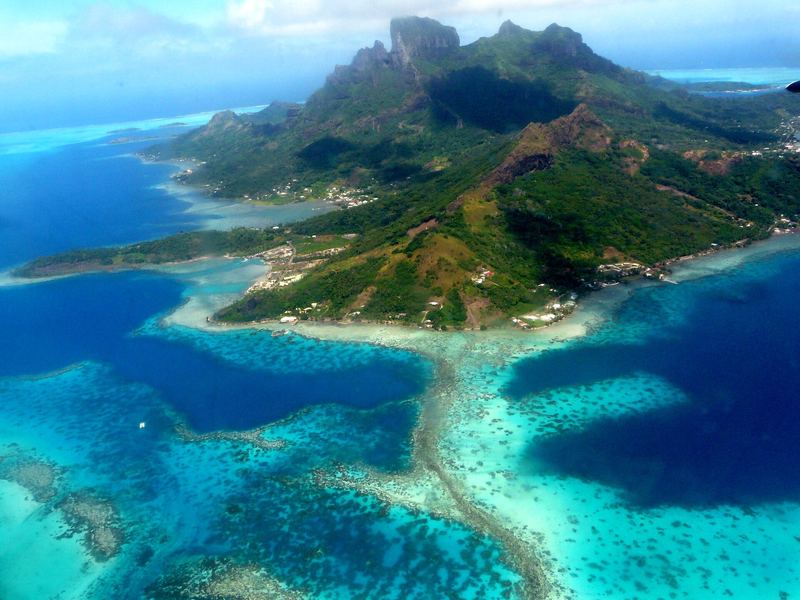
Bora Bora's lagoon is protected by an outer reef and glows from pale aquamarine to deep sapphire. Mount Otemanu, the jagged remnant of an ancient volcano, rises from its center. Blacktip reef sharks, stingrays and reef fish are everyday sights from your deck. The whole island feels arranged around a single view.
Aitutaki's lagoon is bigger and shallower. It's triangular, ringed by a barrier reef, with sandbanks that appear at low tide, channels full of giant trevally and coral heads sheltering giant clams. There's no towering peak; the main island is low and green, with Maungapu its highest point. In full sun, the water glows like nowhere else, which is why the weather matters so much here.
The mood differs too. Bora Bora is about being looked after in a beautiful setting. Aitutaki is small and friendly. You can drive around it in well under an hour. Crowds never really build because there are only so many rooms. Evenings are a drink on your deck as the lagoon turns pink.
Overwater Villas and Beach Bungalows
Bora Bora has one of the world's highest concentrations of luxury overwater bungalows. Four Seasons Resort Bora Bora on Motu Tehotu is the benchmark. The St. Regis Bora Bora Resort has some of the largest overwater villas in the South Pacific and a kid-free pool. Conrad Bora Bora Nui wraps around a sheltered cove. The InterContinental Thalasso has been closed for a full renovation, so check whether it has reopened.
Aitutaki has the Cook Islands' only overwater bungalows, at Aitutaki Lagoon Private Island Resort on Motu Akitua. It's kid-free, for guests 16 and over, with 33 thatched bungalows including seven overwater, plus a Royal Honeymoon Pool Villa. It feels like a classic South Pacific island resort rather than a polished brand. It expects a minimum stay of about four nights.
Aitutaki's other strong picks are on the sand. Pacific Resort Aitutaki has 29 beachfront bungalows, suites and villas facing the sunset, with an infinity pool and spa. Etu Moana is a kid-free boutique with eight villas in gardens on the beach. Family-run bungalows face the same water for far less.
Budget Reality
This is where Aitutaki stands out. All figures are approximate.
On Bora Bora, overwater bungalows at the top resorts run from around $1,000 to several thousand dollars a night. Four Seasons entry bungalows often start around $1,800. Dining is expensive because nearly everything is imported. Some resorts charge per person for boat transfers. Pensions on the main island cost a few hundred dollars.
Aitutaki suits very different budgets on the same lagoon. The private-island resort often starts around $900 a night and competes with Bora Bora at its top end. Pacific Resort Aitutaki often starts around $1,050. Etu Moana often starts around $440. Family-run beachfront bungalows with kitchens cost far less. The snorkeling outside the door is just as good.
Food on Aitutaki is pricier than on Rarotonga since goods arrive by plane or ship, but simpler and more relaxed than Bora Bora's resort dining. Carry some cash, since smaller restaurants and stands may prefer it and ATMs are few.
For couples who want the lagoon more than the label, Aitutaki is excellent value.
Flights From the US
Bora Bora is the simpler trip. Fly nonstop from Los Angeles or San Francisco to Papeete (PPT) on Tahiti, about eight to nine hours. Then Air Tahiti flies about 50 minutes to Bora Bora Airport (BOB) on Motu Mute, with several flights daily. Your resort's boat takes 10 to 20 minutes.
Aitutaki takes more planning. All international flights land on Rarotonga (RAR). From the US, the main option is the weekly Alaska Airlines flight from Honolulu, roughly six hours. Other routes connect through Papeete on Air Tahiti Nui and Air Rarotonga, or through Auckland on Air New Zealand. From Rarotonga, Air Rarotonga flies to Aitutaki (AIT) several times a day in about 50 minutes. Resorts meet you at the small airport. The private-island resort adds a short boat ride.
Book Aitutaki flights when you book your international ones. Seats fill in July and August and service thins out on Sundays. On Aitutaki, rent a scooter, e-bike or small car for a day or two. On Bora Bora, you'll mostly move by boat.
Lagoon Days and Island Nights
On Bora Bora, join a lagoon snorkel to swim with blacktip reef sharks and stingrays, ideally with an operator that doesn't feed them. Have breakfast paddled to your bungalow by outrigger canoe. Picnic on a private motu. Take a 4x4 tour to the WWII cannons or a helicopter flight over the lagoon. End with a sunset catamaran as Otemanu turns pink.
On Aitutaki, the full-day lagoon cruise is the highlight. Most visit a giant clam area, a motu barbecue lunch and Tapuaeta'i, better known as One Foot Island, where a small post hut stamps a footprint as a novelty. Ask for a postcard stamp if you'd rather keep your passport pages clean. Charter a private boat so a guide can time the sandbars for low tide. Climb Maungapu in about half an hour for a late-afternoon view of the whole lagoon. Visit Akaiami, where flying boats stopped on the Coral Route in the 1950s.
Both islands put on an island night with drumming and dancing. Aitutaki's performers take real pride in theirs.
Best Months for Each
The two share a broadly similar Southern Hemisphere pattern. May through October is the drier, cooler season and the best time for both. November to April is hotter and more humid, with short heavy showers and cyclone risk, though direct hits are uncommon.
Aitutaki's lagoon depends more on sunshine. A gray day dulls it noticeably, so in the wetter season keep your cruise day flexible and book it once you see a clear forecast. July and August are busiest there because of New Zealand and Australian school holidays. With limited rooms, book four to six months ahead for those weeks, especially for overwater villas. June and September are particularly good.
Bora Bora's peak is June through August, so book early there too. The shoulder months of April, May, October and November often balance weather and value. Humpback whales pass both regions from roughly July to October.
Pack reef shoes, reef-safe sunscreen and a rash guard. Sun bouncing off white sand and shallow water burns fast. Bring insect repellent. If you're pregnant or hoping to be soon, check CDC travel health notices.
Can You Do Both
It's possible but not simple. Bora Bora is in French Polynesia and Aitutaki is in the Cook Islands, so linking them means flying through Papeete and Rarotonga. Air Tahiti Nui and Air Rarotonga connect Papeete with Rarotonga, but schedules are limited, so plan the whole trip around those days.
Most couples get a better honeymoon by choosing one country. For French Polynesia, pair Bora Bora with Moorea or Taha'a. For the Cook Islands, spend three to five nights on Rarotonga for hiking, markets and an island night, then four or more on Aitutaki to slow right down. Putting the quieter island last works beautifully.
If you do want both lagoons, allow two weeks. A rough shape: Moorea, then Bora Bora, then fly via Papeete to Rarotonga and finish on Aitutaki. Leave buffer days between international legs, since small-plane schedules can shift with weather.