Scale and Mood
Fiji feels like a big, well-oiled honeymoon destination in the best sense. Resorts excel at celebrating newlyweds with flowers, songs and thoughtful surprises. Village visits and kava ceremonies add depth. On your last morning, staff often gather on the beach to sing "Isa Lei" as your boat pulls away. Few couples get through it dry-eyed.
The Cook Islands feel like a small town. Rarotonga has about the population of a small American town and no building taller than a coconut palm. People wave from scooters, dinner might be tuna sashimi eaten barefoot on the sand and resorts tend to be clusters of bungalows, many locally owned. Island night shows bring fast, athletic Polynesian dance. Sunday church services welcome visitors, with harmonized hymns that stay with you.
Couples who want a polished resort escape lean Fiji. Couples who want to feel part of a place lean the Cooks.
Resorts and Private Islands
Fiji has the deeper bench. In the Mamanucas, Likuliku Lagoon Resort was Fiji's first kid-free resort with overwater bures. Tokoriki Island Resort faces west so every bure catches the sunset. In the Yasawas, Turtle Island hosts just 14 couples on the Blue Lagoon, while Laucala Island in Northern Fiji is a 3,300-acre private island with its own airstrip.
The Cook Islands' stays are smaller. On Aitutaki, Aitutaki Lagoon Private Island Resort occupies a 27-acre motu and has the only overwater bungalows in the country. Pacific Resort Aitutaki lines the sunset shore with 29 bungalows and villas. Etu Moana is a kid-free cluster of eight thatched villas on a white sand beach. On Rarotonga, Little Polynesian Resort has 14 kid-free rooms on the clear lagoon at Titikaveka.
If you want the most exclusive stay possible, Fiji. If you want a small, personal stay on one of the Pacific's great lagoons, the Cooks.
Lagoons and Days on the Water
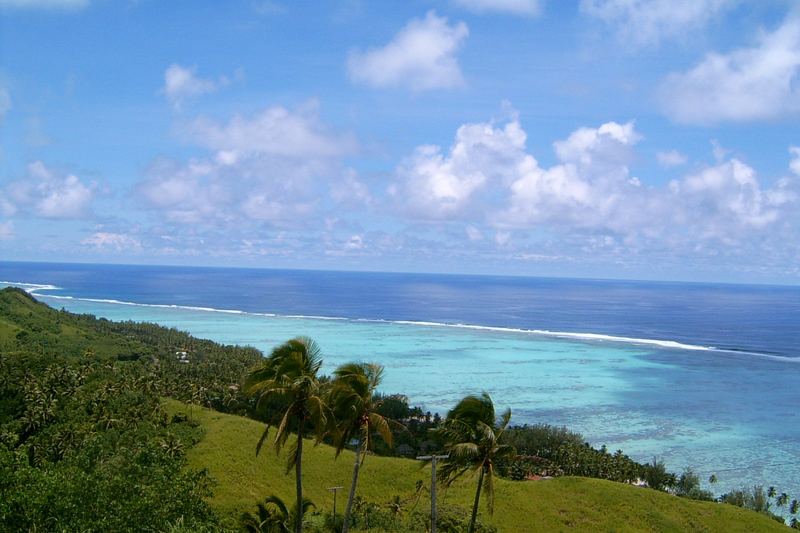
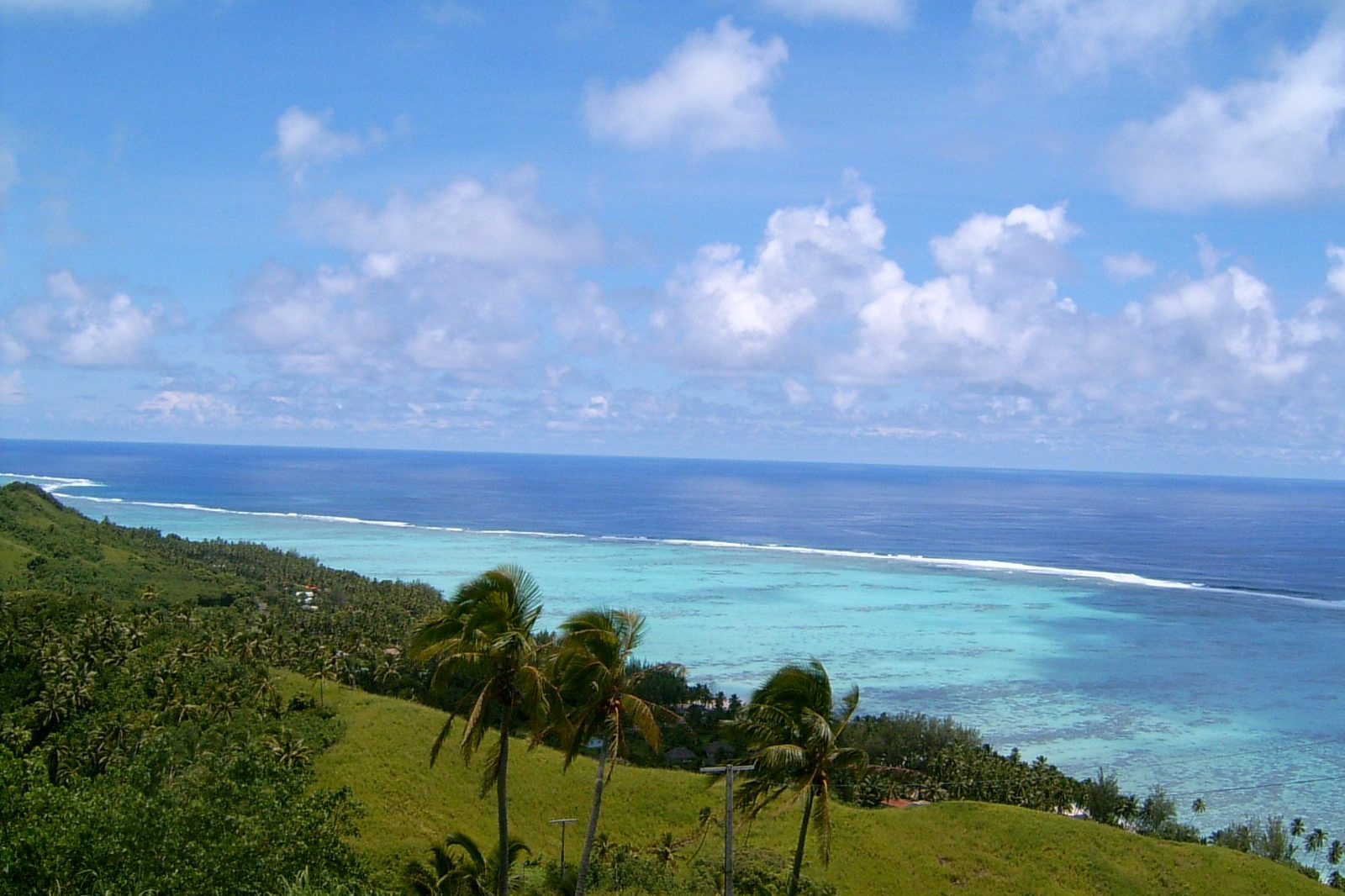
Aitutaki's lagoon is the single most beautiful thing in either country for many couples. A day cruise crosses water that ranges from pale aqua to deep sapphire, stopping at sandbanks and tiny motu such as One Foot Island. On Rarotonga, Muri Lagoon is shallow enough to paddleboard across to uninhabited islets at golden hour. The Aroa Marine Reserve is good for snorkeling.
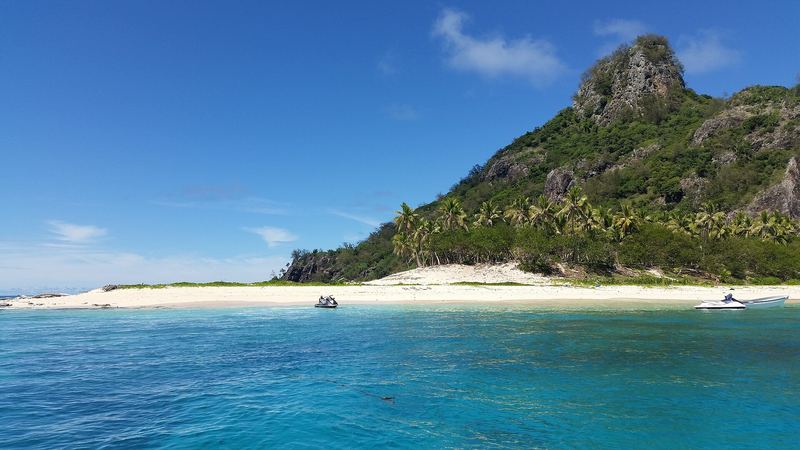
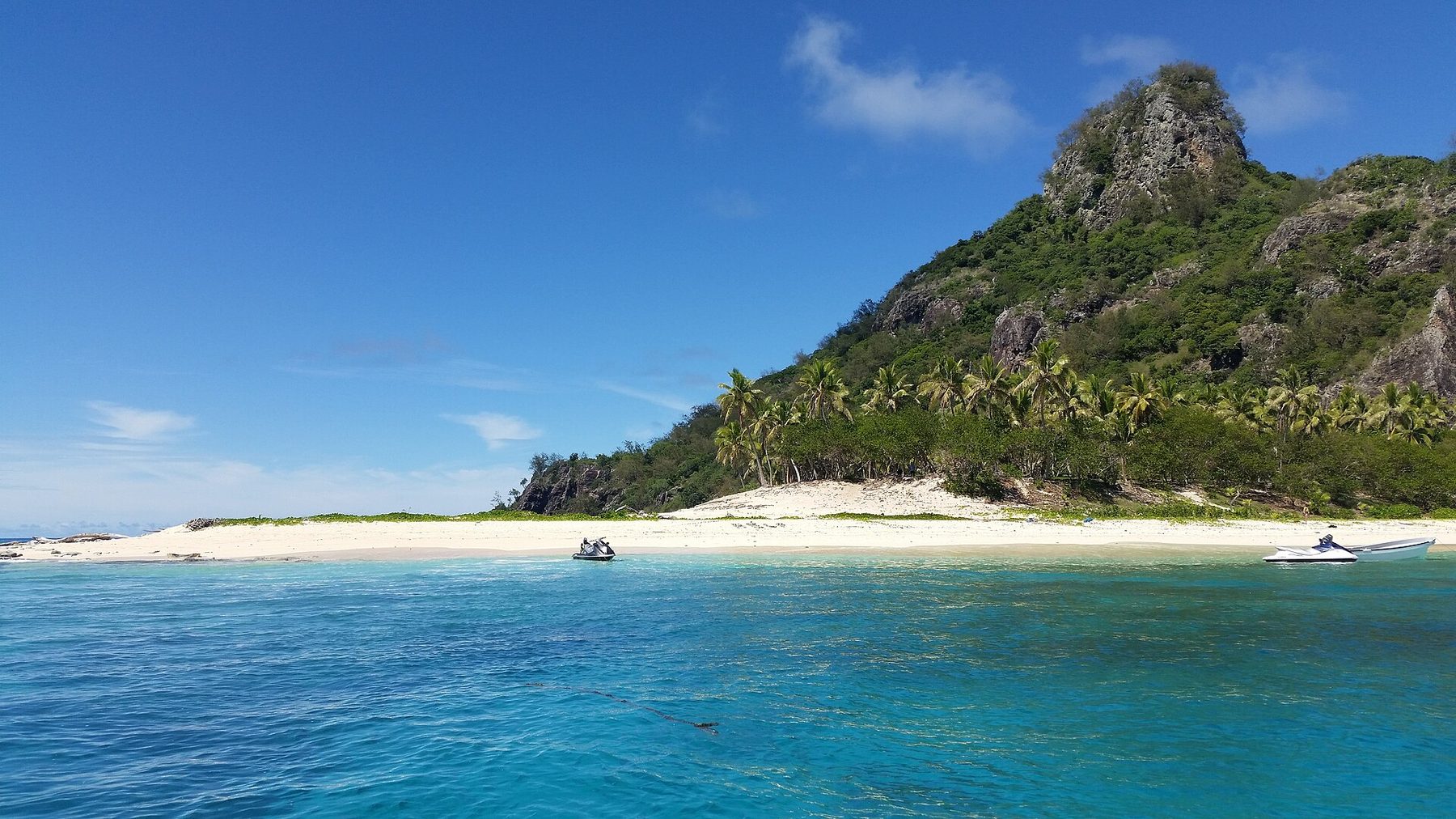
Fiji offers more variety. The Mamanucas are sunny and calm with snorkeling straight off the beach, plus sandbar picnics. The Yasawas add empty beaches and volcanic peaks. Northern Fiji around Taveuni is famous for soft-coral diving on the Rainbow Reef.
On land, Rarotonga has the cross-island track past Te Rua Manga, the spire locals call the Needle, plus the Saturday Punanga Nui Market. Fiji has waterfalls, rainforest and village life. Divers lean Fiji. Couples who mostly want to float in clear water love Aitutaki.
Getting There
Fiji is easier. Fiji Airways flies nonstop from Los Angeles and San Francisco to Nadi (NAN) in about 10 to 11 hours, usually overnight. Many island resorts can be reached the same morning by boat, seaplane or helicopter.
The Cook Islands take more planning. There is no longer a nonstop from Los Angeles. Most Americans fly Alaska Airlines' weekly Honolulu to Rarotonga (RAR) service, about six hours, which sets your trip length in seven-day blocks. The alternatives are Air Tahiti Nui from LAX via Papeete or Air New Zealand via Auckland. Air Rarotonga then flies to Aitutaki several times a day.
The upside for the Cooks is time zone. They run on Hawaii time, so West Coast couples feel almost no jet lag. Fiji sits west of the International Date Line, about 19 or 20 hours ahead of California, so you lose a day flying out and gain it back coming home.
Seasons
The two share the South Pacific calendar. May to October is the dry season in both, with sunny days in the high 70s to low 80s, lower humidity and comfortable trade winds. July and August are the busiest weeks in both, as New Zealand and Australian families arrive for school holidays. In Fiji, the June to September peak means booking popular resorts six to twelve months ahead. On Aitutaki, rooms are limited, so book early too.
November to April is the wet season and cyclone season in both, hotter and stickier with short heavy downpours. Fiji sees roughly one cyclone a year on average. Prices soften and the lagoons stay warm. Buy insurance that covers weather delays and keep a buffer night before your international flight, especially with the Cooks' weekly Honolulu service.
April, May, October and early November are good compromises in both. Mosquitoes are worse in the wet months and dengue occurs in both. If you're pregnant or hoping to be soon, check CDC travel health notices.
Budget and Value
Fiji spans a wider range. Our Fiji guide puts upscale boutique resorts at the luxury end for two, with top kid-free and all-inclusive resorts costing more. Private islands like Laucala sit at the very top. Seaplane and helicopter transfers add a significant per-person cost each way.
The Cook Islands usually cost less at the top end, though more than many couples expect for a small nation, since nearly everything is shipped in. On Rarotonga, beachfront bungalows are moderately priced. On Aitutaki, our listings run from Etu Moana at the lower end to the private island resort and Pacific Resort at the top. Dining runs closer to New Zealand prices than Southeast Asian ones.
Tipping is not part of the culture in either, though many Fiji resorts have a staff fund.
How to Plan Each
For Fiji, plan at least seven nights and ideally ten to twelve, split between two regions. A classic plan is five nights in the Mamanucas, then a seaplane north to the Yasawas or Laucala. Dress modestly in villages, bring a gift of kava root for the chief if you visit. Learn to say "Bula" and "Vinaka."
For the Cook Islands, three to five nights on Rarotonga followed by four to six on Aitutaki is the classic shape, with the slowest days at the end. Take the full-day Aitutaki lagoon cruise on your first clear day. Sunday is a quiet family day, with many shops closed and limited buses. Greet people with "kia orana."
Combining the two is possible, since Rarotonga and Nadi both connect through Auckland, but it adds long travel days. For a single honeymoon, choose one country and give it room. Both reward slowing down.