Why Réunion for a Honeymoon
The scenery is the reason. UNESCO listed the island's peaks, cirques and cliffs as a World Heritage Site in 2010, an area covering roughly 40 percent of the island. You can wake up above a sea of clouds, drive across a lunar plain of volcanic ash to the rim of an active crater and be swimming in a warm lagoon by late afternoon.
It is also unusually easy to travel in. Roads are well maintained, tap water is safe, pharmacies are everywhere and the hiking trails are signed and graded. That makes Réunion one of the more manageable adventure destinations for couples who do not want to rough it.
The culture adds depth. Tamil temples stand beside Catholic churches, Creole dinners last for hours and local rum comes infused with vanilla, lychee or ginger. Pair it with Mauritius, under an hour away by air, for a honeymoon that balances hiking with a few days of resort calm.
Best Time to Visit
May to November is the drier season and the best time for hiking. From June to August, the southern winter, days on the coast are warm and sunny while nights in the mountains can drop close to freezing at the highest refuges. Skies are often clearest then.
September to November is a favorite, with warm weather, dry trails and the jacaranda and flame trees starting to bloom. Humpback whales are offshore from roughly June to October.
December to April is hot and humid. January to March brings the heaviest rain and the risk of cyclones. Trails or roads can close after storms. Dengue and chikungunya flare up in some years, mainly in these hot, wet months. If you're pregnant or hoping to be soon, check CDC travel health notices for Réunion. The windward east and south are much wetter than the sheltered west coast at any time of year.
French school holidays, especially July, August and late December, push up prices and fill gîtes in the cirques, so book early for those periods.
Where to Go
Base yourself in at least two places: the coast and the mountains.
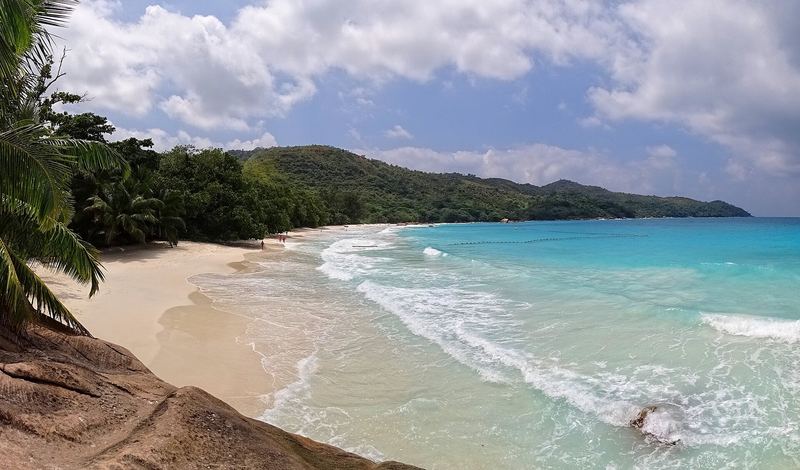
The west coast around Saint-Gilles-les-Bains, L'Hermitage and Saint-Leu has the island's main lagoon, the best beaches and most of the hotels. It is also drier and sunnier than the rest of the island. Saint-Leu is a top paragliding spot.
Cilaos, in the southern cirque, is the most accessible mountain base, with thermal springs, local wine and trails to Piton des Neiges. It has its own destination guide.
Salazie, in the northeast, is the greenest cirque, full of waterfalls, with the pretty Creole village of Hell-Bourg. Mafate has no roads at all, so you hike in to small family-run gîtes.
Piton de la Fournaise is a day trip from the coast or from the highland town of Bourg-Murat. The wild south coast, with lava flows reaching the sea near Saint-Philippe, makes a good scenic drive.
Sample 10-Day Itinerary
Days 1 to 3: Land in Saint-Denis and drive about an hour to the west coast. Recover in the lagoon at L'Hermitage, try a tandem paraglide over Saint-Leu and spend an evening at a seafront restaurant in Saint-Gilles.
Days 4 to 6: Drive the winding road up to Cilaos. Soak in the thermal baths, taste local wine and hike to the Roche Merveilleuse viewpoint. Fit couples can climb to the Piton des Neiges refuge for an overnight stay and sunrise at the summit.
Days 7 to 8: Head to the south and stay near Saint-Pierre or in the highlands at Bourg-Murat. Rise early for the volcano, hiking from Pas de Bellecombe toward the crater when the trail is open. Drive the lava coast near Saint-Philippe.
Days 9 to 10: Finish in Salazie and Hell-Bourg for waterfalls and Creole houses, then return to Saint-Denis for the flight home. With more time, add a two-day hike into Mafate or a few days in Mauritius.
Budget and Costs
Réunion is priced like France rather than like a developing island. Figures are approximate.
Comfortable midrange hotels on the west coast often cost around €100 to €250 a night for two. A few upscale properties, such as LUX* Saint Gilles, charge more, especially in French holidays. Mountain gîtes and chambres d'hôtes are cheaper. Half board in a hiking gîte is usually good value.
Restaurant meals typically run about €15 to €30 per person for a main course and drink in casual places, more for fine dining. Snack bars selling samosas, bouchons and sandwiches are very cheap.
A rental car is essential and often costs around €30 to €60 a day depending on the season. Helicopter flights over the cirques are a major splurge but popular. Round-trip flights from the US, usually via Paris, are commonly in the $1,400 to $2,500 range per person in economy.
Getting There and Around
All routes from the US connect at least once. The simplest is via Paris, where Air France and Air Austral fly from Charles de Gaulle and Corsair and French bee from Orly. French bee also flies to Orly from Newark and San Francisco, which allows a single-airline itinerary with a change at Orly. Flights from Paris take around 11 hours. Air Mauritius and Air Austral connect Réunion with Mauritius in under an hour, a handy option for a two-island trip.
Roland Garros Airport is just east of Saint-Denis, about an hour from the west coast resorts.
A rental car is the way to explore. Driving is on the right, roads are good and the coastal expressway is fast, but the mountain roads are steep with many hairpin bends. Buses connect towns cheaply but are slow for sightseeing. To reach Mafate, you walk or take a helicopter.
Culture and Etiquette
Réunion was uninhabited until the 17th century. French settlers brought enslaved people from Madagascar and East Africa. After slavery was abolished in 1848, indentured workers arrived from India, followed by traders from China and Gujarat. Today the island's culture blends all of them. The abolition date, 20 December, is a public holiday celebrated with music and street parties.
French is the official language and the one to use with officials and in shops, but Creole is spoken in everyday life. Learn a few phrases of French at least. A bonjour on entering a shop is expected.
Cover shoulders and remove shoes in Hindu temples and mosques. Ask before photographing ceremonies. Tipping is not expected as in the US, since service is included, but rounding up for good service is appreciated. Maloya, the island's soulful music tradition, is worth seeking out at a local concert or festival.
Quick tips
- Swim only in the lagoon or in netted, supervised zones; sharks make the open coast dangerous.
- Rent a car. The island's best sights are in the mountains and buses are slow.
- Start hikes at dawn; clouds usually roll in over the peaks by late morning.