Two Kinds of Wildlife Trip
The Galápagos gives you shared firsts at close range. You might snorkel beside a Galápagos penguin, the only penguin species living on the equator, then watch a male blue-footed booby lift his feet one at a time to impress a female. Giant tortoises the size of armchairs graze in the Santa Cruz highlands. Group sizes on land are capped, visitor sites run on schedules and guides keep everyone on marked trails, so even popular spots rarely feel crowded. You come home knowing more about evolution than you expected.
Costa Rica's wildlife is about abundance and variety. The country protects a large share of its land in parks and reserves, which pays off in monkeys, sloths, toucans, scarlet macaws, sea turtles and countless frogs and butterflies. You spot them from hanging bridges, on guided night walks and sometimes from your balcony. The animals are wilder in the sense that they keep their distance, but you see them almost every day. The Galápagos is a once-only encounter. Costa Rica is a steady stream of sightings wrapped into a broader holiday.
In the Water and on the Beach
The Galápagos is a snorkeling honeymoon. On San Cristóbal, a day boat to Kicker Rock, a split volcanic cone, brings sea lions and often turtles and rays, with hammerheads for divers in the channel. From Isabela, Los Túneles takes you through lava arches where turtles and seahorses rest in clear shallow water. Tortuga Bay on Santa Cruz is a long white beach with a sheltered cove where you can kayak among marine iguanas. From June to November the water cools, so pack or rent a shorty wetsuit.
Costa Rica's beaches face the Pacific and are more about sunsets than snorkeling. Guanacaste in the dry northwest has the resort coast, sunset catamarans and surf lessons in Tamarindo. Santa Teresa is a laid-back surf and yoga town. Manuel Antonio mixes beaches with rainforest and monkeys. Many Pacific beaches have strong rip currents and few lifeguards, so swim where your hotel says it is safe. For underwater life, the Galápagos wins easily. For lounging on sand with a cocktail, Costa Rica does.
Cruise, Lodge or Both
In the Galápagos, the first decision is boat or base. Small expedition ships and yachts carry about 16 to 100 guests and sail between islands at night, usually for four to seven nights. Pricier boats offer bigger cabins, better stabilization and more experienced guides. On land, Santa Cruz has the widest choice. Finch Bay Hotel sits on a beach across the bay from Puerto Ayora, reached by water taxi, with marine iguanas on the path. In the highlands, Pikaia Lodge sits on a volcano rim and Galápagos Safari Camp has African-style tents with giant tortoises nearby. A popular split is three or four nights on a boat, then two on land.
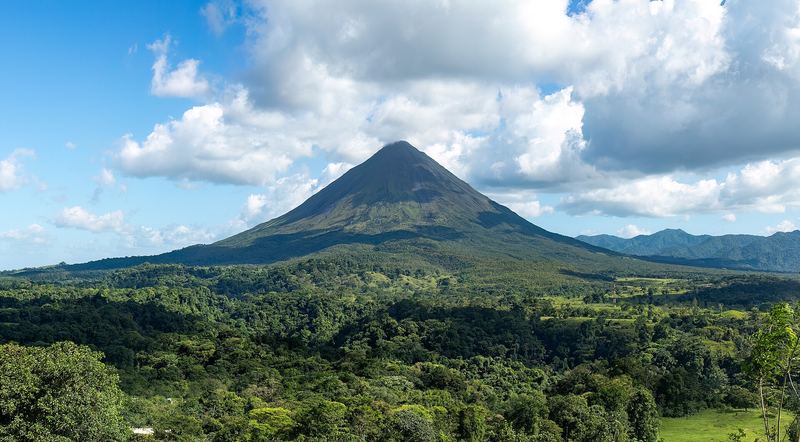
Costa Rica's lodges are the draw in themselves. Around Arenal, several give each room a private hot-spring pool. In Manuel Antonio, Arenas del Mar has rainforest suites with balcony jacuzzis, Gaia Hotel & Reserve is a small grown-up hotel in its own forest and Sí Como No has a kid-free pool. Lapa Rios Lodge on the Osa Peninsula has open-air villas on a 1,000-acre reserve. Nantipa puts beachfront bungalows on Playa Santa Teresa.
Budget for Two
The Galápagos is one of the more expensive honeymoons in the Americas. Our Galápagos guide estimates most couples spend roughly $8,000 to $15,000 for a week, before flights from the US. Cruises run from about $500 per person per night on simpler yachts to over $1,000 on luxury ships. Pikaia Lodge and Galápagos Safari Camp start near $3,000 a night, while Finch Bay starts closer to $450. Add the flight from mainland Ecuador, park fees and crew tips, which are a significant part of crew income.
Costa Rica is easier to scale. Luxury lodges and resorts run roughly $700 to well over $1,500 a night in high season and upscale boutique hotels about $300 to $700. Sí Como No starts around $260, Gaia and Nantipa near $450 and Lapa Rios near $1,000. Guided tours like zip-lining commonly run $75 to $150 per person. Green-season travel brings real savings. All figures for both are approximate. For the cost of one Galápagos week, many couples could spend ten days in Costa Rica at a high level.
Getting There
Costa Rica is the shorter trip. There are nonstops to San José (SJO) and Liberia (LIR) from many US hubs, typically about three to six hours. Book an open-jaw ticket, into one airport and out of the other, to avoid backtracking between Arenal and Guanacaste. Private transfers between regions often cost a few hundred dollars. Shared shuttles cost much less.
The Galápagos takes longer. You first fly to Quito (UIO) or Guayaquil (GYE) on the Ecuadorian mainland, then take a domestic flight to Baltra (GPS) or San Cristóbal (SCY). From Quito the island leg is about three hours, often with a stop in Guayaquil. The islands run one hour behind the mainland. Bags pass a biosecurity check before departure, so arrive early. Baltra is about an hour from Puerto Ayora by bus, ferry and taxi. San Cristóbal's airport is five minutes from town. Most couples need a night on the mainland at least one way. Bring your passport for both countries. Entry and visa rules depend on your citizenship and can change at short notice, so check the official government website before you book.
Seasons and Sea Conditions
The Galápagos has no bad month, only trade-offs. December through May is warm, with air and water in the high 70s, calmer seas and mostly sunny skies with short showers. Green sea turtles come ashore to nest. June through November is the cooler garúa season, with misty highlands and rougher seas, but the Humboldt Current brings more fish and livelier sea lions. September and October tend to be the choppiest months. If either of you gets seasick, choose a larger ship or a land-based trip.
Costa Rica's dry season runs roughly December through April, with the most sunshine on the Guanacaste coast. The green season, May through November, brings sunny mornings, afternoon showers and lower prices, with September and October the wettest months on the Pacific side. Arenal can rain in any month. Late November, early December and May are the sweet spots. Conveniently, both destinations are at their most comfortable from December to May, so a winter or spring wedding works for either.
Combining Them
A Costa Rica and Galápagos honeymoon is possible but takes planning, because you will route through a hub such as Panama City or the Ecuadorian mainland and lose most of a day each way. It works best on a trip of two weeks or more. A sensible order is the Galápagos first, while you have energy for early starts and boat days, then a week in Costa Rica: a few nights at Arenal for hot springs and hanging bridges, then a Pacific beach to finish slowly.
With ten days or less, pick one. Choose the Galápagos if the wildlife itself is the dream and you are happy to spend more for it. Plan at least four nights there, five to seven if you can. Choose Costa Rica if you want variety, softer adventure and a beach. Plan seven to ten nights. Both are lowland tropical destinations for part of the trip, so pack repellent. Dengue occurs in lowland Costa Rica. If you're pregnant or hoping to be soon, check CDC travel health notices for both.