The Shape of Each Trip
A classic 13-night Italian honeymoon might be three nights in Venice, three on Lake Como, three at a Tuscan estate and four on the Amalfi Coast, moving by high-speed train and driver, then flying home from Naples or Rome. Each stop has a strong sense of place. Most of them involve water.
A classic ten-day French honeymoon might be three nights in Paris, the TGV to Avignon in about 2 hours 40 minutes, a few days in the Luberon villages by rental car, then a drive to the Riviera for Antibes or Cap Ferrat before flying home from Nice. In autumn, swap Provence for Champagne and the Loire.
Italy tends to string together several scenic highlights. France tends to pair one great city with one or two regions. With a week, both countries reward choosing just two bases.
Scenery and Setting
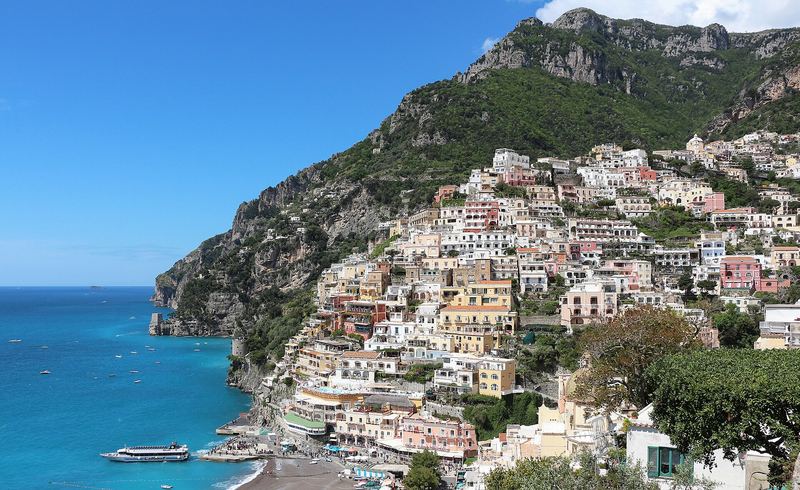
Italy wins for drama. Pastel houses stack up the Amalfi cliffs above a very blue sea. Lake Como's grand villas and terraced gardens sit at the foot of the Alps. Tuscany's cypresses, vineyards and medieval hill towns look the way couples hope they will. Venice has no equivalent anywhere.
France wins for range of mood. In one trip you can stroll the Marais at midnight, sleep in a vineyard chateau, swim off a granite cove in Corsica and ride a cable car toward Mont Blanc from Chamonix. Provence slows to long lunches under plane trees and rose at five. Alsace has half-timbered wine villages. Annecy has a clear Alpine lake for swimming.
For couples who want the sea to be part of the honeymoon, Italy's coast is the easier fit, though the Riviera and Corsica cover it in France. For couples who want city nights, Paris tips the scale.
Hotels and Where You Will Sleep
Italy's honeymoon hotels are famous in their own right. On the Amalfi Coast, Le Sirenuse in Positano, Hotel Santa Caterina near Amalfi, Caruso in Ravello and Monastero Santa Rosa in Conca dei Marini all have long histories and famous terraces. Lake Como has the historic Villa d'Este and the intimate Passalacqua. In Tuscany, restored estates such as Borgo Santo Pietro pair countryside with serious kitchens.
France does small, personal luxury especially well. Many of its best stays are family-run chateaux, converted farmhouses or village inns with a dozen rooms, where the owner pours the wine at dinner. Landmark palace hotels exist in Paris and on the Riviera, but you do not need a palace budget to sleep somewhere with history.
If one splurge hotel is the centerpiece of your plans, Italy has more candidates. If you prefer charm and character across several stops, France delivers it at many price points.
Food and Wine
This contest is close to a draw. Italian food is regional and generous: Amalfi seafood and lemons, Tuscan steak, Lake Como perch and pasta made with care in every village. Evenings begin with aperitivo, lunch runs from about 1 to 3 p.m. and dinner rarely starts before 8. Order a cappuccino only in the morning, then switch to espresso.
French food changes dramatically from Alsace to the Basque coast to Provence. Its wine regions are destinations in themselves. A lunch prix fixe menu is the great value, often 25 to 45 euros each, while dinner with wine at a nice bistro is commonly 120 to 200 euros for two. Bordeaux, Burgundy and Champagne are at their most beautiful during the October harvest.
Couples who dream of seafood lunches by the sea will lean to Italy. Couples who want to plan days around cellar tours and village markets will lean to France.
Flights, Trains and Cars
Both are easy from the US. Paris CDG has more nonstop service from American cities than any other mainland European capital. Italy has nonstops to Rome, Milan and, seasonally, Venice from major hubs, typically around eight to ten hours from the East Coast. In summer, Nice also has nonstops to several East Coast cities, which makes an open-jaw trip into Paris and out of Nice easy.
Trains are the backbone in both. France's TGV reaches Lyon in about 2 hours, Bordeaux in just over 2 and Strasbourg in under 2. Italy's high-speed lines connect Venice, Milan, Florence, Rome and Naples.
Cars are where they differ. Avoid driving on the Amalfi Coast and in Italian cities, though a car is useful in rural Tuscany, where you need an International Driving Permit and must watch for ZTL zones. France is friendlier to drivers: rent a small car for Provence, the Loire, Alsace or Corsica. Expect toll highways.
Seasons and Closures
The calendars nearly match. May, June and September are the best months in both, with early October close behind. July and August are hot, busy and expensive. In both countries locals take their own holidays in August. Some Paris restaurants close for two or three weeks then. Ferragosto in mid-August fills Italian beaches.
In Italy, many Amalfi Coast and Lake Como hotels close from about November to March, which makes winter better for Venice, Florence and Rome. Tuscany's harvest and truffle season make September through November special.
France offers more off-season options. Paris is lovely and quiet in winter. Alsace's Christmas markets draw couples in late November and December, while the Alps have a ski season from December to April. Lavender blooms in Provence from late June to mid-July, which tempts many couples into the busiest weeks.
For a winter wedding, France gives you more honeymoon choices.
Budget and Practical Matters
At the top end, Italy is pricier. Luxury hotels in its main honeymoon regions run from several hundred dollars a night at boutique properties to well over $1,500 at the most famous addresses in peak season. In France, a good Paris boutique hotel often runs 250 to 500 euros a night and a charming countryside inn 150 to 300, though palace hotels start well above 1,000 in summer. A September trip in France often costs about a fifth less than summer. All figures are approximate.
Safety is similar. The State Department rates France Level 2 because of terrorism risk and civil unrest, so stay alert in crowds and avoid demonstrations. In Italy the main nuisance is pickpocketing on crowded trains and around major sights, which applies in Paris too.
France has one extra planning quirk: rail and air traffic control strikes. They are usually announced a few days ahead, so avoid tight same-day connections before an international flight.