Same Herds, Different Stage
The migration is a loop. Each country holds a different part of it. The herds spend roughly January to March on Tanzania's southern Serengeti plains for calving, move through the Western Corridor around May to July and reach the Mara River in the north from about July. They cross into Kenya's Maasai Mara and linger there until around October before turning south again.
That means Kenya is a July to October story, with river crossings likeliest from August into early October. Tanzania has a version of the migration in most months, as long as you match your lodge to where the herds are. Outside migration season, the Mara still has some of the best resident big cats in Africa, so a January trip to Kenya is far from second best.
If your wedding date is fixed in the first quarter, Tanzania has the edge. If it falls in August or September, both work and the decision comes down to style.
How Each Safari Feels
In the Mara, density is the thrill. The reserve covers about 580 square miles. The conservancies around it, such as Mara North, Olare Motorogi and Naboisho, cap beds so that a lion sighting usually has one or two vehicles at it. You can walk with a Maasai guide, drive after dark with a red spotlight and be on a game drive the afternoon you land.
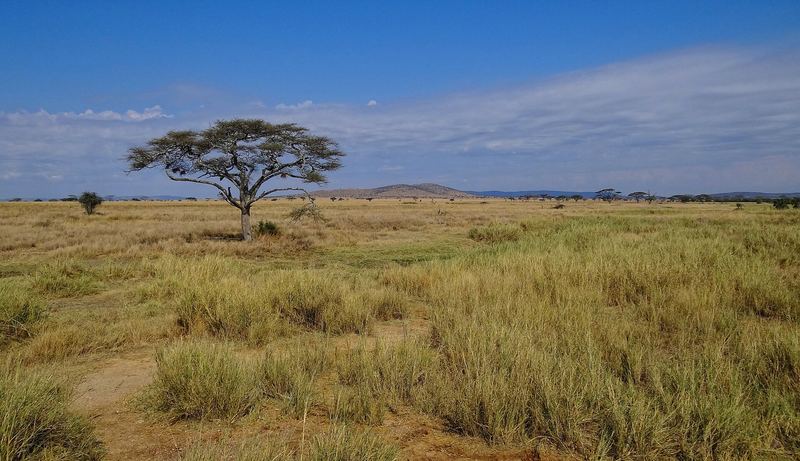
The Serengeti feels bigger and emptier in places, with granite kopjes, long horizons and more driving between sightings. Private reserves on its edge, such as Singita Grumeti, recreate the conservancy model with off-road driving and walks, while camps inside the park put you closer to the moving herds.
Kenya also makes it easy to add a second, contrasting area. Laikipia means rhinos, Grevy's zebra and cool nights by a fire. Tanzania's add-ons are Tarangire for elephants and baobabs and Ngorongoro for a day in an ancient caldera.
The Beach Finish
This is where Tanzania pulls ahead for many couples. Zanzibar is a short light-aircraft flight from Serengeti airstrips, so you can do a morning game drive and be on the sand by afternoon. The island has Stone Town's UNESCO-listed lanes, sunset dhows, spice farms and a wide spread of beach hotels, from boutique places to the barefoot private island of &Beyond Mnemba.
Kenya's coastal answer is Diani Beach south of Mombasa: a long white strand, a reef to snorkel and dhow trips to the Kisite marine park. It is lovely and good value, though the resort scene is smaller. Diani sits well outside the coastal Level 4 zone, but Lamu, once Kenya's romantic island, is off the list under the current advisory.
Plenty of couples who start in the Mara still finish on Zanzibar, which is a short flight from Nairobi.
Safety and Advisories
Read this part carefully. The State Department rates Kenya Level 3, Reconsider Travel, mainly because of imported Ebola cases in Nairobi, alongside crime, kidnapping, terrorism and unrest. Several areas, including Lamu County and the coast north of Malindi, stay at Level 4. The Mara and Laikipia are not Level 4 zones, but you should buy medical evacuation insurance, book refundable deposits and look again at the advisory and the CDC notice a few weeks before you fly.
Tanzania is rated at the increased caution level. Most couples have smooth trips. On Zanzibar and in Arusha, use hotel transfers and avoid empty beaches and Stone Town's back lanes late at night.
In both countries, malaria prevention is advised for the parks and the coast. If you're pregnant or hoping to be soon, check CDC travel health notices before you commit. Buckle up on rough park roads too.
Where You Will Sleep
Kenya's honeymoon camps lean small and personal. Angama Mara sits high on the Oloololo Escarpment above the Mara Triangle, with glass-fronted tents and a view that makes breakfast run long. Mara Plains Camp in Olare Motorogi is intimate and photography-focused, while Governors' Camp is the classic riverside option inside the reserve. In Laikipia, Elewana Loisaba Tented Camp has twelve tents on an escarpment with Mount Kenya on the horizon.
Tanzania offers more range at the top. Four Seasons Safari Lodge Serengeti sits inside the park around a waterhole that elephants visit constantly, with plunge-pool suites and a spa. Singita Sasakwa Lodge is an Edwardian-style manor on a hill in the Grumeti reserve, with cottage infinity pools. Elewana Tarangire Treetops puts you in treetop rooms beside a huge baobab. Then &Beyond Mnemba Island closes the trip with sand between your toes.
Getting There and Around
Kenya Airways has flown nonstop from New York JFK to Nairobi in about 14 to 15 hours, though frequency has been cut back, so most couples connect once through Europe, the Gulf, Istanbul or Addis Ababa. You land at Jomo Kenyatta International (NBO), then cross town to Wilson Airport (WIL) for bush flights of 45 to 75 minutes to the Mara. Allow at least three hours between them or stay overnight.
Tanzania has no nonstops from the US. Couples usually connect through Doha, Dubai, Istanbul, Amsterdam or Addis Ababa to Kilimanjaro (JRO), spend a night near Arusha and fly on by light aircraft to Serengeti airstrips in one to two hours. Zanzibar (ZNZ) has its own international links for the trip home.
Both countries cap small-plane luggage at around 15 to 20 kg in soft bags, so pack accordingly.
What It Costs
Neither is cheap. Both scale. All figures are approximate and swing with season.
In Kenya, comfortable midrange lodges with meals and shared drives often run around $500 to $900 per couple per night. Small conservancy camps with private guiding, drinks and activities commonly sit between $1,500 and $3,000 or more per couple per night in peak months. Mara reserve fees for foreign visitors rose sharply and can add hundreds of dollars per couple per day in high season, so ask whether quotes include them.
In Tanzania, mid-range luxury tented camps run roughly $600 to $1,200 per person per night and top lodges often pass $1,500 per person. Park fees come on top. Zanzibar resets the budget, with boutique beach hotels from a few hundred dollars a night.
Compare quotes per couple, not per person. That one detail explains most of the apparent price gap.