Two Kinds of Old-World Romance
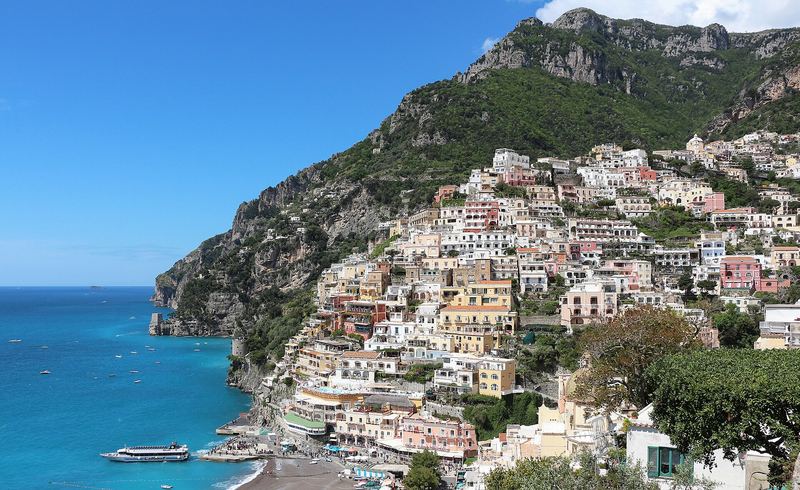
Italy's romance is grand and layered. Pastel villages stack up the cliffs of the Amalfi Coast. Villas and terraced gardens line Lake Como beneath the Alps. Tuscany is vineyards and medieval hill towns. Venice is a city of canals with no cars at all. Renaissance frescoes and a simple plate of pasta made with care both count as beauty here.
Portugal's romance is quieter and more weathered. Lisbon and Porto are old, hilly cities built for wandering, with tiled facades and viewpoints at every turn. The Douro Valley's terraced vineyards fall steeply to the river. The Alentejo is cork forests and family estates. The Algarve has golden sea cliffs and caves. Then there are the islands: Madeira's subtropical mountains and the Azores' crater lakes and hot springs.
Italy impresses. Portugal charms. Couples who have already done Italy often find Portugal feels more personal. First-timers to Europe are rarely disappointed by Italy.
Flight Times and Getting Around
Portugal is closer. Lisbon has nonstops from roughly a dozen US airports on TAP Air Portugal, United, Delta and American, about 6.5 to 7 hours from the East Coast. Porto has nonstops from Newark. Ponta Delgada in the Azores is under five hours from Boston. That short hop matters on a ten-day trip.
Italy is about eight to ten hours from the East Coast, with nonstops to Rome, Milan and seasonally Venice. An open-jaw ticket, arriving in one city and leaving from another, saves backtracking.
Inside each country, trains do much of the work. Italy's high-speed network links Venice, Milan, Florence, Rome and Naples. Portugal's Alfa Pendular runs Lisbon to Porto in about three hours. For Tuscany, the Douro, the Alentejo and the Algarve, rent a car. Avoid driving in Italian cities and on the Amalfi Coast, where a driver is far less stressful. Madeira and the Azores are a short flight from Lisbon. Both need a car.
Picking Your Season
Both share the same sweet spot: May, June and September, when it is warm without being oppressive and the summer crowds have not arrived or have left.
In Italy, early October is a close runner-up. Tuscany's harvest and truffle season make fall wonderful for food lovers. July and August are hot and crowded, especially on the Amalfi Coast. From about November to March, many Amalfi and Lake Como hotels close, so winter suits a city trip to Venice, Florence and Rome.
In Portugal, the Algarve sea is warm enough to swim from June. Late September and October bring the grape harvest to the Douro Valley, the best time to be there. July and August push the Alentejo and the Douro past 95°F, though Lisbon stays more moderate. Winter is mild but rainy on the mainland. Madeira stays in the 60s and low 70s through December and January, making it the stronger winter honeymoon of the two countries.
Palazzi, Quintas and Clifftop Hotels
Italy has the more famous addresses. On the Amalfi Coast, Le Sirenuse, Hotel Santa Caterina, Caruso and Monastero Santa Rosa are honeymoon favorites. On Lake Como, Villa d'Este is the historic choice and Passalacqua the intimate one. Capri adds Hotel Caesar Augustus and J.K. Place Capri. In Tuscany, restored estates such as Borgo Santo Pietro pair countryside with serious kitchens. Rome has the Hotel de Russie.
Portugal's best stays are smaller and often in the countryside. The Yeatman in Porto looks across the river with wine at its heart. Six Senses Douro Valley sits among the vineyards. São Lourenço do Barrocal is a restored farming estate in the Alentejo. Bela Vista Hotel & Spa is a cliffside mansion in the Algarve. Bairro Alto Hotel is a Lisbon classic. Belmond Reid's Palace looks over the sea on Madeira.
Italy does legendary. Portugal does characterful, at a gentler price.
How Far Your Money Goes
This is where Portugal pulls ahead. All figures are approximate.
In Portugal, good boutique hotels in Lisbon or Porto run roughly 180 to 350 euros a night. Five-star hotels and top estates often start around 400 euros and pass 800 in summer. Six Senses Douro Valley starts around $700, while several of the best boutique stays start nearer $300 to $450. Lunch for two at a tasca with wine can be 25 to 40 euros. A good dinner runs 80 to 150 euros.
In Italy, luxury hotels range from several hundred dollars at boutique properties to well over $1,500 a night at the most famous addresses in peak season. On Capri, Hotel Caesar Augustus and Hotel Punta Tragara start around $1,000 to $1,100, J.K. Place nearer $2,000. Private boat days, drivers and guides add up quickly. High-speed trains are reasonably priced if booked early.
Both add small nightly tourist taxes. Shoulder months lower rates in either country.
At the Table
Italy's food reputation is earned. Every region cooks differently: Amalfi seafood and lemons, Tuscan steak and Brunello, Lake Como perch. Evenings start with aperitivo on a terrace and meals are meant to be savored. Restaurants range from a trattoria lunch to Michelin-starred tasting menus. The best plan is a mix.
Portugal's food is the quieter surprise. Grilled fish and clams in garlic and coriander on the coast, slow-roasted pork and lamb in the Alentejo and custard tarts everywhere. Wine lists are dominated by grapes you have probably never heard of, at prices that make a second bottle feel reasonable. In the Douro you can drink vintage port where it is made.
Dinner runs late in both, rarely before 8. Service is unhurried and you will need to ask for the check. Tipping is modest. Round up or leave a little for great service.
Things to Do as a Couple
In Italy, take a private boat along the Amalfi Coast and swim off the rocks. Glide between Lake Como villages and wander the gardens of the villas. Drive through the Val d'Orcia and stop at hill towns and wineries. Ride a gondola in Venice at dusk, then stay out late once the day-trippers leave. Spend an afternoon in a Florence gallery and an evening at a long dinner.
In Portugal, spend a long lunch in Alfama and an evening at a fado house, staying quiet while the singer performs. See Pena Palace early in Sintra and stay overnight to have the gardens to yourselves. Tour quintas in the Douro, take a boat into the sea caves near Benagil and walk the Algarve's cliff paths. On Madeira, follow levada walks along irrigation channels. On São Miguel in the Azores, soak in hot springs and go whale watching.
Italy leans toward culture and dolce vita. Portugal mixes culture with more outdoor time.
Practical Differences
Both are comfortable for couples. The US State Department rates Portugal at Level 1, its lowest tier. In both countries the main nuisance is pickpocketing on crowded trams, trains and at big sights, so keep phones zipped away.
In Italy, cover shoulders and knees at churches such as St. Mark's Basilica. Carry a light scarf. Dressing well at dinner is appreciated. If you drive in Tuscany, carry an International Driving Permit and watch for camera-enforced ZTL zones. Transport strikes occasionally affect trains and ferries.
In Portugal, don't default to Spanish. English is the better fallback. A bom dia goes a long way. Wear shoes with grip, because the polished limestone sidewalks get slick on Lisbon's hills. Highway tolls are often electronic only, so ask your rental company for a transponder.
If one of you is changing names after the wedding, travel on your current passports for either.
Could You Do Both?
Yes. It is easier than most couples expect. Lisbon and Rome are about three hours apart by air, with frequent flights. With two weeks, an open-jaw ticket makes it work: fly into Lisbon, spend six nights between Lisbon, Sintra and the Algarve or Douro, then fly to Naples or Rome for seven nights on the Amalfi Coast or in Tuscany and Rome. Fly home from Rome.
Starting in Portugal helps with jet lag, since the flight is shorter. Ending in Italy puts the big finale last.
With ten days or fewer, choose one. Ten days in Portugal covers a city, wine country and a beach comfortably. Ten days in Italy is enough for two regions, such as Lake Como and Venice or Tuscany and the Amalfi Coast, with at least three nights in each.