Scale Changes Everything
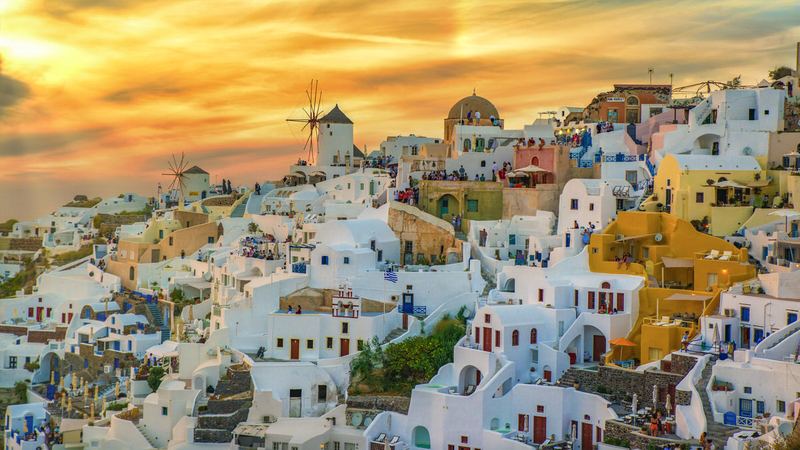
Santorini can be understood in a day. Its villages, wineries, beaches and Akrotiri are all within a short drive. Most of the romance happens on your own terrace. That makes it ideal for a short stay or for the first half of a two-island honeymoon.
Crete needs time. Chania to Heraklion is around two hours on the north coast highway, while mountain and south coast roads are slower and winding. A honeymoon here usually means two bases, perhaps Chania for four nights and Elounda for three, plus day trips. The reward is range: a Venetian harbor at sunset, a palace older than classical Greece and lunch in a mountain village where the menu is whatever the owner's mother cooked.
With only four or five days, Santorini is the clear choice. With a week or more, Crete gives you more for the time.
Where You Will Stay
Santorini's hotels are built for honeymooners. Katikies Santorini cascades down the cliff in Oia with white cave suites and three infinity pools. Canaves Oia Epitome faces direct sea sunsets, with every suite and villa over its own pool. Grace Hotel Santorini in Imerovigli has 23 rooms and a showpiece infinity pool.
Crete offers two styles. In Chania, Casa Delfino is a family-run Venetian mansion a lane back from the harbor, with a roof terrace and a small spa you book for yourselves. Domes Noruz Chania is a kid-free beach resort on a sandy bay about 10 to 15 minutes from the old town, with plunge pools or jacuzzis in every suite. In the east, Elounda Mare is a Relais and Chateaux resort of stone bungalows with their own pools above the calm Gulf of Mirabello.
A boutique room in Chania usually costs far less than a private-pool suite in Elounda or Oia, which helps the budget.
Beaches and Swimming
Crete wins on beaches. Balos, on the Gramvousa peninsula in the far northwest, is a shallow lagoon of warm, pale turquoise water. Elafonisi in the southwest has shallow water and patches of pinkish sand. Elounda's resorts sit on the calm Gulf of Mirabello. Many have private beaches. On the south coast, car-free Loutro sits on a quiet bay reached by boat. Go to Balos and Elafonisi before 10 a.m. or after 4 p.m. to miss the boat crowds.
Santorini's caldera hotels sit on cliffs, so the sea is something you look at more than swim in. You can swim at Ammoudi Bay below Oia, the Red Beach when access is open, the black sand at Kamari and Perissa or from a catamaran in the caldera.
Couples who want real beach days should lean to Crete. Couples happy with a plunge pool and a view will not miss the sand.
Food and Wine
Both are good places to eat, but Crete is one of the best in Greece. Start with dakos, a barley rusk topped with grated tomato, mizithra cheese and olive oil, then try kalitsounia cheese pies and Chania's boureki. Village menus bring wild greens, snails and slow-cooked lamb. Ask for gamopilafo, the rice dish traditionally served at Cretan weddings. Expect a glass of raki and maybe a plate of fruit you did not order at the end of dinner.
Santorini's volcanic soil gives intense cherry tomatoes, creamy yellow fava and white eggplant. Its wine is the star: dry, mineral Assyrtiko and sweet amber Vinsanto, with tastings on terraces above the caldera.
Crete's wines have improved enormously too. Look for white Vidiano and reds from Liatiko and Kotsifali, with tastings around Peza and Archanes south of Heraklion. For a wine-tasting afternoon with a view, Santorini; for a food trip, Crete.
History and Days Out
Each island has a Bronze Age headline. Santorini has Akrotiri, a town buried by the great eruption, with multistory buildings still standing under a protective roof. Crete has Knossos, the Minoan palace south of Heraklion. Visit early, before the tour buses.
Crete has much more beyond that. Walk Chania's harbor out along the breakwater to the old lighthouse at sunset. Take a boat from Plaka or Elounda to Spinalonga, a Venetian sea fortress later used as a leper colony. Active couples can hike Samaria Gorge, about 16 kilometers down to the Libyan Sea, usually open from around May to October; book a tour that includes the bus and boat back.
Santorini's best extras are the sunset catamaran, the cliff path from Fira toward Oia and a long seafood lunch at Ammoudi Bay. For couples where one partner wants to hike and the other wants to read by the pool, Crete has room for both.
Seasons, Crowds and Cost
Crete has a longer season. Many hotels open in April and stay open into late October. Chania and Heraklion stay lively year round. Santorini's caldera hotels mostly open from around April to late October or early November. On both, the best months are late May, June, September and early October.
Crowds are where the islands differ most. Santorini welcomes around two million travelers a year. Cruise ships crowd Oia and Fira on summer days, so you explore early and watch sunset from your terrace or a boat. Crete's size absorbs visitors better. Driving 20 minutes inland usually leaves the crowds behind.
On cost, Santorini's caldera suites with private pools are among the priciest rooms in Greece in high summer. Crete has luxury at Elounda too, but its boutique hotels in Chania and its tavernas give much better value. The shoulder months help on both islands.
Getting There and Combining Them
Santorini is the simpler arrival. Most couples connect through Athens or a European hub to the airport (JTR), 20 to 30 minutes from the caldera villages, then pre-book hotel transfers. Caldera villages are pedestrian-only, so porters carry bags the final stretch.
Crete has two airports, Heraklion and Chania, each about an hour from Athens by air, with many direct European flights in summer. A rental car is essential for most Crete honeymoons. Drive defensively, since locals often use the hard shoulder to let faster cars pass and goats appear around mountain corners.
The two pair well. High-speed ferries link Santorini and Heraklion in summer, so a ten-day honeymoon might be three nights in Santorini for the views, then a week on Crete split between Elounda and Chania before flying home via Athens. Summer winds can delay ferries, so leave a buffer before your international flight.