Two Kinds of Cliff
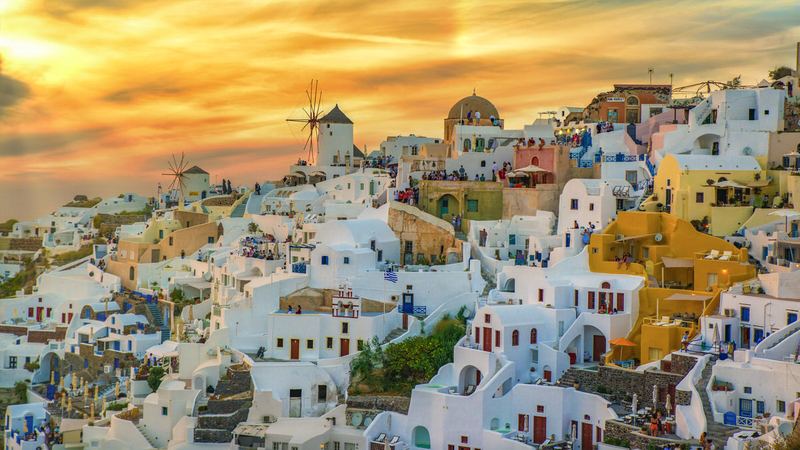
Santorini's cliffs are volcanic, banded in red, black and cream and wrapped around a flooded caldera. Whitewashed villages such as Oia, Imerovigli and Firostefani sit along the rim like frosting on a cake. The palette is white, blue and black. The view from almost any western terrace takes in the whole caldera at once.
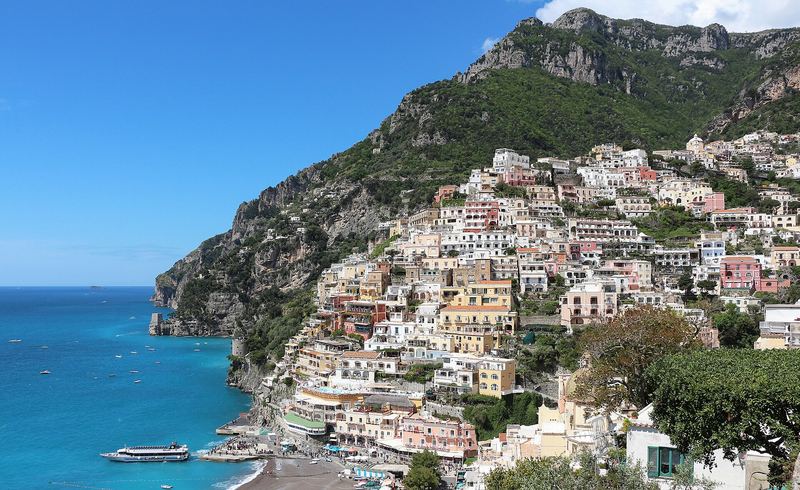
The Amalfi Coast's cliffs are green and terraced. Pastel houses stack up the slopes of the Sorrento Peninsula, church domes glint in the sun and lemon groves drop toward the sea. Each town has its own character. Positano is boutiques and beach clubs. Amalfi has a grand cathedral and a lively harbor. Ravello floats high above the water among gardens, while fishing villages such as Atrani and Cetara sit in between.
Santorini delivers one tremendous view. Amalfi delivers a hundred smaller ones that change with every bend in the road.
Legendary Rooms
In Santorini, the suite is the experience. Katikies Santorini in Oia has white cave suites cascading down the cliff and three infinity pools. Canaves Oia Epitome faces direct sea sunsets, with every suite and villa looking west over its own pool. Grace Hotel Santorini in Imerovigli has only 23 rooms and a showpiece infinity pool.
On the Amalfi Coast, the hotels are institutions. Le Sirenuse in Positano is a family-run villa with candlelit dinners and an art-filled interior. Hotel Santa Caterina, just outside Amalfi, is a Liberty-style classic with cliff elevators to a private beach club, rare on this coast. Caruso, A Belmond Hotel, crowns Ravello with its famous infinity pool and gardens. Monastero Santa Rosa in Conca dei Marini is a 20-room former convent with terraced gardens.
All are expensive in summer. Santorini's caldera suites rank among Greece's priciest rooms. Amalfi's famous names are among Italy's most expensive hotels. Shoulder months help in both.
Swimming and the Sea
Neither is a sandy-beach honeymoon, which surprises some couples. Santorini's caldera-rim hotels sit on cliffs, so you swim in your pool, on a catamaran across the caldera with a stop near the warm springs, at Ammoudi Bay below Oia, at the Red Beach when access is open or on the black-sand beaches of Kamari and Perissa.
The Amalfi Coast's beaches are mostly small and pebbly, such as Positano's Spiaggia Grande and Fornillo. Beach clubs rent loungers and umbrellas by the day. Several hotels have private swimming platforms or beach clubs, a major plus in summer.
On the water, Amalfi has the edge for variety. A private boat day on a traditional gozzo takes you into grottoes and coves, then across to Capri for lunch and the Faraglioni rocks. Santorini's sunset catamaran is the single best afternoon on the island, though. It also neatly skips the crowds at Oia's castle.
The Food Question
This is Amalfi's strongest card. The coast cooks with the sea and the lemon: scialatielli with seafood, spaghetti alle vongole, colatura di alici from Cetara and spaghetti with fried zucchini near Nerano. The sfusato amalfitano lemons flavor limoncello and pastries. The sfogliatella Santa Rosa was created by nuns in Conca dei Marini. Long seafood lunches on the beach at Positano or Marina del Cantone are a daily ritual, with Falanghina and Fiano in the glass.
Santorini eats well too. Its volcanic soil gives intense cherry tomatoes for tomato fritters, creamy yellow fava and white eggplant. Its wine is a real strength: dry, mineral Assyrtiko from vines trained into low baskets against the wind, plus sweet amber Vinsanto.
For couples who plan days around lunch, Amalfi wins. For couples who would rather spend an afternoon tasting wine with a view, Santorini is excellent.
When to Go
The seasons line up closely. Santorini's caldera hotels mostly open from around April to late October or early November. The sweet spots are late May through June and mid-September through early October. July and August are hottest, busiest and priciest, with cruise ships crowding Oia and Fira.
On the Amalfi Coast, May, June and September are ideal, with warm days, a swimmable sea and hotels in full swing. Early October can be lovely. July and August bring the busiest roads and highest rates. April is good for hiking and gardens, though the sea is still cool. Most of the famous hotels close from about November to March.
Both reward booking early. The best caldera suites for summer often sell out six months or more ahead. Top Amalfi hotels can fill six to nine months out for May through September.
Getting There and Getting Around
From the US, both usually involve a connection. For Santorini, most couples connect through Athens or another European hub to the airport (JTR), about 20 to 30 minutes from the caldera villages. Ferries also link the port of Athinios with Piraeus and other islands.
For the Amalfi Coast, fly into Naples (NAP), often via Rome or another hub, or take the high-speed train from Rome to Naples or Salerno. A private car from Naples to Positano or Amalfi takes about an hour and a half. The Amalfi Drive is narrow and congested in summer, with restrictions on non-resident vehicles on busy days, so hire a driver rather than renting a car. Ferries in season link Positano, Amalfi, Salerno and Capri.
Both are vertical. Santorini's caldera villages are pedestrian-only, with stairs everywhere and porters for luggage. Every Amalfi town climbs a hillside. Pack compact bags and comfortable sandals for both of you.
Days Beyond the View
Santorini's extras are compact. Walk part of the cliff path from Fira toward Oia, ideally early in the morning. Visit Akrotiri, a Bronze Age town preserved under volcanic ash with multistory buildings still standing. Tour a winery, or descend to Ammoudi Bay for grilled fish by the water.
The Amalfi Coast has more range. Hike the Path of the Gods high above Positano in the cool of the morning. Wander the gardens of Villa Cimbrone in Ravello to its Terrace of Infinity, or catch a summer concert in Villa Rufolo's gardens during the Ravello Festival. Take a cooking class with a local family, visit a lemon grove or browse Vietri's hand-painted ceramics. Pompeii and Herculaneum are within day-trip range.
That range is why most couples spend four or five nights on the Amalfi Coast, often split between Positano and Ravello, against three or four in Santorini.
Building the Wider Trip
Santorini works best as half of a Greek honeymoon. Pair it with Mykonos for beaches and nightlife, or with a quieter island such as Milos. Add a night in Athens. Summer winds can delay ferries, so leave a buffer before your international flight.
The Amalfi Coast pairs naturally with Rome, Florence or Lake Como, connected by high-speed trains through Naples or Salerno. A ten-day Italian honeymoon might be three nights in Rome and five on the coast, with a boat day to Capri.
You could do both, with flights between Athens and Naples or Rome, but you would spend a day in transit and need about two weeks to make it relaxed. For most couples, the better choice is to pick the country that matches your appetite: Greece for island-hopping and sunsets, Italy for food, grand hotels and history woven through every town.