One Island or an Island-Hop
The Maldives is built around the resort island. Most couples choose one or two resorts and spend their whole honeymoon on them. A popular plan splits the stay between a speedboat resort near Malé and a seaplane resort in Baa, Ari or Noonu. Beyond that, there is little reason to move.
French Polynesia is built around the island-hop. A typical ten-night trip spends a night on Tahiti, three nights on Moorea and five on Bora Bora, then a last night on Tahiti before the flight home. For a splurge, swap some Bora Bora nights for Tetiaroa, a 20-minute private flight from Tahiti. With more time, add Taha'a, Huahine or Rangiroa. Air Tahiti flies between the islands, while ferries link Tahiti and Moorea several times a day.
If you'd love a sense of travel and variety, French Polynesia delivers it. If you want to arrive and stop, the Maldives is simpler.
Flights and Time Zones
French Polynesia is far easier for most Americans. Nonstop flights connect Los Angeles and San Francisco with Papeete (PPT) on Tahiti in about 8 to 9 hours. Tahiti shares Hawaii's time zone, so jet lag is mild for West Coast travelers. From Papeete, Air Tahiti reaches Bora Bora in about 50 minutes and ferries reach Moorea in roughly 30 to 45 minutes.
The Maldives has no nonstop flights from the US. Most couples connect through Doha, Dubai or Istanbul to Velana International Airport (MLE), with 20 or more hours of total travel and a big time change. Seaplanes to the outer atolls fly only in daylight, so you may need a night near Malé on arrival.
For East Coast couples the gap narrows, because you'll connect through California to reach Tahiti. Even so, French Polynesia rarely takes as long door to door as the Maldives.
Scenery Side by Side
The Maldives is flat. Its islands rise just a few feet above the sea, so the scenery is all about water and sky: a lagoon in shades of turquoise, a reef edge where the color drops to deep blue and a sandbank on the horizon.
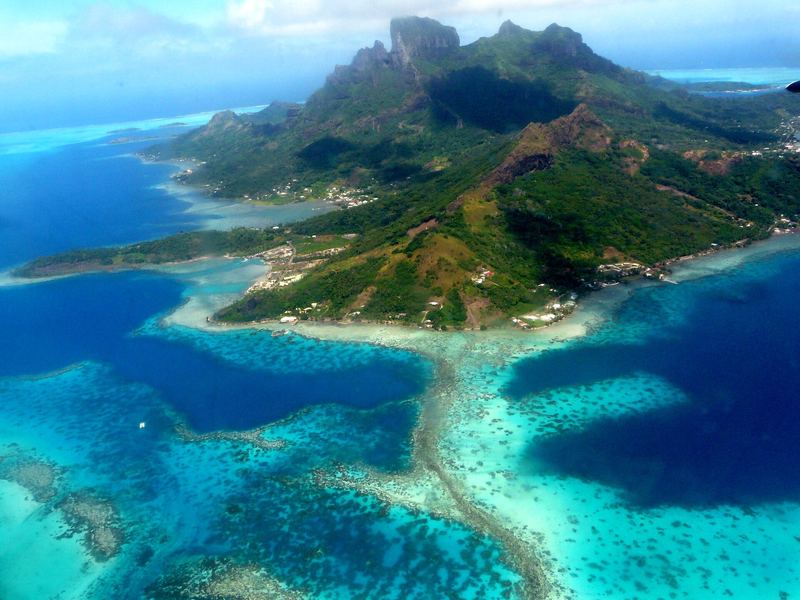
French Polynesia's Society Islands are volcanic. Bora Bora's Mount Otemanu rises over a lagoon of astonishing clarity. Moorea's jagged green peaks tower above Cook's Bay and Opunohu Bay, with pineapple fields in the valleys and a lookout at the Belvedere. Tetiaroa is the exception, a ring of coral islets around a sealed lagoon that looks more like the Maldives.
The lagoons are close in quality. The land is where they part ways. Couples who love views with height, or who want to hike, usually prefer French Polynesia. Couples who find a flat, glowing horizon the most relaxing sight in the world tend to choose the Maldives.
Culture and Food
French Polynesia has more of both. Polynesian traditions are very much alive, from ʻori Tahiti dance and drumming to tattoo art and the scent of tiare flowers. The Heiva festival, held around July, celebrates dance, music and sport. Ancient marae, sacred stone sites, should be treated with respect. Greet people with ia ora na and say māuruuru for thank you.
The food blends French technique with island ingredients. Try poisson cru, raw tuna marinated in lime and coconut milk. Grilled mahi-mahi and vanilla sauces are common too. Local roulottes, or food trucks, serve generous plates at lower prices than the resorts.
The Maldives is an Islamic nation where resort life is largely separate from local life. Inside the resorts the atmosphere is international and relaxed. Ask if your resort hosts a boduberu drumming performance. Try Maldivian dishes such as mas huni and garudhiya. Alcohol is served only at resorts and licensed vessels.
Resorts and Prices
Both are premium. All figures are approximate.
In the Maldives, luxury resorts such as Soneva Fushi, Four Seasons Landaa Giraavaru, Waldorf Astoria Ithaafushi and Conrad Rangali often start above $1,500 a night in high season. Taxes and a daily green tax can add a quarter or more. Seaplane transfers are priced per person and can exceed a thousand dollars round trip. Ayada Maldives and Hurawalhi sit a little lower.
In French Polynesia, Bora Bora's overwater bungalows at Four Seasons, The St. Regis and Conrad Bora Bora Nui often run from around $1,000 to several thousand dollars a night. The Brando on Tetiaroa sits at the top but includes dining and many activities. Moorea, with the Hilton Moorea Lagoon Resort, is noticeably cheaper. Le Taha'a by Pearl Resorts and smaller hotels on Huahine and Fakarava come in lower still.
That spread means French Polynesia is easier to balance across a trip, mixing splurge nights with gentler ones.
Seasons and Wildlife
Their best seasons are almost opposite. The Maldives is most reliable from January to April, during the dry northeast monsoon. June to September is wetter and cheaper, with manta season in Baa Atoll, roughly May to November. Whale sharks stay in South Ari year round.
French Polynesia is drier from about May to October, with lower humidity and cooling trade winds. June to August is peak season. November to April is warmer and wetter, with short tropical showers. It overlaps the South Pacific cyclone season, though serious storms are relatively infrequent in the Society Islands. Humpback whales migrate through from roughly July to October, which adds whale watching off Moorea. Dengue circulates, so if you're pregnant or hoping to be soon, check CDC travel health notices.
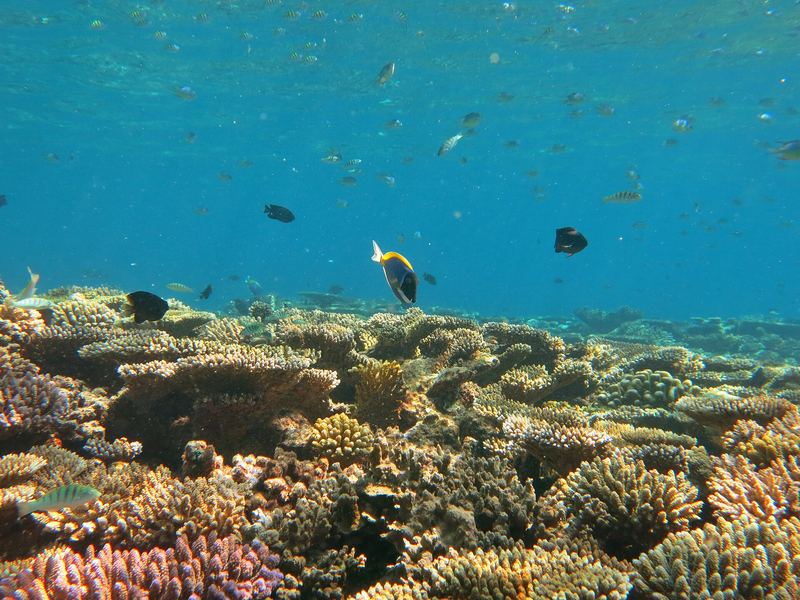
In the lagoons, French Polynesia's signature is swimming with stingrays and blacktip reef sharks. The Maldives offers bigger marine encounters overall. A summer honeymoon favors French Polynesia, while a late-winter one favors the Maldives.