Two Very Different Landscapes
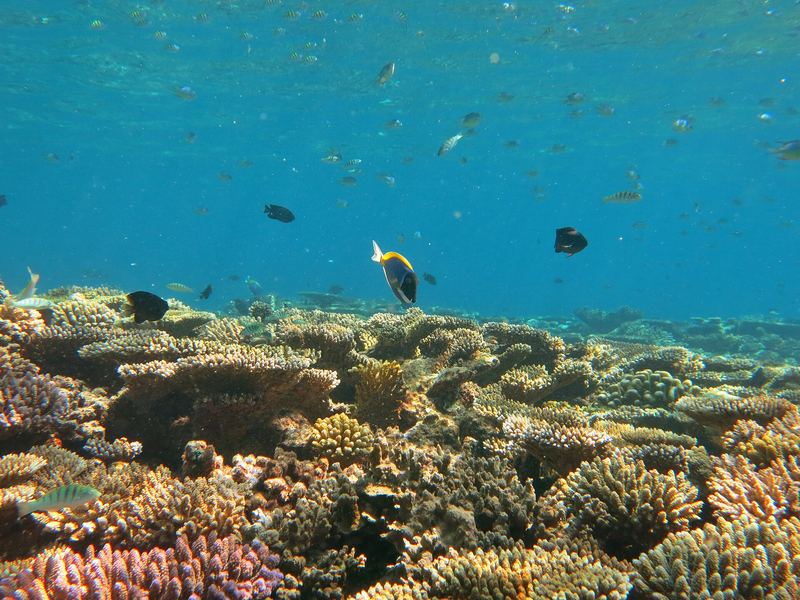
Look at the beaches side by side and the contrast is immediate. In the Maldives, white sand meets a lagoon of almost electric turquoise and the horizon is flat in every direction. The beauty is in the color and the space.
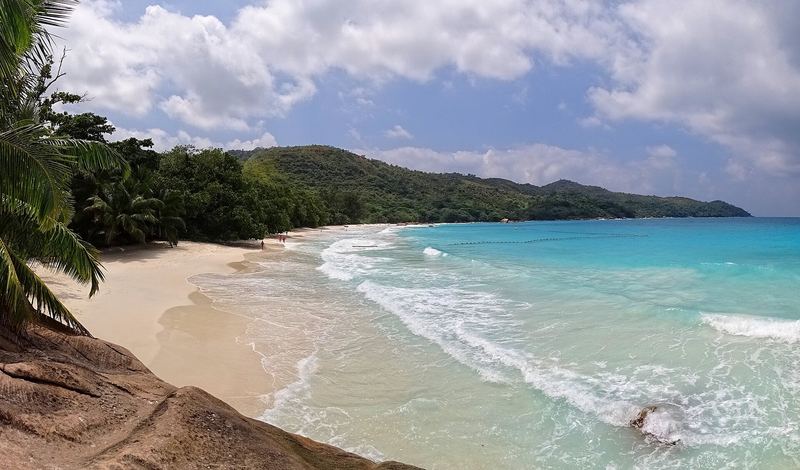
In the Seychelles, the same white sand is framed by smooth granite boulders the size of houses, with palms and jungle-clad hills rising behind them. Anse Source d'Argent on La Digue and Anse Lazio on Praslin are the famous examples. Inland, the Vallée de Mai on Praslin is a UNESCO-listed forest where the coco de mer palm grows, while Mahé's Morne Seychellois trails climb into cloud forest.
If one of you gets bored by flat scenery, the Seychelles gives the eye more to do. If you both picture yourselves floating in still water staring at nothing, the Maldives does that better than anywhere.
How Your Days Feel
A Maldives honeymoon is deliberately simple. Each resort occupies its own island, so there is no traffic, no town and no reason to put on shoes. Days settle into swims, snorkels, naps and long dinners. Excursions tend to be by boat: a sunset dhoni cruise, a sandbank picnic, a manta trip. Couples who want a true rest often find this exactly right.
The Seychelles asks a little more of you, in a good way. A typical trip involves a ferry from Mahé to Praslin, a day trip to La Digue where bicycles outnumber cars, a walk through the Vallée de Mai and maybe a boat to Curieuse Island to meet giant tortoises. Then you finish on a private island to switch off.
Neither is better. It comes down to whether the two of you recharge by doing nothing at all or by doing a little every day.
Seasons and Sea Conditions
The Maldives is warm all year and follows two monsoons. December to April is the dry season, with calm seas and peak prices. January to April is the most reliable stretch. June to September is wetter and windier but cheaper. It also overlaps with manta season in Baa Atoll, roughly May to November.
The Seychelles is also warm all year and sits outside the main cyclone belt. From about May to September the southeast trades bring drier, breezier weather and choppy water on southeast-facing coasts. December to March is hotter and more humid with heavier showers. The calm transition months, April to May and October to November, are the favorites for snorkeling and diving.
One safety point for the Seychelles: some of its most beautiful beaches, such as Grand Anse on La Digue and Anse Intendance on Mahé, are often unsafe for swimming in the windy months. Maldivian lagoons are far more sheltered.
Getting There From the US
This is close to a tie. Neither country has nonstop flights from the US. Both are usually reached through the big Gulf hubs.
For the Maldives, most couples connect through Doha, Dubai or Istanbul into Velana International Airport (MLE) near Malé. Total travel time is often 20 hours or more. Resort transfers are either a speedboat ride or a 30 to 45-minute seaplane that flies only in daylight.
For the Seychelles, the usual routes run through Dubai, Doha or Addis Ababa into Seychelles International Airport (SEZ) on Mahé, again with 20 or more hours from the East Coast. From there you take a ferry or short flight to Praslin, or a helicopter or small plane to a private island.
In both cases a stopover night in Dubai or Doha breaks the journey well. The Seychelles adds more internal travel, while the Maldives adds seaplane timing.
Where You Will Stay
The Maldives is the home of the overwater villa. Its range of resorts is enormous. In Baa Atoll you can choose Soneva Fushi's jungle villas, Four Seasons Landaa Giraavaru's polished service or Anantara Kihavah's underwater dining. Gili Lankanfushi near Malé is a rustic-chic classic, while JOALI in Raa Atoll and Six Senses Laamu sit at the high end. Hurawalhi is kid-free.
The Seychelles is mostly about villas on land with private pools, often looking over granite and sea. Raffles Seychelles on Praslin is our top pick for an island-hopping base. North Island, with just 11 large villas, is the archipelago's most famous retreat. Six Senses Zil Pasyon on Félicité sits close to La Digue. Denis Private Island and Four Seasons Desroches add more remote options, while Four Seasons Resort Seychelles covers Mahé.
Overwater villas are essentially absent in the Seychelles, so if that is a must, the decision is made.
What It Costs
Both are premium destinations, so budget seriously for either. All figures are approximate.
In the Maldives, the luxury resorts we cover often start above $1,500 a night in high season. Service charges, a tourism tax and a daily green tax can add roughly a quarter or more. Seaplane transfers are per person and can run from several hundred to over a thousand dollars round trip. With no restaurant to walk to, a meal plan often makes sense.
In the Seychelles, luxury resorts on Praslin and Mahé range from several hundred to well over a thousand dollars a night. Private islands start well into four figures. Helicopter transfers to those islands are expensive too.
The Seychelles has one advantage for your wallet: you can mix a private island with a few nights at a mid-range hotel, take ferries rather than flights and eat at Creole takeaways. The Maldives offers less room to cut costs once you are on a resort island.
Can You Do Both?
Some couples try. It can work on a long trip of two weeks or more. The catch is logistics. Flights between the two are limited, so a combined trip often routes back through a Gulf hub such as Dubai or Doha, which costs you most of a day.
If you do combine them, put the Seychelles first. Use your energy for the ferries, bike rides and hikes, then end in the Maldives with nothing to do but swim. Give each at least five or six nights.
For most couples, a better plan is to choose one and go deeper. In the Maldives, split your stay between two atolls, perhaps a speedboat resort near Malé and a seaplane resort in Baa or Noonu. In the Seychelles, pair Praslin and La Digue with a private island such as North Island or Zil Pasyon. Both approaches give you variety without the extra flights.