Mountains or Sandbars
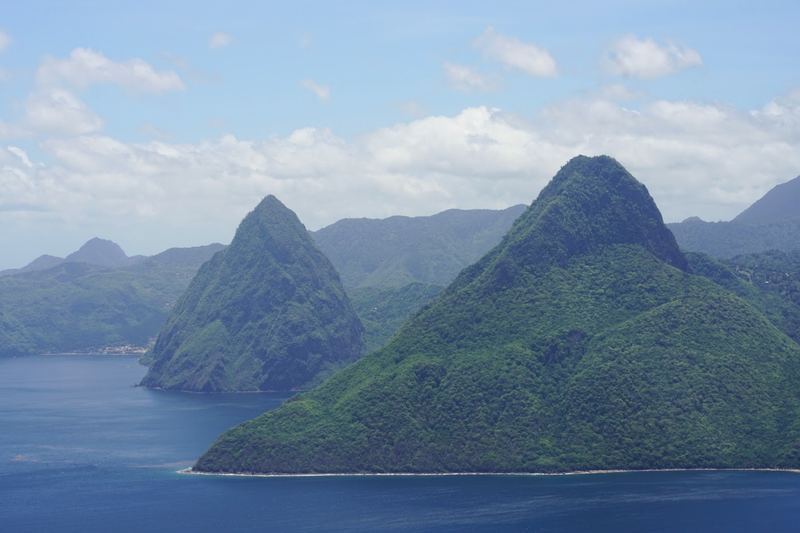
Saint Lucia's landscape is its calling card. The Pitons, a UNESCO World Heritage Site, dominate the southwest coast. Around them, rainforest climbs steep hillsides, waterfalls drop into pools and fishing villages sit in small bays. Beaches are mostly golden or darker volcanic sand in coves, rather than long white strands. The water ranges from deep blue to turquoise.
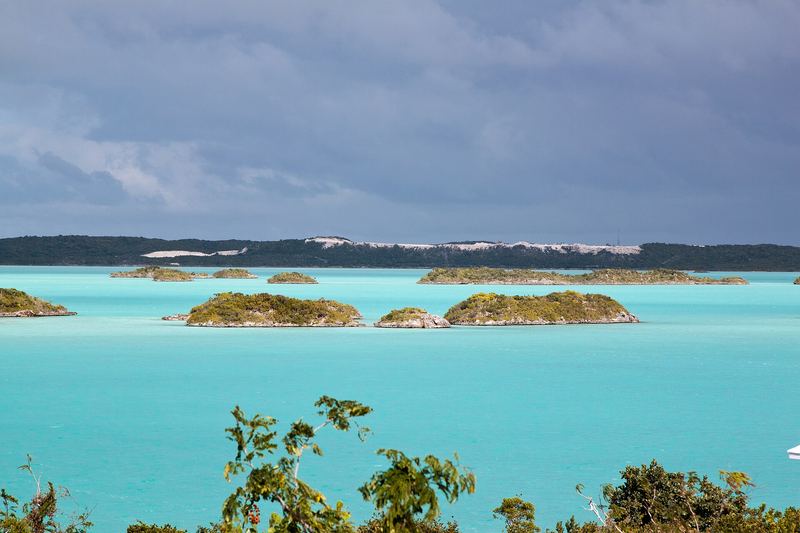
Turks & Caicos is flat and luminous. Grace Bay on Providenciales runs for about three miles of powdery white sand, with a reef offshore keeping the water calm. Shallow banks create sandbars and uninhabited cays you can reach by boat. Humpback whales pass through the Turks Island Passage in winter. There is no rainforest and very little elevation, so the drama is all in the color of the sea.
If you want views that change with every turn of the road, choose Saint Lucia. If you want to float in the clearest water you've ever seen, choose Turks & Caicos.
Getting There From the US
Turks & Caicos is one of the easiest Caribbean islands to reach. Providenciales International Airport (PLS) has nonstop flights from many US cities and the flight from Miami takes about 90 minutes. Grace Bay is about 15 minutes from the airport, so you can be on the sand within an hour of landing.
Saint Lucia takes a little longer. Nonstop flights reach Hewanorra International (UVF) from several US hubs, including Miami, New York, Atlanta and Charlotte, with flying time of roughly four to five hours from the Northeast. Hewanorra is in the south, about an hour by road from Soufrière and an hour and a half from Rodney Bay. Some couples skip the winding drive with a short helicopter transfer.
For a long weekend or a five-night trip, the shorter journey to Turks & Caicos is a real advantage.
Weather and Timing
The seasons line up. Both have their driest, sunniest weather from about mid-December to April or May, which is peak season, with the highest rates and the best suites selling out early around Christmas, New Year and Easter. In Turks & Caicos this is also humpback whale season, roughly January through April.
May and June are excellent in both, with warm water, fewer visitors and lower rates. Saint Lucia's Jazz and Arts Festival is typically held in May.
June through November is the Atlantic hurricane season, which typically peaks from August to October in both. In Saint Lucia, this is also the wetter season, with rain often falling in short, heavy bursts that keep the rainforest lush. Turks & Caicos is drier overall, though summer is hotter and more humid. If you travel in hurricane season, book flexible rates and buy travel insurance.
Resorts and Suites
Saint Lucia has some of the Caribbean's most celebrated romantic resorts. Jade Mountain, near Soufrière, is kid-free, with open-wall sanctuaries and infinity pools facing the Pitons. Ladera Resort, also kid-free, perches on a ridge 1,000 feet above the sea. Anse Chastanet is a relaxed beach resort with a superb snorkeling reef, while Sugar Beach, A Viceroy Resort, sits in the valley between the Pitons. In the north, Sandals Grande St. Lucian is a kid-free all-inclusive on the Rodney Bay peninsula and Zoëtry Marigot Bay is an all-inclusive on a sheltered bay.
Turks & Caicos is more focused. Grace Bay Club, the first luxury all-suite resort on Grace Bay, has a kid-free Hotel Building with its own infinity pool. COMO Parrot Cay is a private island between Providenciales and North Caicos, with a spa and secluded beach houses. Most couples base themselves on Grace Bay.
Price Check
Both are among the more expensive Caribbean destinations. In Saint Lucia, ultra-luxury open-wall suites and villas in Soufrière often run from the low four figures per night upward in peak season. Upscale boutique and beachfront resorts range from several hundred to around a thousand dollars a night. Northern all-inclusives often cost less once meals and drinks are factored in. Zoëtry Marigot Bay starts at roughly $850 a night, all-inclusive.
In Turks & Caicos, luxury resorts on Grace Bay often range from several hundred dollars to well over a thousand a night for an oceanfront suite in peak season. Private-island resorts like COMO Parrot Cay start in the four figures. Dining is pricey because most goods are imported.
All figures are approximate and vary greatly by season. Saint Lucia's all-inclusives give it more budget flexibility.
Adventures and Downtime
Saint Lucia mixes adventure with romance. Hike Gros Piton with a guide in the morning, soak in the Sulphur Springs mud baths near Soufrière and visit Diamond Falls and its gardens. Tour a cocoa estate and taste chocolate made on the island. Snorkel the reef off Anse Chastanet, take a sunset sail along the coast or zipline through the rainforest. In the north, Rodney Bay and Pigeon Island add beaches, restaurants and a hike to an old fort.
Turks & Caicos is about the water. Swim and paddleboard on Grace Bay at sunrise, snorkel Bight Reef just offshore and charter a boat to Iguana Island and secluded sandbars. Rent a car to explore Chalk Sound and Taylor Bay. Join the weekly Island Fish Fry for local food and music. In winter, take a whale-watching trip. Most days end with dinner on the beach.
Getting Around and Practicalities
In Saint Lucia, the island's roads are winding and hilly, so most couples use resort transfers or taxis rather than renting a car. Driving between Soufrière and Rodney Bay takes over an hour. The currency is the East Caribbean dollar, pegged to the US dollar, which is widely accepted. Pack insect repellent for the rainforest and good shoes for hikes.
In Turks & Caicos, Providenciales is easy to explore. The US dollar is the official currency, electricity uses US-style plugs and driving is on the left. Many couples rent a car for a day to reach quieter beaches. One important rule: check every bag for stray ammunition before you fly, since carrying even a single round is a serious offense there.
Both are English-speaking and very welcoming. In both, the sun is strong, so pack reef-safe sunscreen and a hat.
Can You Combine Them?
It is possible but not ideal. The two sit far apart in the Caribbean and moving between them usually means connecting through Miami or another hub, which costs most of a day. If you have ten nights or more and want both mountains and beaches, it can work: start with five nights in Saint Lucia, split between Soufrière and Rodney Bay, then fly to Providenciales for four or five nights on Grace Bay.
Most couples get more from choosing one and splitting it between two bases. In Saint Lucia, pair an open-wall suite near the Pitons with a beach resort in the north. In Turks & Caicos, combine Grace Bay with a few nights at Parrot Cay or a boat trip to the outer cays.
With a week or less, pick Turks & Caicos for pure beach time or Saint Lucia for a more varied, scenic trip.