Jungle Hills or a Sunset Coast
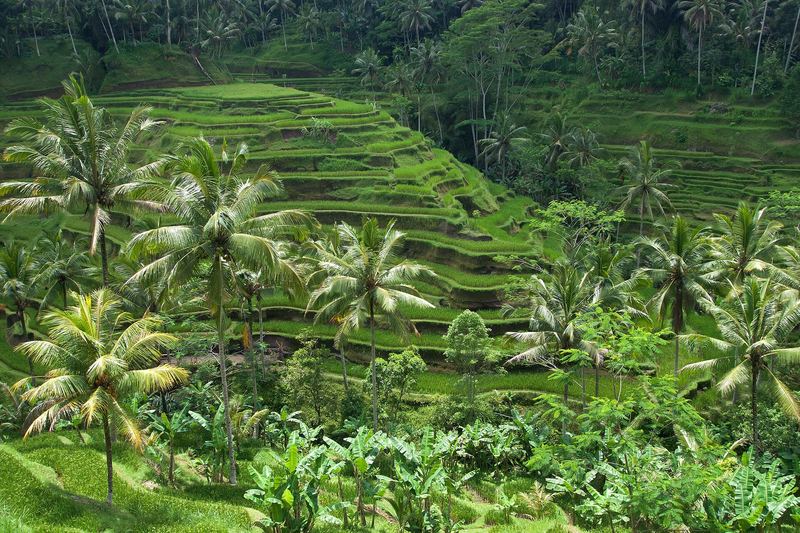
The setting is the biggest difference. In Ubud you look out over green: terraced paddies at Tegallalang, the grassy Campuhan Ridge and steep valleys where resorts cling to the gorge walls above the Ayung. Nights are cooler than on the coast and the soundtrack after dark is frogs and cicadas.
Seminyak is flatter and busier. The beach runs for miles, broken by temple shrines and beach-club umbrellas. It faces due west, so sunset is a nightly event that people actually plan around. Inland the scenery is lanes, walls and frangipani rather than landscape. You come for the sea, the light and the life on the street.
Neither is remote. Central Ubud is crowded with cafes and yoga studios, though a few minutes out you are among villages and fields. Seminyak stays lively from breakfast to late evening.
The Resorts and Villas
Ubud is the place for a headline hotel. Four Seasons Resort Bali at Sayan is famous for its arrival over a suspension bridge onto a rooftop lotus pond, with villas stepping down toward the river. Mandapa, a Ritz-Carlton Reserve, has walled pool villas on the riverbank and its own working rice field. Capella Ubud, designed by Bill Bensley, swaps villas for themed luxury tents with saltwater pools on a jungle ridge near Keliki.
Seminyak's strength is the private villa. Bali's villa culture grew up around here, from one-bedroom plunge-pool places to estates with a chef. On the beachfront, The Oberoi Beach Resort, Bali has thatched villas in gardens above the sand, The Legian Seminyak has large ocean-facing suites. Alila Seminyak and W Bali Seminyak are more contemporary.
In Seminyak, check that your pool is fully private and how close the nearest beach club is. In Ubud, staying just outside the center gives you quiet without losing the restaurants.
What It Costs
The shape of the spending differs. Ubud's big Ayung River resorts run from roughly $700 to well over $1,500 a night; that is where a splurge goes. Boutique villas in the rice fields are far cheaper, roughly $150 to $400 a night.
In Seminyak a one-bedroom villa with its own pool typically costs about $150 to $400 a night, while the beachfront resorts sit around $400 to $900 or more. All of these are approximate ranges that climb in July, August and over Christmas and New Year.
Day-to-day costs also tilt differently. Ubud's resorts are a little isolated, so you tend to eat in and hire a driver for sightseeing. Seminyak puts dozens of good-value restaurants within walking distance, though import taxes push cocktails close to US prices.
When to Go
Because they share an island, the calendar is nearly identical. The drier months run roughly April to October, with August usually the driest. July, August and the late-December holidays are the peak, with the highest rates and the worst traffic. May, June and September are the sweet spot for both.
The wet season, about November to March, plays out differently. In Ubud the downpours are heavy but often brief, the jungle turns its deepest green and the gorge resorts feel atmospheric with rain on the roof, so a wet-season stay can be a pleasure. On Seminyak's west-facing beach the same months bring humidity, flooded roads after storms and rubbish that can wash ashore, which takes some shine off a beach-focused stay.
One date affects both: Nyepi, the Balinese Day of Silence in March or April, shuts the whole island for 24 hours, airport included.
Days Together in Each Place
Ubud days fill themselves. Watch sunrise over Tegallalang before the tour buses arrive, take part in a water purification ritual at Tirta Empul with a priest or guide, walk the Campuhan Ridge in late golden light and catch a Legong or Kecak performance in a palace courtyard. Rafting the Ayung followed by a couples massage suits an adventurous partner and a sleepy one alike.
Seminyak days are slower and more sensual: a floating breakfast in your pool, a lazy afternoon on a beach-club daybed at a place such as Potato Head, a flower bath at one of the many spas and then sunset on the sand. Pura Petitenget, a centuries-old seaside temple, hosts frequent ceremonies you can watch respectfully in a sarong and sash. Tanah Lot, a temple on a rock in the sea, is about an hour north and best at sunset.
Eating Out
Seminyak is Bali's dining capital and the clearer winner for couples who plan trips around restaurants. Within a few blocks you can eat refined Indonesian, Mediterranean, Japanese or modern Australian cooking, then move on to a rooftop or beach bar.
Ubud eats well too, just differently. It has warungs serving babi guling and bebek betutu plus a big scene of healthy, plant-based cafes. The standout meals tend to be at the resorts: a Balinese feast at Sokasi at Four Seasons Sayan, a fire-cooked tasting menu at Api Jiwa at Capella Ubud, or dinner in one of Mandapa's bamboo pods at Kubu.
In both places drink bottled or filtered water, take care with ice at small stalls and skip homemade arak, which has caused methanol poisoning.
Comfort and Practical Matters
Both sit at the end of a long trip. There are no nonstop flights from the US to Bali, so most couples connect through Singapore, Tokyo, Seoul, Taipei, Hong Kong or a Middle East hub, with total travel often topping 20 hours. Seminyak is the easier first stop if you land late, since it is closer to DPS, though the drive can still run 30 minutes to over an hour in traffic.
In Ubud, rely on resort shuttles or a hired driver rather than a scooter; roads are narrow and busy. Keep sunglasses and phones secure at the Sacred Monkey Forest, where the macaques grab things and can bite. In Seminyak, walk for short hops and use Grab or Gojek for longer ones. The surf can be strong with rip currents, so swim only between the flags where lifeguards are on duty.
Dengue is present across Bali, so use repellent at dawn and dusk. If you're pregnant or hoping to be soon, check CDC travel health notices for Indonesia.
Splitting Your Nights
This is the rare comparison where the best answer is often both. Ubud and Seminyak are roughly an hour to an hour and a half apart by car, so moving between them costs one morning, not a day of travel. Our suggested order is Ubud first: the cooler hills are a gentle place to recover from jet lag, then you finish with beach days, sunsets and good dinners before the flight home.
For a ten-night trip, try four nights in Ubud and three in Seminyak, then add Uluwatu's cliffs or a quiet island at the end if you want more seclusion. On a shorter week, three and three works well.
If you only have room for one base, let your daily rhythm decide. Couples who want to explore, learn and be enveloped by landscape should stay in Ubud and day-trip to the coast. Couples who want to rest, swim and eat out should stay in Seminyak and hire a driver for one day in the hills.